4-Methylbenzyl Chloride: More Than a Building Block
Historical Development
4-Methylbenzyl chloride, sometimes recognized by old-school chemists as simply p-tolylmethyl chloride, has stuck around in the toolbox of organic and industrial chemists for decades. Its journey stretches back to the rising demand for synthetic chemicals in the early 20th century, coinciding with the birth of large-scale pharmaceuticals and dye industries. Public records and chemical theses from the 1930s highlight its role as a precursor. Old patents from the era mention its use in the synthesis of dyes and intermediates. Listening to stories from experienced process operators, you hear how synthesis routes using toluene derivatives reshaped manufacturing scales, shifting experimentation from glass flasks to steel reactors and plant floors. What’s striking is how its pathway from specialty molecule to common intermediate reflects broader shifts in manufacturing priorities, especially as industries looked for precise ways to introduce functional groups into molecules efficiently.
Product Overview
In practical terms, 4-methylbenzyl chloride shows up wherever there’s a need to attach a benzyl group with a methyl twist. Its structure—built around a benzene ring with both a methyl and a chloromethyl group—makes it ideal for introducing these pieces into larger chemical systems. Chemists prize it for its reactivity; it lets you quickly spin up amines, ethers, and other versatile derivatives by reacting cleanly with nucleophiles. Seeing it used on the bench feels a bit like watching an old friend at work. It’s not flashy, but it gets the job done.
Physical & Chemical Properties
You won’t catch a pleasant whiff working with this one. At room temperature, it generally appears as a clear, colorless to pale yellow liquid. Its boiling point hovers around 204°C, and anyone who’s spilled it knows the characteristic sharp, biting smell. Its density sits slightly above water—about 1.07 g/cm³—making phase separation straightforward. Chemists keep it dry and bottled tightly, knowing hydrolysis produces p-tolylmethanol and HCl. High reactivity makes it indispensable for some reactions but also a source of worry for storage and transportation. These firsthand experiences shape why lab techs focus on strong bottle seals and fume hood ventilation when handling it.
Technical Specifications & Labeling
Chemical labels spell out the hazards. GHS pictograms warn about toxicity, irritation, and environmental hazards. From my own work, I’ve noticed most stock bottles carry purity in excess of 98%, often specified for both general synthesis and analytical quality. The UN number classifies it among dangerous goods in transit. Such details aren’t just paperwork—they connect to real safety needs, echoing stories from transport mishaps and lab accidents. Folks handling 4-methylbenzyl chloride learn early on that respect for the label means respect for personal health.
Preparation Method
Classic methods for making 4-methylbenzyl chloride often rely on the chlorination of p-xylene. The process uses chlorinating agents, most often thionyl chloride or sometimes benzyl chloride itself under catalytic conditions. From my conversations with seasoned synthesis chemists, process control means careful dosing—too much chlorine, and you end up over-chlorinating the ring, missing your target. Industrial setups use batch reactors cooled to control side reactions. Many small-scale syntheses use UV light or radical initiators for smoother outcomes, but scaling up means mastering the fine line between selectivity and production rate.
Chemical Reactions & Modifications
This molecule acts as a strong alkylating agent. It reacts sharply with nucleophiles—amines, phenols, and thiols snap up the chloromethyl group. I’ve seen it play a central role producing a wide variety of benzylated derivatives. Labs rely on it to synthesize pharmaceuticals, surfactants, and flavor compounds. It also often pops up as an intermediate for insecticides and plasticizers. In these reactions, the classic SN2 pathway dominates; strong bases and non-polar solvents speed things up. There’s little room for error, and that’s why process chemists focus on tight process parameters to avoid unwanted side products or even runaway reactions.
Synonyms & Product Names
Street names among chemists include p-tolylmethyl chloride, 4-methylphenylmethyl chloride, and para-methylbenzyl chloride. Over the years, the International Union of Pure and Applied Chemistry standardized “4-methylbenzyl chloride” for unambiguous global reference. Product catalogs from major suppliers stick to these, though local names still linger in lab slang. This mix of names teaches the value of consistency, especially with cross-border collaboration, preventing costly misunderstandings on ordering or regulatory paperwork.
Safety & Operational Standards
In the lab, you pick up fast that this compound burns eyes and skin and that vapor inhalation carries risks of lung irritation. Splash goggles, nitrile gloves, and strict closed handling routines cut exposure and spills. On the industrial side, chemical plants set up special ventilation, gas scrubbing units, and standard protocols for treating accidental releases. Emergency response guides always highlight the need for quick evacuation and neutralization of spills. From my work around industrial sites, regular safety drills and ongoing updates to Material Safety Data Sheets are more than compliance—they’re practical tools preventing tragedy. Industry groups frequently review their standards as new toxicity and exposure data emerge.
Application Area
4-methylbenzyl chloride’s reach goes far. It enables the synthesis of complex pharmaceuticals, especially antihistamines and certain antifungals. Agrochemical producers draw from its structure to build novel pesticides and fungicides. Polymer scientists use it to anchor chains or introduce side groups during plastic production. In fragrance and flavor work, its derivatives can lead to spicy or aromatic components. In research-focused labs, it’s a key choice for introducing benzyl protection groups, which later come off under mild conditions. Talking to colleagues highlights how its accessible reactivity and reliable performance keep it in rotation, despite stiffer regulations and safer alternatives coming to market.
Research & Development
Innovation rarely slows. Current research tracks focus on tweaking the chlorination step to cut hazardous waste. Academic labs work on greener solvents or flow chemistry setups, aiming to reduce chlorinated byproducts and energy loads. In pharma and materials science, custom derivatives of 4-methylbenzyl chloride keep sparking new intellectual property claims. I’ve met startup teams working out enzyme-catalyzed reactions that offer selective transformations at lower temperature, suggesting a future where biocatalysis could sidestep harsher chemical routes. The pressure to “green” both synthesis and application shows up in conference talks and patent filings alike.
Toxicity Research
Nobody working with 4-methylbenzyl chloride shrugs off health concerns. Animal studies and workplace exposure reports highlight risks—its toxicity centers on respiratory, skin, and eye irritation. Some breakdown products raise additional hazards, particularly for wastewater handlers. Industry-disclosed data provides acute toxicity estimates and repeat dose effects. Regulatory agencies have flagged it as an irritant in global chemical inventories, with restrictions on workplace air concentrations. Increasingly, researchers keep tracking long-term exposure data, including any links to chronic health effects. This drives new best practices and tools for monitoring air and surface contamination in labs and plants.
Future Prospects
The future of 4-methylbenzyl chloride ties closely to regulatory trends and sustainability pushes. If better, safer, and greener routes emerge, use could shift towards specialized, high-value fields—think precision pharma or tailored polymer materials. New regulations on chlorinated compounds might limit broader applications, but creative chemists keep finding clever uses as a coupling partner and intermediate, sometimes using milder conditions or engineered microbial systems. Ongoing investment in toxicity research and alternative synthesis reminds us that even old-guard molecules must learn new tricks to stay relevant. As labs get greener, and safety standards climb, those still working with 4-methylbenzyl chloride know that every process and protocol gets a second look through the lens of sustainability and health protection.
Insights from Chemistry to Commerce
4-Methylbenzyl chloride does not make headlines in daily news, yet it runs quietly just beneath the radar in many industries. My background in science journalism has brought me into the world of chemicals more than once. There, I’ve seen just how often everything from medicines to plastics depends on the building blocks like this one. Most people will never come across its name, but its fingerprints touch plenty of things that affect public health, safety, and even environmental well-being.
Connecting Industrial Chemistry with Daily Life
This compound holds more importance to everyday products than you might think. Chemists use 4-methylbenzyl chloride as a stepping stone. Pharmaceuticals often start with it as part of a process that adds or tweaks specific chemical groups. That change can tweak how a medicine acts in the body, maybe making it more effective or easier to absorb. In my reporting, I’ve spoken to researchers who rely on simpler compounds like this to save time and money during drug development.
Then, outside the lab, manufacturers blend this chemical into the world of dyes, fragrances, and plastic additives. Synthetics often get a bad reputation, but precise tweaks, powered by molecules like this, have made medical technology safer, household products more reliable, and many skills like textile dying more predictable. Whether it gets converted to a colorant in a t-shirt or used as a chemical tag in a laboratory experiment, the backbone it provides is the same.
Risks and Responsible Practices
As important as it is, there are big concerns about safety. Handling 4-methylbenzyl chloride can risk eye and respiratory tract irritation, and it does not take much for poorly run facilities to impact health. Some cases I’ve reviewed show accidents where lax storage leaked chemicals, affecting workers and nearby neighborhoods. It’s a classic example: a tool that helps society but bites back if care falls by the wayside.
Regulation has tightened, especially after advocacy from health and environmental groups. Factory inspections became more regular and strict. I’ve covered initiatives where environmental chemists introduced safer storage, and retrained workers on handling. Evidence points to better health outcomes in areas where these steps took hold. For companies, investment in responsible protocols reduces downtime, worker turnover, and public complaints.
Better Alternatives and Future Steps
People ask if we could skip chemicals like 4-methylbenzyl chloride altogether. Industry often tries, because everything has a lifecycle and an ecological footprint. Some companies have pivoted toward using less volatile benzyl derivatives or green chemistry alternatives. So far, not every substitute performs equally well, and replacement is a slow crawl, not a sprint. More funding for research at both public and private levels encourages safer breakthroughs.
Most progress happens where buyers, regulators, and communities push for transparency. Whenever companies publish audits of their emissions and handling procedures, real trust goes up. As someone who’s watched the cleanup after chemical missteps, I can say public attention does shape how industry behaves. Consumers have more power than they think.
Some jobs force you to stare danger in the face. Chemistry is one of them. Sitting, gloves on, eyes sharp—handling toxic chemicals becomes routine, yet it never means safe. Take 4-Methylbenzyl Chloride, for example. This stuff deserves attention that’s both careful and informed, especially among folks new to lab work or industrial processing.
Why 4-Methylbenzyl Chloride Demands Respect
I’ve met people who shrug at unfamiliar chemical names, but there's nothing ordinary about this compound. Inhaling its vapors, splashing it on skin, or letting it near your eyes causes more than a mild irritation—some studies point to serious respiratory trouble, burns, and risks that could show up years later. Anyone who's ever cleaned up after a spill will tell you those sharp, biting odors don't disappear quickly, and neither do the consequences of a mistake.
Preparation Isn’t Optional
Some of my first lab experiences involved nerves so frayed I double-checked every label. That basic habit saved me more than once. With 4-Methylbenzyl Chloride, there’s no room for guesswork. Gloves made of nitrile or neoprene hold up better than latex. Splash goggles and lab coats are a must, not just for show but because this chemical finds its way through thinner barriers. Only work inside a fume hood—breathing those fumes straight from an open bench can leave a mark on your lungs, and it’s not the kind that fades overnight.
Labels shouldn’t go ignored. I’ve witnessed some people pour off chemicals into unmarked bottles, a shortcut that almost always ends badly. Proper labeling and up-to-date safety data make the difference between minor scares and life-changing accidents.
Accidents Happen—Preparation Makes the Difference
Nobody stands immune to error, and I say this after many years surrounded by glassware and warning labels. Even seasoned pros get caught off guard. The best labs keep emergency eyewash and showers within arm’s reach, not as decoration but as lifelines. Simple rinsing saves vision and skin, often in the frantic seconds after a splash.
Chemical spills bring their own chaos. Dumping sand or neutralizing powders on liquid beats the disaster that follows a panicked paper towel wipe. Collecting waste in the right containers—no shortcuts, no guessing—means the next person won’t suffer for a hidden mistake.
Training Makes All the Difference
Most accidents involve inexperience or foggy judgment under pressure. Good organizations hammer home the right procedures, and experienced staff don’t assume new faces know what’s safe. The best places drill people on spill kits and the difference between cleaning up glass and cleaning up a dangerous chemical.
Toward Safer Workplaces
Some might argue that regulations go overboard, but history says otherwise. Proper ventilation, top-shelf personal protective equipment, and real training cut down injuries—and lawsuits. Regular safety meetings feel tedious, but they make safety second nature, which is the best defense for any lab or plant.
People can try to wish away the dangers by telling themselves they’ll just "be careful." Experience tells a different story. Real safety requires planning, patience, and listening to those who’ve learned the hard way. That’s how accidents shrink and trust builds in chemical handling. It’s never just a matter of routine.
Understanding the Compound
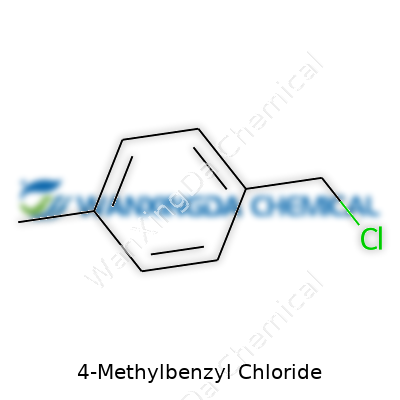
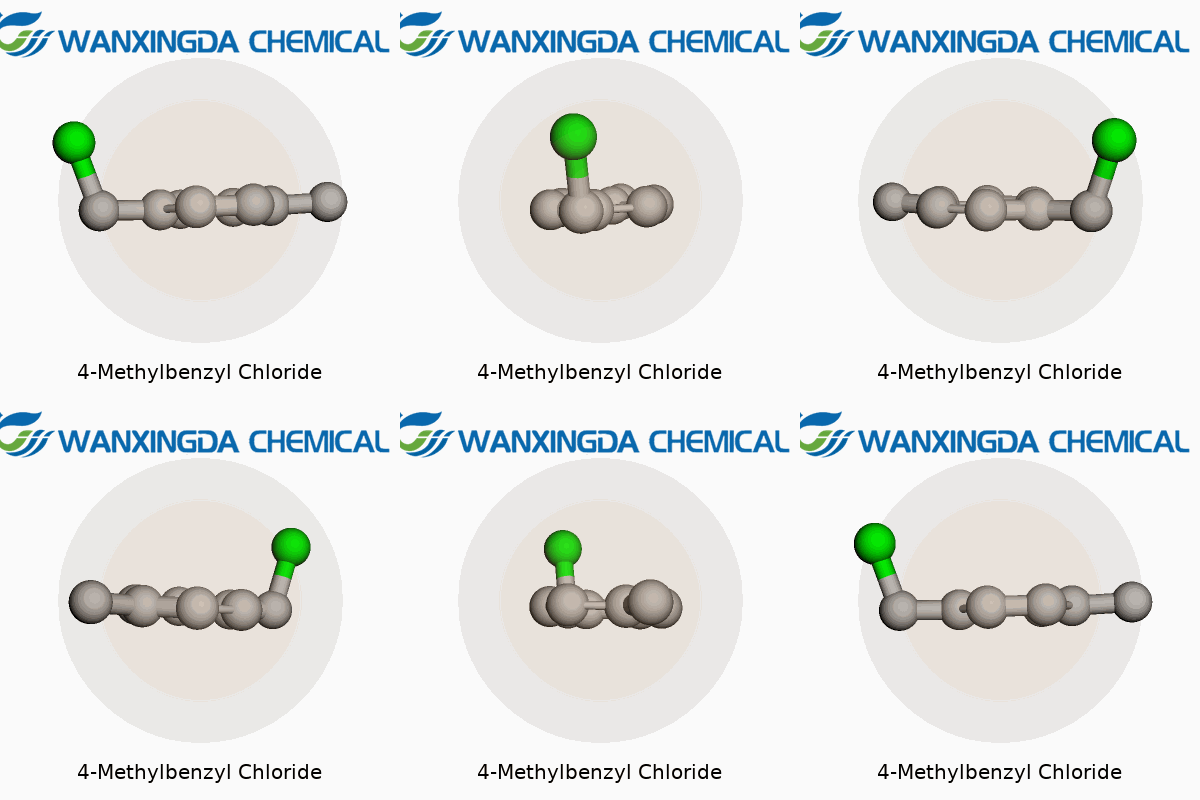
In the world of organic chemistry, every molecule has a story. 4-Methylbenzyl chloride stands out for both its structure and its uses in labs and industry. If you’re looking for its chemical formula, it lines up like this: C8H9Cl. The backbone comes from a benzene ring, which is a core part of so many compounds found in pharmaceuticals, fragrances, and polymers. Here, a methyl group grabs the fourth slot, and a benzyl chloride group tags along, shaping this compound’s distinct identity.
The Role in Organic Synthesis
Many chemists first hear about 4-methylbenzyl chloride in a synthesis class, or see it listed in a list of reagents for intermediate steps. Its value runs deep in making specialty chemicals and pharmaceutical precursors. Working with this compound reminded me how small changes to a molecule — like swapping a hydrogen for a chlorine atom — guide everything from reactivity to safety precautions at the bench.
Handling and Safety: Real-World Lessons
In the lab, 4-methylbenzyl chloride demands respect. It reacts eagerly with nucleophiles, making it useful for building more complex molecules but also a potential irritant. These hands-on moments underscore why it pays to keep gloves and good ventilation in mind. The chemistry community has spent decades refining guidelines for handling compounds of this family, with clear evidence that good habits prevent headaches (and dangerous byproducts).
Why Accurate Formulas Matter
After years in research, I’ve seen confusion spark from something as simple as switching a “3” for a “4” in a compound’s name. The position of each atom on a ring structure completely changes how that chemical acts. For example, changing that methyl group’s location changes both naming conventions and reaction outcomes. Reliable textbooks, peer-reviewed articles, and chemical databases reinforce the point that in this field, details aren’t just for the pedantic — they make or break safe research and product quality.
The Bigger Picture: Sourcing and Sustainability
Sourcing isn’t only a concern for industrial buyers; many universities and startups feel the squeeze of price and availability trends for specialty chemicals. Experts point out the need for improving synthetic methods that produce less hazardous waste, especially for chlorinated aromatics. Manufacturers who focus on cleaner routes set a higher bar for industry, and scientists keep looking for greener solvents and catalysts. This isn’t just good for labs but helps cut unnecessary exposure for everyone along the supply chain.
Moving Forward Responsibly
Any discussion about chemicals with a formula like C8H9Cl should include the reality of risk and responsibility. Teachers, students, and technicians alike benefit from keeping updated on the latest handling protocols and disposal strategies. I’ve had the best results treating every “routine” procedure as an opportunity to check assumptions, streamline workflow, and swap tips — simple actions that make a big difference. By staying well-informed and sharing knowledge, the community not only gets the science right but keeps people safe and the environment cleaner.
Behind every vial of 4-Methylbenzyl Chloride, there’s a surprisingly important story about science, responsibility, and safety. Anyone who’s handled this chemical won’t forget its pungent odor or the sense of caution it demands. In my years working in a university lab, I came face-to-face with the risks that can unfold if supervision slips or protocols get brushed aside. With this particular compound, the choices we make about storage go far beyond good housekeeping—they touch on protecting health, lab equipment, and even the surrounding community.
Trying to Dodge Trouble: Simple Storage Can Save a Lot of Headaches
So often, unsafe storage turns into a silent invitation for accidents. 4-Methylbenzyl Chloride isn’t just another bottle on the shelf—its corrosivity and ability to irritate skin and eyes sit together with a real risk of harmful vapors. Some people underestimate how quickly things can go wrong; an uncapped container or a poorly sealed bottle can fill a room with fumes before anyone has a chance to fix the mistake. Choosing a tightly sealed, chemical-resistant container puts up the first line of defense.
Many experienced chemists recognize the role temperature plays. This compound won’t explode if it gets warm, but higher heat pushes up vapor pressure and slowly degrades the chemical. I learned early on that the standard advice holds true for a good reason: room temperature, away from direct sunlight, gives you a stable material and a bit more peace of mind. A locked, well-ventilated storage cabinet—preferably marked with proper labels—keeps accidents from ever reaching the next stage. This type of simple diligence keeps people out of harm’s way and prevents contaminating nearby items.
Understanding Compatibility Cuts Down on Risk
Mixing incompatible chemicals causes some of the worst laboratory disasters. Stored beside strong oxidizers or acids, 4-Methylbenzyl Chloride can react and create unexpected danger. I’ve seen labs skip the work of checking chemical compatibility charts, and the result sometimes becomes an after-hours cleanup or worse—a toxic release. Grouping chemicals by hazard and storing each group in its own designated space sounds tedious, but after a close call, it suddenly starts making a lot more sense. Getting the labeling and separation right makes the difference between a safe day at work and an emergency room visit.
Training and Good Habits Mean Fewer Surprises
Many accidents in labs and warehouses start not with equipment failures but with human forgetfulness or confusion. Outdated training produces more uncertainty around what to do in a crisis. Regular drills, clear signage, and hands-on demonstrations can anchor the right habits. Even outside labs, facilities teams who clean or move supplies benefit from understanding why a bottle stays in its spot, what the warning labels mean, and what to do if they pick up a container that feels strangely warm or looks pressurized.
It’s easy to see chemical storage as just one more detail to juggle until a close call brings the consequences to life. Respecting the potential dangers of 4-Methylbenzyl Chloride turns simple routines—sturdy seals, cool cabinets, separated shelves—into genuine safeguards. Collective vigilance not only keeps labs compliant with safety rules but, more importantly, it keeps people safe and science moving forward without unnecessary setbacks.
Bringing Laboratory Chemistry to Street Level
Anyone who’s spent time in a chemical lab knows that every material brings its own quirks, hazards, and tales. 4-Methylbenzyl chloride comes with an oily look, almost syrupy, but don’t let the texture fool you. This is not something you want to spill on your hands or knock over near an open window. This clear liquid releases a sharp, sometimes suffocating smell that has chased me—and a few colleagues—out of the storeroom more than once. The fumes sting at the nose and eyes, so good ventilation isn’t negotiable. Everybody learns that lesson early.
Breaking Down What This Compound Does
4-Methylbenzyl chloride, known to chemists as a substituted benzyl chloride, features a benzene ring with a methyl group at the fourth position and a reactive chlorine atom. This setup makes it part of a family known for reactivity, especially in organic syntheses. The chlorinated carbon loves to latch onto nucleophiles, so it’s a reliable building block in labs that create pharmaceuticals or specialty materials.
The boiling point hovers just around 204°C, and I’ve watched distillations of this compound put both patience and glassware to the test. It doesn’t dissolve in water with any enthusiasm due to the bulky aromatic ring, but ask it to blend with organic solvents, and there’s barely a boundary. This property plays right into the hands of industrial chemists who use non-polar solvents to get their reactions rolling.
Hazards That Demand Respect
Handling 4-methylbenzyl chloride takes a steady hand and planning. Back in my graduate days, I saw an experiment delayed for hours after someone forgot their fume hood sash—persistent irritation of the lungs got everyone’s attention fast. This compound causes burns and blisters if it touches skin, and the vapors will make anyone cough. Only tightly sealed bottles and solid training keep those problems in check.
Don't forget the chemical reactivity angle. That chlorine atom doesn’t just stay put; it wants to react with water to produce hydrochloric acid and creates bigger headaches if you’re not paying attention. The stuff can even spark fires if you let it mingle with strong oxidizers. Safety data and labels give warnings, but in practice, careful handling and routine maintenance matter more than paperwork.
Why This Chemical Shows Up Where It Does
Many folks picture chemistry as a world apart from daily life, but this compound, for better or worse, makes its way into manufacturing routes for drugs, agricultural chemicals, and even dyes. Its ability to act as a bridge for attaching other groups to the aromatic ring earns it a paying job in many reactions. Large plants manage the material with strict controls, using closed systems to limit emissions and exposure. Out-of-date facilities and poor safety culture have sparked incidents in the past, putting nearby communities and workers at risk.
Looking for Smarter Practices and Lower Risks
Factories that respect both their neighbors and employees invest in airtight equipment and strong extraction systems. On the lab side, teaching the next generation of chemists about potential hazards and proper procedures can stop accidents before they start. Substituting less hazardous benzyl derivatives could reduce risks in some cases, but research on safer alternatives doesn’t always keep pace with production demand. Real progress depends on both industry investment and regulatory oversight, so both practice and policy need attention if we’re serious about health and environmental safety.