Benzaldehyde: Tracing Its Journey, Impact, and Challenges
The Roots of Benzaldehyde in Science and Industry
Benzaldehyde’s story goes deeper than lab glassware and chemical catalogues. This compound first caught scientists’ attention in the 1800s, discovered in bitter almonds by chemists who didn’t have chromatography or digital balances. Its unique almond scent made it hard to ignore—long before the exhaust and machinery of heavy industry, people were pointing at cracked apricot seeds and cherry kernels, asking what unleashed that strong aroma. Early uses leaned on nature’s recipes: extracting benzaldehyde from bitter almonds or, in years before synthetic chemistry took over, pressing cherry pits and prunus seeds. Over time, as scientists pieced together its chemical backbone, benzaldehyde moved from natural sources to laboratory synthesis, shifting from delicacy to industrial mainstay.
What Benzaldehyde Looks and Smells Like
Open a bottle of pure benzaldehyde and the smell calls to mind marzipan, almond cookies, or the inner flesh of cherries. This clear, colorless liquid comes with a density slightly heavier than water and slips into the organic layer when added to a beaker of solvents. It boils not much hotter than water, sliding into vapor at temperatures found in a kitchen stovetop. In sunlight or on a lab shelf too long, it can pick up a yellow tinge as it slowly oxidizes. Most chemists remember benzaldehyde by that unmistakable sweet, sharp smell—sometimes enough to evoke a memory before any experiment really begins.
Getting Technical: How Benzaldehyde Holds Up in the Lab
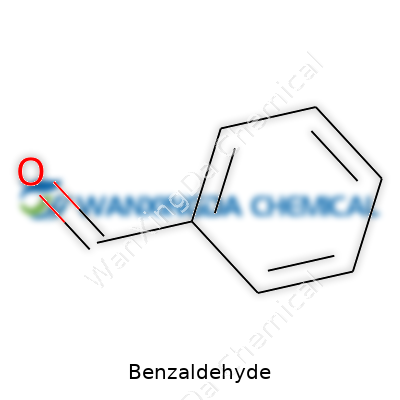
On paper, benzaldehyde lines up with a compact chemical formula, C7H6O. In practice, its reactivity makes it both useful and tricky. Unlike stable hydrocarbons, this compound wants to transform, teaming up with amines, acids, and bases. Measuring for purity means checking for traces of benzoic acid, which creeps in as benzaldehyde ages. Regulations in most lab environments ask for clear labeling, mindful storage away from oxidants, and quick handling after opening. Its relatively low flash point means one careless spill near open flames invites trouble, so most chemists keep it under wraps.
From Almonds to Acids: How Benzaldehyde Is Made
The old-fashioned way relied on crushing bitter almonds to coax out the compound, a process neither quick nor efficient. With advancing industrial chemistry, the process switched gears. Today, oxidizing toluene under strict conditions forms benzaldehyde cascading through stainless steel reactors, far from the almond groves of earlier centuries. Another route tackles benzal chloride, hydrolyzing it under steady pressure to finally release that almond-scented liquid. Like many industrial chemicals, making benzaldehyde now demands careful balancing of yields, costs, worker safety, and environmental impact—nothing like the slow, fragrant extraction from handfuls of kernels. Each method leaves a signature on the final product, influencing both trace impurity profiles and the by-products requiring disposal or further refinement.
Chemistry at Work: Reactions and Tweaks
Benzaldehyde’s versatility draws researchers—it rarely stays unchanged for long. Subjected to mild oxidation, it shifts to benzoic acid, itself a valuable preservative. Add a base and it forms benzoin through a reaction that generations of organic chemists drilled into memory. Small tweaks turn benzaldehyde into a gateway for dyes, perfumes, or pharmaceuticals. Condensation reactions link it with other aldehydes and ketones, crafting larger molecular frameworks with applications across industries from polymers to disinfectants. For those tossing ideas around in research and development labs, benzaldehyde is both a familiar old friend and an open invitation to new chemistry.
What People Call Benzaldehyde: Names and Synonyms
Academic papers call it benzaldehyde. Popular texts sometimes refer to it simply as “oil of bitter almonds.” Other names surface in industry, like benzenecarbaldehyde or benzoic aldehyde. Scan older literature and you might catch “artificial almond oil” thrown in, a name reflecting its flavoring use. No matter the name, the telltale almond scent leaves little room for confusion, but labeling requirements aim for the clear IUPAC name—to keep shipments and safety data in order.
Keeping It Safe: Handling Benchmarks and Standards
Working with benzaldehyde requires respect for its health risks. The sharp, sweet odor signals more than just flavor; it also warns about toxicity at higher doses. Spills demand immediate cleanup, not just for the strong scent but for the irritation it brings to skin and respiratory passages. Most countries include it on hazardous material lists, setting workplace limits on airborne concentrations. Storage depends on opaque, tightly sealed containers, often tucked into cool, dry corners of storerooms. Safety standards urge use of gloves, safety glasses, and chemical fume hoods to keep accidents rare. Continuous monitoring and training stay at the center of responsible handling, especially as product orders and tonnage continue rising.
Benzaldehyde in the Real World: Where It Shows Up
Ask anyone about their encounter with benzaldehyde and you’ll likely hear about food or fragrance before chemistry. The almond note finds its way into baked goods, soft drinks, and cherry-flavored candies. Flavors and perfumes count on benzaldehyde’s ability to deliver an instant sensory hit. Pharmaceutical companies tap into its structure to build medicines, either as an intermediate step or as a functional building block for more complex therapies. Agriculture puts it to work against pests; certain disinfectants and dyes trace their color back to modified benzaldehyde molecules. Even some laboratory syntheses use it as both a starting material and a milestone along the synthetic journey.
Following the Research Trail: Current Studies and Insights
Research into benzaldehyde keeps moving, exploring safer methods of production, greener oxidation processes, and improved detection of trace impurities. Advances in analytical chemistry allow finer distinction between authentic benzaldehyde from natural sources and the synthetic version—an issue for both regulators and high-end food manufacturers. Scientists study the molecule’s reactivity hoping to sidestep unwanted side products, drive higher efficiency, and limit environmental impact. In pharmaceuticals, researchers look at derivatives to fight infections or build new types of chemical scaffolds. Each lab notebook brings up both new possibilities and stricter demands for responsible use.
Testing for Harm: What We Know About Toxicity
Benzaldehyde rarely slips into tables of deadly chemicals, but toxicity studies send consistent warnings about exposure. Ingesting small amounts, as happens in flavored foods, passed regulatory muster under current safety limits. Higher concentrations—especially in vapor form—can irritate eyes, skin, and airways, and at severe doses, cause systemic effects in organs. Long-term workplace exposure prompts regular health monitoring. The body breaks down benzaldehyde fairly quickly, but repeated exposure brings cumulative effects that safety audits try to minimize. Toxicologists continue focusing on at-risk populations, including those with genetic factors limiting detoxification. For all its sweetness, this molecule reminds users that pleasant smells sometimes carry less pleasant risks.
Where Benzaldehyde Might Go Next
Future prospects center on balancing industrial demand and environmental care. Researchers hunt for catalytic systems that make benzaldehyde cleaner, with fewer by-products and less waste. Genetic engineering of microbes or plants could lead to new ways of producing it without relying on petrochemicals or harsh conditions. Regulatory trends seem poised to tighten controls, especially as demand across flavors, pharmaceuticals, and materials keeps climbing. Some labs look at benzaldehyde as a stepping stone, modifying its structure to build new drugs, advanced polymers, and even energy-storage materials. Interest in sustainability will likely push benzaldehyde producers and users to map their supply chains more closely and cut down on emissions. Each advance or change brings challenges of its own—proof that even the most familiar chemicals never stand still.
Everyday Encounters with Benzaldehyde
Open a bottle of almond extract or get a whiff of maraschino cherries, and there's a good chance you’re smelling benzaldehyde. Most people probably don't realize the same sharp, sweet aroma shows up in their favorite flavors, fragrances, and even in some daily chemicals. Benzaldehyde, though simple in structure, wears many hats.
Flavor and Fragrance: Not Just a Pretty Scent
I first noticed the punchy scent of benzaldehyde while baking with almond extract, without giving much thought to the science behind it. Later in a chemistry class, we learned that this single molecule is responsible for that signature nutty scent. Food manufacturers lean on benzaldehyde to intensify almond flavor, especially in products like pastries, candies, and frostings. In the world of perfumes and soaps, it’s a favorite for giving floral blends a sweet, lingering top note.
Benzaldehyde isn’t just for fun and games, either. It plays a part in masking off-notes in otherwise bland supplements or protein shakes. Chemists figured out long ago that adding a dash of this compound helps create a more palatable experience without the sugar.
Pharmaceuticals: A Creative Building Block
Dig deeper and find benzaldehyde woven into the fabric of pharmaceutical chemistry. It serves as a basic building block when constructing more complex molecules. Respiratory drugs sometimes lean on compounds derived from benzaldehyde. For folks with certain chronic coughs, medications using these derivatives can offer relief. Sedative drugs also rely on benzaldehyde-based reactions, showing just how versatile a small aromatic aldehyde can be.
This isn’t just chemistry for the sake of chemistry. Quality controls around pharmaceutical-grade benzaldehyde make sure purity levels stay high. Regulatory agencies keep a close eye, since safe medicine depends on it.
The Chemical Industry’s Quiet Workhorse
Factories don’t put “benzaldehyde inside” labels on plastics or dyes, but it’s there all the same. Benzaldehyde gets used to prepare other chemicals, including cyanide compounds, acrylic resins, and dyes that color fabrics and materials. This backbone role supports the broader chemicals industry, where consistency and reactivity matter more than name recognition.
There’s a practical edge to all this. While most folks never see a barrel of benzaldehyde, many rely on the plastics, colors, and additives it helps create. Take a look around any household or lab shelf; the odds are good something there traces back to benzaldehyde.
Facing the Safety Moment
Using benzaldehyde isn’t risk free. If misused, it can irritate skin, eyes, or lungs. Mistakes during production or transport have led to environmental spills in some countries, drawing attention from regulators and safety advocates. Workers in factories must follow strict handling rules. Responsible companies install detection systems and keep emergency plans up to date. Long-term, the industry searches for greener synthesis methods and safer alternatives, pushing toward lower emissions and smaller footprints.
Looking Ahead with Science and Practical Use
Despite its humble start as the compound behind almond aroma, benzaldehyde pulled off quite a balancing act. Food flavorists appreciate its reliability. Chemists build on its backbone. Communities expect manufacturers to keep safety and environmental health front and center. The story of benzaldehyde reminds me that even a simple scent can have a complex role in modern living—and that science, regulation, and industry work best when they face practical realities head on.
Not Just a Cherry Scent
Benzaldehyde fills the air with the smell of almond extract or maraschino cherries. Many might have mixed a drop into their high school chemistry experiment or seen it listed as an ingredient in food flavorings and fragrances. It sounds harmless, almost friendly. That’s where people make mistakes.
The Real Chemical Behind the Aroma
The reality is, benzaldehyde isn’t just a bottle of sweet aroma. It has risks that people gloss over until something goes wrong. In my early days as a lab assistant, I watched somebody spill some on their arm, thinking it posed little threat. Within minutes, their skin turned red, starting to itch and burn. That lesson stuck with me.
Benzaldehyde can irritate both skin and eyes. Its vapor, if inhaled, will make your throat scratchy and might cause headaches or dizziness. The U.S. Environmental Protection Agency and the National Institute for Occupational Safety and Health both point to potential health risks, especially as exposure levels increase. Though not as dangerous as some other chemicals, chronic exposure becomes a problem.
Not All Use is Equal
People work with benzaldehyde everywhere from flavor labs and perfumeries to cleaning product factories. In small doses, with plenty of ventilation and the right gloves, most people can manage risk. Trouble starts when these safety basics get ignored.
Safety data isn’t just legal fine print. It matters most when someone decides to skip gloves, or pours benzaldehyde near an open flame. The liquid may catch fire more easily than water boils. Even students sometimes treat lab procedures loosely, forgetting that vigilance doesn’t just apply to caustic acids or strong solvents.
More Than Personal Health
Regulatory agencies regulate benzaldehyde because its chemical cousins show up in illicit substance production. That adds a layer of scrutiny and puts an obligation on everyone handling it to keep records tight and storage secure. But health should always be the main concern on the job.
Trying to save money by cutting corners never pays off in labs or manufacturing plants. One incident of poor handling can lead to visits from regulators, fines, or even lawsuits. That’s aside from harming the people directly exposed—colleagues, delivery drivers, or even neighbors if there’s a spill.
Better Habits, Better Outcomes
A few key steps can make benzaldehyde use much safer. Keeping it locked away when not in use cuts down the risk of off-hours accidents or theft. Always using gloves and goggles seems basic, but sometimes people slack off on routine days. Clean spills immediately, and make sure ventilation is running before opening any container.
Training helps. Regular reminders get everyone on the same page about procedures, exposure limits, and what to do in case of accidental contact. Sharing real stories—like the one I witnessed—makes the rules personal instead of abstract.
Trust Knowledge, Not Luck
Everyday chemicals come with hidden dangers. Benzaldehyde makes a strong case for keeping respect and caution front and center. People think, “I’ve never had a problem before.” That mindset changes fast with just one close call. Respect the risks, use common sense, and you’ll keep that cherry-almond scent where it belongs—safely inside the bottle.
Chemical Details That Matter
Benzaldehyde stands out for anyone who's spent real time in a chemistry lab. You run across this compound at a point when the smells of organic chemistry become burned into your memory. Its chemical formula—C7H6O—reflects a structure that's both simple and memorable. That simplicity leads to surprising flexibility in applications. Its molecular weight sits at 106.12 g/mol, giving chemists a reliable figure for calculations. These details aren’t just figures for a quiz. A clear grasp of them actually makes experiment planning easier, especially for those who want repeatable results.
Why Formula and Weight Aren't Just Numbers
It’s easy to gloss over chemical formulas and weights, chalking them up as details for academics. My experience says otherwise. Working in the field, you learn that errors in these numbers can blow up a scale-up experiment. Accuracy isn’t just about passing a test—it saves time and, frankly, keeps people safe. The right molecular weight lets teams measure out reagents for reactions that use benzaldehyde, from making perfumes to pharmaceuticals. This number becomes essential for molar conversions and understanding reaction yields. Even outside the lab, people should care because downstream products can show up in daily life.
Applications and Impact
Benzaldehyde shows up where few expect it. Open a bottle of almond extract and the faint smell connects straight to this very molecule. Its aroma gets used for flavoring and in scented products. In industrial contexts, benzaldehyde acts as a building block, transforming through reactions like the Cannizzaro or Perkin into products such as mandelic acid or cinnamic acid. These end up in pharmaceuticals, plastics, and dyes that most people use without ever reading a chemical label. Its relatively simple structure bridges the natural world—since it occurs in almonds, cherries, and cinnamon oil—and the synthetic. This overlap between nature and the lab has made benzaldehyde approachable for chemists of any skill level.
Real Problems and Responsible Handling
Digging into benzaldehyde isn’t just about chemical trivia. Its formula and weight form the backbone for safe handling. My own work in the lab brought that lesson home: mislabeling, or mixing it up with lookalikes, can lead to dangerous mistakes. Handling precautions and regulatory rules keep tighter control over its use, especially because it can get turned into more hazardous substances. People working with it trust reliable data on formula and molecular weight, since even small measurement errors ripple through a production run. In teaching situations, emphasizing these details trains better scientists who respect the risk and handle chemicals the right way.
Training the Next Generation and Finding Balance
Accurate information empowers both professionals and students to make smarter, safer choices. Chemistry textbooks and reputable lab manuals present these facts with the hope that the next generation memorizes more than just the numbers. By connecting those numbers to daily safety, to the products in kitchen cabinets, or to environmental impact, we make chemistry more approachable. From almond flavoring to industrial process, benzaldehyde’s presence pivots on simple, well-understood numbers. That makes clear data about its chemical formula and molecular weight an ongoing necessity in any lab, classroom, or production floor.
Thinking Through Storage Choices
Benzaldehyde’s almond-like aroma stands out, but don’t let the pleasant scent fool you: this compound belongs in the “handle with respect” category. I remember my introduction to benzaldehyde in a college lab. One moment, I admired its almost bitter-sweet smell; seconds later, I discovered how quickly its vapor stings the nose and the eyes. That sharp lesson made an impression—storage isn’t just about tidiness, it’s about health and peace of mind.
Why Ventilation and Temperature Control Matter
Leaving a bottle of benzaldehyde on a warm, sunny windowsill brings trouble—vapors escape easier in warmth, and those vapors can irritate your throat and make your head swim. In real-world lab settings, locked, ventilated cabinets away from direct sunlight always win. Not every workplace has high-end chemical storage rooms, but sticking to a cool, shaded environment tackles most risks. Constant temperature reduces the chance of unpredictable fumes and accidental exposure.
Containers: Tight Seals, Zero Tolerance for Leaks
Once, a coworker left a benzaldehyde bottle half-open after a rushed experiment. The room carried that telltale odor for days. It got me thinking: cleanup isn’t about correcting mistakes, it’s about avoiding them in the first place. Glass bottles with Teflon-lined caps work best. Metal containers break down. Plastic bottles sometimes react and add impurities. No one wants mystery byproducts when safety is on the line. If a cap gets sticky or loose, replace it right away. Damaged packaging means unpredictable exposure and possible contamination.
Fire Risks and Neighbors
Despite what TV makes us think, most labs aren’t full of explosions, but storing benzaldehyde close to oxidizers or open flames courts disaster. Benzaldehyde catches fire more easily than water boils; one forgotten spark near an open sample can do permanent damage. I’ve seen too many stories—both in news and among fellow researchers—about labs evacuated or ruined because someone shrugged off fire safety. The solution looks simple: keep benzaldehyde in its own zone, far from anything flammable or reactive. No cutting corners here.
Labeling: For You and the Folks After You
Permanent, clear labeling saves headaches down the road. Imagine the next shift stepping in and finding an unmarked bottle. Confusion follows, and the risk of misuse rises. I always write down the date received, chemical name, and concentration. These details matter more than any digital inventory, especially during a crisis.
Handling Spills and Planning for Accidents
No one plans to tip over a bottle, but accidents happen. Having spill kits ready and knowing escape routes makes a real difference. Too many times, people ignore drills thinking “it won’t happen to me.” But a swift response stops problems from growing. Absorbent pads and proper disposal bins keep cleanup efficient, and, just as important, protect air quality for everyone in the building.
Taking Personal Responsibility
Experience teaches that taking shortcuts with benzaldehyde isn’t worth the risk. Safety goes beyond regulations—it’s about respect for your own health and everyone around you. Making smart storage choices, setting a good example, and calling out sloppy practices do more than keep inspectors happy. They keep life and work running smoothly.
Spotting the Hidden Hazards
Benzaldehyde might ring a bell for folks who’ve grown up catching the smell of artificial almond in pastries or cherry soda. It slips into perfumes, foods, cleaning agents, and even industrial processes. Many people cross paths with this chemical without a second thought, but that doesn’t mean it’s risk-free.
The Risks in the Air and at Work
Breathing in benzaldehyde can irritate the eyes, nose, and throat within minutes. If exposure ramps up—like in poorly ventilated manufacturing plants or flavoring factories—workers face heavier risks, including headache, nausea, and trouble breathing. Studies collected by public health agencies point to repeated or high-level exposure causing lung irritation. Chronic exposure isn’t well studied, but the red flag from shorter-term contact feels significant.
Folks who work around solvents, plastics, and cleaning products often underestimate the health risks lurking in trusted ingredients. The Centers for Disease Control and Prevention warns that inhaling large amounts in a short time can damage the respiratory tract. Most kitchens and homes won’t get there, but warehouse workers, cleaning crews, and even those handling flavoring extracts do well to learn the symptoms and act early.
Benzaldehyde on the Skin
Skin contact often flies under the radar. For some people, a quick splash causes redness or an itchy rash. Extended contact—think factory assembly lines or repeated spills—brings up the odds of dermatitis. Dermatologists point out that allergic reactions to benzaldehyde aren’t mainstream, but that won’t matter to anyone unlucky enough to catch a burning rash. Personal protective equipment like gloves makes a world of difference for those who handle large quantities.
What Science Says about Toxicity
Unlike some notorious chemicals, benzaldehyde doesn’t linger in body fat or bones. Once absorbed, the liver breaks it down, usually without drama at small doses. The American Conference of Governmental Industrial Hygienists pegs its workplace exposure limits relatively high compared to more sinister chemicals, yet caution stays high for good reason.
Research hasn’t turned up rock-solid links to long-term cancer risk from benzaldehyde itself. Still, the jury stays out since the science just isn’t settled. One thing stands clear—combining benzaldehyde with other chemicals, like those in poorly ventilated workspaces or cleaning supplies, can kick up the potential for harm.
Paving a Safer Path Forward
Safer workspaces start with knowledge and clear rules. Companies that use benzaldehyde need open conversations about its hazards—from safety training to robust fume hoods and ventilation. Regular air monitoring gives early warning when levels climb too high. For anyone handling concentrated forms, proper gloves and splash protection help prevent skin problems.
Home cooks and hobbyists may not need industrial-strength protection, but common sense goes a long way. Good ventilation, safe storage, and prompt cleanup of spills keep everyday risks in check. Health authorities recommend keeping products with benzaldehyde away from children’s reach, and using only food-safe grades in recipes.
Why Awareness Matters
People rely on clear, trustworthy information about the risks in their daily routines. Benzaldehyde rarely makes headlines, yet research, personal stories, and public health data show that what’s out of sight shouldn’t be out of mind. Staying informed helps protect workers, families, and communities long before small risks become serious problems.