Benzyl Benzoate: A Story of Chemistry, Purpose, and Progress
Historical Development
Benzyl benzoate doesn’t jump into mind during most conversations about chemical breakthroughs, but its story shows how small molecules have shaped everything from medicine cabinets to perfume aisles. It popped up in the late 19th century as chemists chased new ways to fight parasites and boost fragrances. Early on, folks realized benzyl benzoate offered both a way to fight off itch-causing mites and to deliver a sweet, comforting scent. Industrial production followed quickly once people recognized there was more to this clear liquid than met the eye. Longevity in use says plenty—older remedies don’t always stick around unless there’s real value. In my memory, every pharmacy’s shelf once carried ointments and liniments marked with that distinct smell, echoing decades of small daily victories against common nuisances.
Product Overview
Most people bump into benzyl benzoate without knowing it. The names listed on the sides of lice treatments or the ingredient packs for perfume blends rarely attract much attention. In medical contexts, this molecule tackles scabies and lice, while the cosmetics world leans on its ability to carry fragrances and help lotions glide onto skin. It’s not a one-trick pony: textile and plastics industries also rely on its solvent abilities, giving benzyl benzoate a seat at many industrial tables. During my own time studying organic synthesis, its versatility stood out, both as a functional raw material and as a teaching tool for reaction mechanisms and physical property demonstrations.
Physical & Chemical Properties
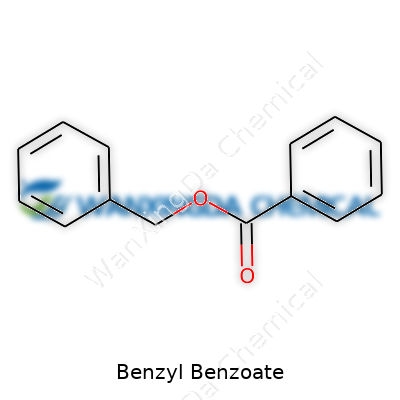
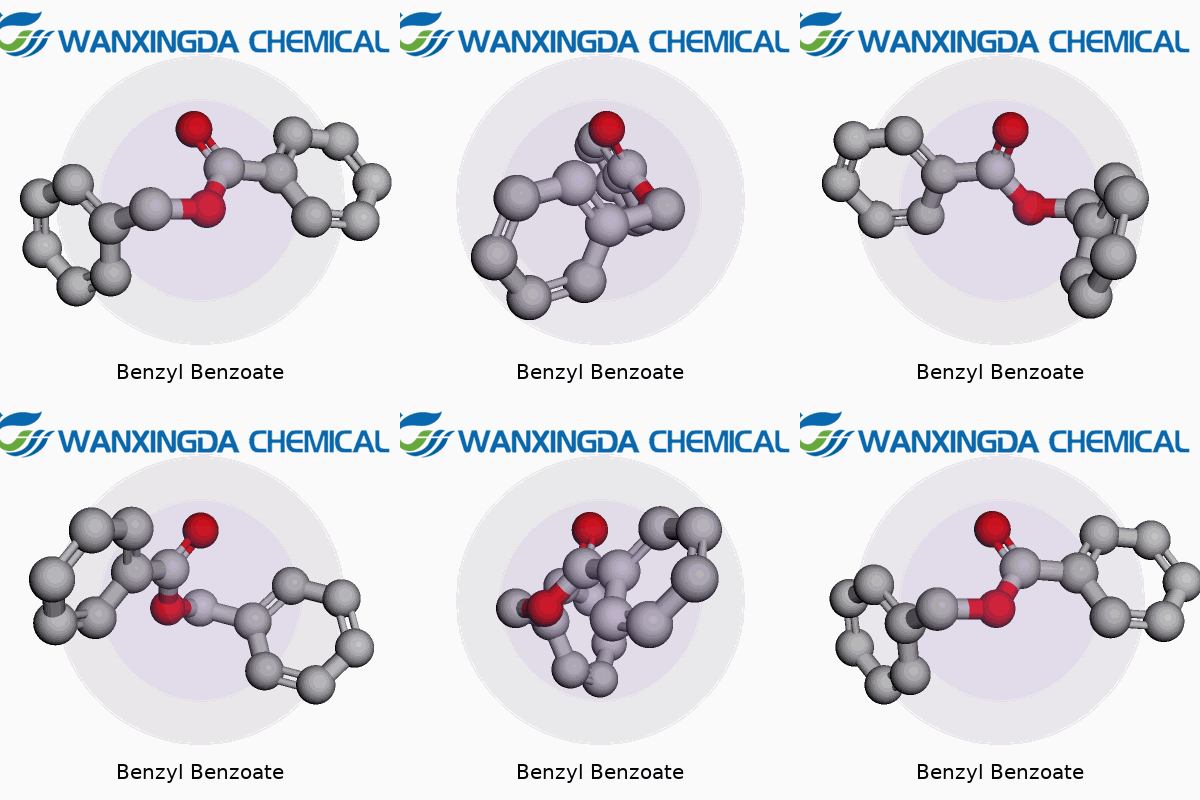
Clear, oily, and colorless, benzyl benzoate passes the first tests for purity with ease, providing reliable results in batches both small and large. At room temperature, it looks unremarkable—transparent, with a barely-there aroma that hints at its benzoic roots. Its molecular formula, C14H12O2, gives it a consistent baseline, and a boiling point well above average room temperature means it sticks around instead of vanishing into thin air. It dissolves easily in alcohols, oils, and organic solvents, refusing to buddy up with water. These properties explain why it shows up in both topical treatments and scent-heavy lotions; it’s eager to mix, hold, and deliver active molecules where they count.
Technical Specifications & Labeling
Regulators push for clear, honest labeling, and benzyl benzoate doesn’t escape this spotlight. Food and Drug Administration and European Chemicals Agency guidelines include purity thresholds, percentage caps, and handling advice. I remember scouring ingredient lists on prescription creams, seeking any sign of contamination, and learning firsthand how critical labeling becomes for allergy sufferers and sensitive users. Clear technical standards force manufacturers to keep quality high, which protects end users from unexpected side effects or unwanted residues. Those technical details—purity, concentration, and safe storage instructions—shape how it gets shipped, stored, and ultimately handled in my day-to-day work.
Preparation Method
Production hinges on the chemical reaction between benzyl alcohol and benzoic acid, often catalyzed by acidic conditions or dehydrating agents. The result: a classic esterification, which always fascinated me in lab courses. The byproduct, water, gets pulled off to push the reaction forward, and the distillation step purifies benzyl benzoate so it shines for its many uses. Large-scale facilities have fine-tuned this method, squeezing maximum yield and purity from each run. Every time I handled small-scale synthesis, the distinctive sweet odor and slick texture reminded me of its industrial counterparts pouring hundreds of kilograms for global customers.
Chemical Reactions & Modifications
Anyone with a background in organic chemistry quickly sees opportunities to tweak or break apart benzyl benzoate in the lab. Hydrolysis splits it back into benzyl alcohol and benzoic acid, which often kicks off deeper explorations into reaction conditions and catalytic strategies. Hydrogenation or other substitutions can change its character, creating related esters or more exotic derivatives for fragrance houses or pharmaceutical R&D. The drive to tweak and explore remains, since each new blend or analog could offer either better safety, improved performance, or both. It demonstrates how foundational molecules serve as stepping stones for the broader chemical industry’s creativity.
Synonyms & Product Names
Chemical catalogues list benzyl benzoate under names like Phenylmethyl benzoate, Benzoic acid benzyl ester, and E 1518. Cosmetic packaging, medical packaging, and industrial supplies rarely agree on what to call it, yet behind each name sits the same familiar compound. This patchwork of alternate names sometimes confuses the uninitiated, underlining the importance of harmonized labeling for consumer health and safety. If you’ve ever hunted for a specific solvent or active ingredient in global catalogs, you’ve likely run into the same problem—different names, same molecule, same potential surprises for unsuspecting buyers.
Safety & Operational Standards
Benzyl benzoate demands respect through gloves and careful handling. Some people experience skin irritation or allergic reactions. International regulatory bodies classify it with safety margins that make sense for real-world use but should never turn into an excuse for careless handling. In my own work, training sessions hammered home the best ways to move, mix, and measure it—spills, skin contact, or haphazard storage simply invite trouble. Industry uses strict protocols: ventilation, proper labeling, emergency washing stations. This keeps minor incidents from turning into workplace injuries or environmental headaches. Knowledge beats complacency every time.
Application Area
Hospitals, clinics, and even school nurses’ offices reach for benzyl benzoate to fight mites and lice, taking advantage of its proven performance. Textile manufacturers dissolve dyes and softeners using its strong solvent powers. Perfumers stretch its role further, using it as a fixative and carrier for subtle aromatic notes that need to linger. Paint, plastics, and rubber benefit from its compatibility, lending smoothness, flexibility, or lasting fragrance where needed. These widespread applications highlight why every chemistry student should spend time learning about it—not just in lab theory, but through hands-on practice and real-world observation.
Research & Development
University research centers and pharmaceutical companies watch for new ways to capitalize on benzyl benzoate’s properties. Formulation scientists chase improved stability and reduced irritancy in topical products; analytical chemists develop new quality control techniques based on its distinct chemical signature. I’ve seen research focus shift to derivatives that modify its skin absorption, or to blends marrying benzyl benzoate with essential oils for added effect. The pursuit of safer, more effective treatments for parasitic infections continues, and benzyl benzoate often forms the backbone of those experiments.
Toxicity Research
Toxicologists mapped out most of benzyl benzoate’s safety profile decades ago, but the work never really stops. Animal studies and sensitive skin panels kept confirming it as generally safe at appropriate concentrations, but higher doses or improper use reveal side effects—irritation, sensitization, or mild neurotoxic effects. Regulators and manufacturers constantly weigh risks and benefits, pushing for clear usage guidelines and strict purity limits. Every year, studies revisit its safety for new user groups: infants, pregnant women, people with eczema or allergies. As with many older chemicals, vigilance keeps past experiences from turning into future regrets.
Future Prospects
What lies ahead for benzyl benzoate will depend on regulatory trends, new evidence about risks, and changing market demands. Emerging research into green synthesis methods could shrink the environmental footprint, swapping harsh reagents for more sustainable catalysts. Advances in allergen detection might drive even stricter purity requirements, especially in personal care products. Pharmaceutical innovation could find new uses, especially as parasites continue adapting to standard treatments. If history is any guide, this humble molecule will roll with the changes, shifting roles or evolving formulations to stay relevant. In every chemistry curriculum and every industry using its versatility, benzyl benzoate stands as a reminder that even seemingly simple molecules carry surprising depth and significance.
Understanding Benzyl Benzoate Beyond the Label
Benzyl benzoate has a name that might sound like it belongs in a chemistry lab, but it actually fills a number of roles in homes, clinics, and even cosmetic pouches. In the real world, I’ve seen benzyl benzoate most often as a tool in the fight against scabies. Doctors prescribe creams or lotions containing this compound when families face outbreaks. Scabies isn’t glamorous to talk about, but if you know someone who’s dealt with the relentless itch, you’ll appreciate why benzyl benzoate matters. Though not as famous as antibiotics like penicillin, it brings much-needed relief to people who often have few other options, especially in crowded or underserved settings.
Medical use forms a big part of the story, but the reach of benzyl benzoate goes further. Anyone who has read the label on a bottle of insect repellent or old-school lice treatments might spot the compound, tucked between other chemical names. Benzyl benzoate targets the nervous system of mites and lice, disrupting the chain of survival and helping families and public health workers break cycles of infestation. This isn’t just about scratching less—untreated infestations can lead to infections and missed school or work, putting pressure on already-strained households.
From Scabies Treatment to the Bottles on Store Shelves
Many people cross paths with benzyl benzoate without ever hearing the name, especially in the world of fragrances. Its slightly sweet scent and ability to dissolve other compounds mean that perfume makers rely on it—a trick I learned from an older family member who worked in a small perfume shop. Manufacturers use it as a fixative, which helps the fragrances linger on skin or clothing. In this way, benzyl benzoate isn’t just a behind-the-scenes player in medicine cabinets; it keeps perfumes from fading right after you spritz them.
Personal care extends this compound’s reach further. Shampoos, lotions, and even some sunscreen formulations turn to benzyl benzoate. Its qualities as a solvent make it a versatile ingredient for mixing, smoothing, and stabilizing all sorts of cosmetic creations. I’ve sometimes wondered how a lotion manages to stay creamy and pleasant after sitting on a shelf for months; benzyl benzoate often plays a part.
Looking at Risks and the Need for Careful Use
No chemical is risk-free. Benzyl benzoate can irritate the skin and eyes if used in too high a concentration, and some people have allergic responses. Doctors know to adjust doses or switch medications in children or those with sensitive skin. I’ve seen parents struggle with this, worrying about side effects while desperate for something to ease their child’s discomfort. This points to a bigger issue: access to solid information and trustworthy products. Counterfeit and poorly labeled medicines often show up in low-income communities, raising serious safety questions.
Steps Toward Safer, Smarter Use
A solution I see is straightforward. Education goes a long way. When pharmacies give out clear instructions, people use benzyl benzoate more safely. Regulatory bodies can also step in by ensuring tighter controls and clear labeling, especially in markets where fake drugs are a threat. Companies in the beauty and fragrance industries should be upfront about ingredients, allowing consumers with sensitivities to avoid nasty surprises.
Benzyl benzoate may not grab headlines, but it quietly improves everyday life. Its story shows the value of keeping one foot in science and the other in practical experience—a balance that serves everyone, from families coping with scabies to anyone who enjoys a favorite scent lingering a bit longer.
A Real Talk About Skin, Parasites, and Practical Treatment
Dealing with scabies or lice isn’t a conversation anyone enjoys, but most of us cross paths with these unwelcome guests at some point. In clinics and homes around the world, people turn to benzyl benzoate as one of the tools in the fight. Before even thinking about application, it’s important to understand the power and risks bottled in that clear solution.
Benzyl benzoate acts as a nerve poison for mites and lice. Medical professionals reach for it because it works fast. That doesn’t mean it’s without drawbacks. I remember seeing people rush these treatments, eager to end the itch, only to find themselves dealing with chemical burns or worse. When skin is already irritated, pouring on a strong chemical can turn a simple problem into a painful one.
How Real-Life Application Shapes Outcomes
I’ve noticed people want fast relief, so they use too much or scrub it in with heavy hands. Experts emphasize gentle massaging—not only to avoid damaging skin but to make sure the lotion covers every spot. Skipping spots gives the parasite room to stick around. The instructions usually call for application from neck downwards, with special attention to folds in the skin. On kids or elderly skin, extra caution matters since these groups have thinner skin and can absorb more, raising the risk of toxic effects.
After application, it’s best to leave the lotion on for the recommended period before washing off, usually eight to twenty-four hours, depending on advice. Missing this step leaves residue that might just cause rash or stinging. That fresh, tingling “clean” feeling is often just a warning sign—it’s easy to overdo it. I’ve seen advice swing from single treatments to repeating the process a week later if itching continues, because the itch doesn’t always mean the bugs survived. The immune system can keep flaring even after successful extermination.
Risks, Mistakes, and What Actually Helps
Not every scabies or lice case can be handled at home. Broken skin, deep infection, or allergic reactions need real medical expertise. Some folks, looking for savings, use benzyl benzoate made for industrial use instead of the pharmaceutical kind, risking potent concentrations far too high for skin. Fakes also circulate online—if the label doesn’t match trustworthy sources or the liquid smells odd, don’t put it near your skin.
Educating people means fewer accidents and better results. People benefit when they know what to expect: possible burning for the first few minutes, dryness in the following days, and a need to wash bedding and clothing to prevent reinfestation. Leaving family and pets untreated can undo all the hard work. Even with tight budgets, following known medical guidance saves money and pain.
Better Answers Start With Better Information
Doctors and pharmacists carry the latest guidance on what works best and how to avoid common mistakes. Key health organizations started recommending alternatives where resistance builds up or when softer skin calls for gentler medicine. But the old saying about prevention wins here too—basic hygiene, avoidance of skin contact with affected people, and quick action at the first sign remain the strongest shield.
At the end of the day, benzyl benzoate sits on bathroom shelves across the world as a trusted cure, but only when respect for its strength matches the need for relief. Real results grow from a mix of good instructions, community knowledge, and steady hands.
A Common Solution That Can Still Raise Eyebrows
Benzyl benzoate often shows up in the list of treatments for scabies and lice, used on prescription or sometimes over the counter. Doctors know it well. Folks dealing with itchy rashes tend to trust it to clear up their skin. Seeing bottles line pharmacy shelves, it almost feels as familiar as calamine lotion or hydrocortisone. For many, it’s a staple in their medicine cabinets, especially in countries where scabies outbreaks remain common. Yet questions pop up about what happens after slathering on this liquid remedy. Like, does it just fix the itch, or are there trade-offs hiding behind the promise of relief?
Stinging, Burning, and Irritation
The directions recommend diluting or applying sparingly, and for good reason. Most reactions start right after putting it on. People talk about stinging or burning, sometimes so sharp that continuing treatment feels brutal. One study looking at children found that nearly half experienced local skin irritation—inflammation, redness, and a mean, relentless itch. That’s a sizable chunk. In places where people already have open sores from scratching, this burning can get more intense than what the doctors warn about in pamphlets. Skin doesn’t heal as quickly and new patches can break open under the chemical stress.
Allergic Reactions Get Less Attention
Some users bump into benzyl benzoate and develop more than irritation: allergic contact dermatitis. Rash, swelling, even blisters can show up, and not just on broken skin. Medical journals have reported both rare and recurring cases, with symptoms sometimes mimicking the very skin disease the treatment targets. My own friend with eczema suffered a major flare-up after just a single application, and the dermatologist quickly called for a different medicine. The cases don’t always appear right away. Delayed reactions give people a false sense of security before skin flares later.
Eyes, Airways, and The Youngest
Mistakes happen. Benzyl benzoate never belongs near the eyes, mucous membranes, or on delicate infants. Inhaling the fumes or getting a little in the eye can deliver a harsh sting or trigger coughing fits. In rare situations, medical literature documents seizures in small children exposed to high concentrations—thankfully, such events tend to be tied to improper use. Yet these cases show up often enough to keep pediatricians cautious. The World Health Organization flags benzyl benzoate as unsuitable for children under two. For frail adults or the elderly, thin skin magnifies burning and dryness.
Better Ways Forward for Skin Health
Relying exclusively on benzyl benzoate stops making sense when safer alternatives exist. Permethrin cream, though sometimes pricier, brings fewer side effects, and ivermectin oral tablets offer a solution where topical remedies don’t stick. Good hygiene, trimmed fingernails, and decontaminating bedding help control reinfection and limit the need for repeated chemical warfare on skin. More training for health workers on dilution, timing, and application protects people, especially younger patients or those with sensitive skin. Reporting unpleasant experiences lets regulators and public health agencies build better safety guidelines.
Using benzyl benzoate wisely means keeping eyes open—not just for quick fixes, but for quality of life after the itch fades.
Getting Real About Scabies and Head Lice in Kids
Parents know the struggle of itchy kids all too well. Scabies and head lice spread fast in schools and at home. The impulse to grab something strong and proven can feel urgent. Benzyl benzoate, an old staple in many parts of the world, often winds up in the conversation, thanks to its reputation for clearing up these stubborn pests. In some countries, you’ll even find doctors prescribing it for children. But the question lingers—just because it’s available, should parents turn to it for their little ones?
Weighing Tradition Versus Safety Concerns
Benzyl benzoate has history on its side. Hospitals and clinics across Africa, Asia, and Latin America have relied on it for decades to treat scabies. In my own childhood, the sharp scent of that white emulsion bottle meant someone at school had brought home a few unwanted guests. Results were often fast. But I also remember red skin, tears after application, and a lot of nervous questions from parents.
In medical literature, this treatment kills mites and lice by essentially suffocating them. It’s cost-effective—often much cheaper than newer medicines like permethrin. For large families or communities with limited resources, that affordability becomes a real factor.
Yet, those stories about burning, stinging, and even blistering aren’t just anecdotes. The World Health Organization and pediatric groups in the US and UK often sound a note of caution. Young children, especially infants, have sensitive skin. Their bodies don’t always handle chemicals the way adults do. Reports link benzyl benzoate in children with skin irritation and, in rare cases, more serious reactions. Australia doesn't recommend it for kids under two. Some European countries warn against it for anyone under six.
Doctors Still Weigh Individual Risks—And Alternatives Matter
Ask any pediatric dermatologist and the advice lands in a gray area. Some places with strong health systems lean toward safer, newer treatments because fewer side effects turn up in trials. Yet in areas where newer drugs aren’t available or expense rules them out, benzyl benzoate stays in regular use, with lower concentrations and careful supervision. It comes down to whether the benefits outweigh the risks for a particular child and family.
Research suggests 5% to 10% strengths do a better job causing fewer problems than the 25% formulas of decades past. Good instruction matters even more—never slathering medicine on broken skin, washing it off after the window of effectiveness, and making sure to keep it out of eyes and mouths.
Practical Steps for Concerned Parents and Caregivers
Fact-checking sources and asking about local guidelines should be the first step before turning to benzyl benzoate. Chatting with a doctor can help break down options. For kids, doctors may prefer permethrin or even oral ivermectin, depending on age and health circumstances. Treating itchy skin without dangerous side effects ranks highest for families and healthcare workers alike.
The takeaway isn’t to demonize benzyl benzoate or romanticize newer treatments. Access, cost, and safety weave into every good medical decision, especially for children. As science moves forward, the best choice remains one shaped by evidence, practical experience, and a little caution where young skin is involved.
Benzyl Benzoate: Simple Name, Big Impact
Benzyl benzoate might sound unfamiliar to most folks unless you’ve camped out in the pharmacy aisle lately. This stuff treats scabies and lice, both of which cause a great deal of real itching and embarrassment. Doctors all over the world reach for it as a frontline treatment, especially for people who can’t tolerate other strong medications.
Getting Benzyl Benzoate Without a Prescription
In countries like the UK and Australia, benzyl benzoate lotion or emulsion waits on pharmacy shelves right beside things like calamine lotion and permethrin. Walk up, chat with the pharmacist, and in minutes you can buy it, no doctor’s note needed. Over-the-counter access means people deal with outbreaks quickly. Think about how scabies spreads: one person in the household catches it, and next, everyone’s scratching. If a bottle sits behind a locked counter or requires a prescription, there’s a risky delay.
It’s a bit different in the United States, where most treatments for lice or scabies stay behind the pharmacy counter or bear a prescription-only label. The FDA places benzyl benzoate in a more controlled space, possibly due to skin irritation concerns and the goal of avoiding misuse. Scabies can mimic other skin conditions—eczema, allergies, various rashes—so doctors may want eyes on the patient before anyone tries a serious topical treatment.
Balancing Access and Safety
Scabies causes plenty of distress, but it won’t disappear just because a pharmacy runs out of the right lotion. Studies published by the World Health Organization and peer-reviewed journals press the point: tackling infestations early keeps cases from spiraling through families, dorms, or care centers. Delays can push up costs for families and the health system. In that light, easier access to benzyl benzoate looks practical.
On the other side, not everyone who finds an over-the-counter product knows how to use it. Some folks slather on far too little, or quit early because they think the itch should vanish overnight. A pharmacist’s advice helps—there’s no question about that. Left on too long or applied to broken skin, benzyl benzoate stings like mad. People with sensitive skin sometimes react badly. Risk of misuse gives regulators something to think about.
Better Education as a Middle Road
If regulators want a middle path, public health programs could fill the knowledge gap. Clear instructions, maybe even pictorial guides for folks with limited English, make a world of difference on store shelves. Campaigns about lice and scabies rarely get attention outside of school newsletters, but these pests show up everywhere, not just crowded housing. If countries make benzyl benzoate available over the counter, health authorities can step up with solid, science-backed information. Social media and clinics do much of this already, keeping misunderstandings to a minimum.
Making benzyl benzoate easier to get doesn’t mean letting safety slide. Countries that balance convenience and guidance offer a better outcome for families struggling with pests that don’t care about boundaries. For many, the relief doesn’t just come from a bottle, but from straight answers and trustworthy advice.