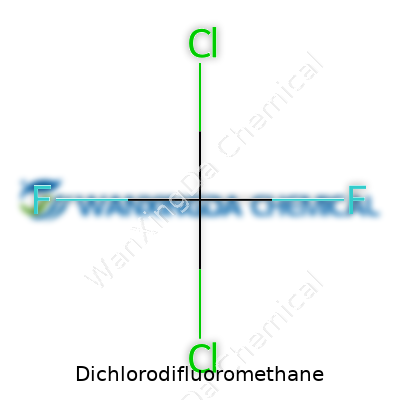
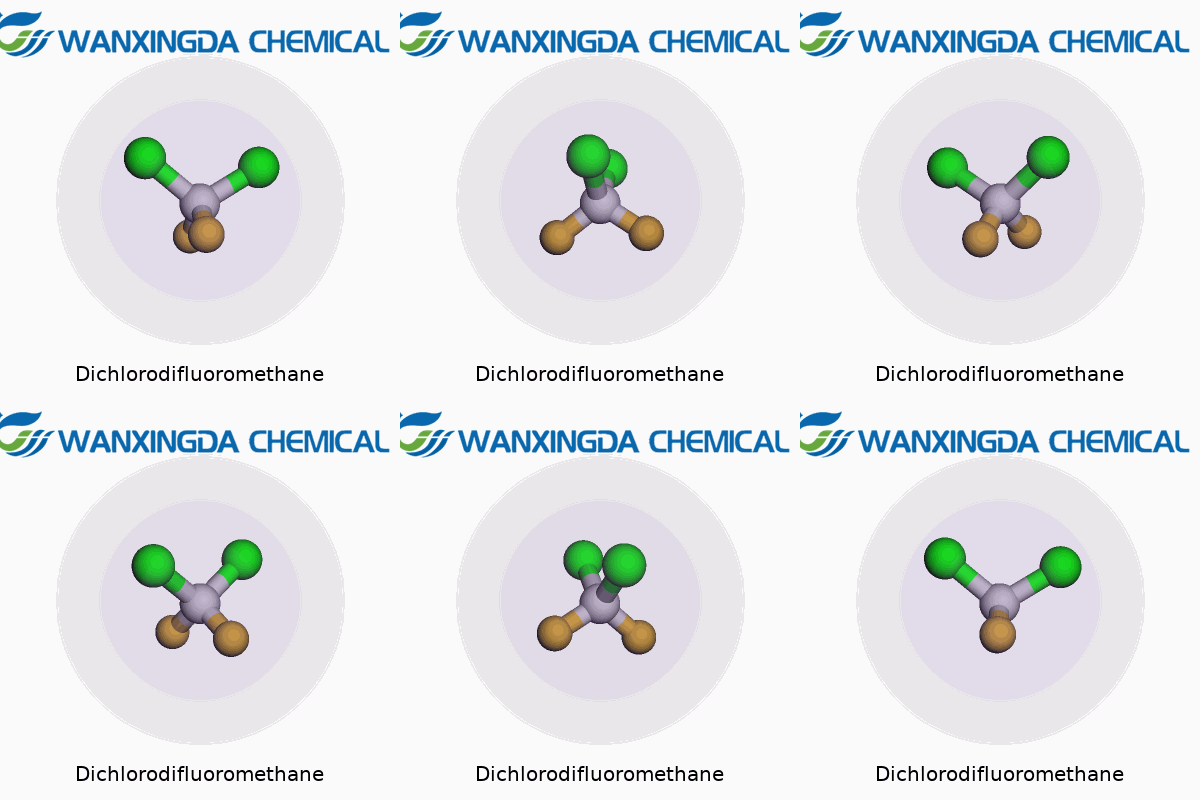
Dichlorodifluoromethane: A Chemical's Past, Present, and Possible Future
Historical Development
Dichlorodifluoromethane, better recognized as CFC-12 or Freon-12, marks a story that goes back to the late 1920s. In the race to find safer alternatives to ammonia and other flammable gases used for refrigeration, Thomas Midgley Jr. and his colleagues at General Motors landed on a family of compounds called chlorofluorocarbons. It felt like a miracle. Suddenly, homes and shops could keep food cool without a risk of explosion or toxic leaks. Air conditioning shifted from luxury to standard, refrigerators found their way into everyday kitchens, and the automobile industry adopted Freon-12 to cool drivers through the sweltering summer. By the 1970s, global production soared above 300,000 tons, cementing the influence of CFC-12 on modern comfort. Yet, this technological leap hid a price nobody thought to ask about until scientists started to notice something happening high above the clouds: the Earth's ozone layer, which shields us from harmful ultraviolet radiation, was thinning. Researchers Rowland and Molina uncovered that CFCs, including dichlorodifluoromethane, did not break down in the lower atmosphere. These molecules drifted up, where sunlight broke them, freeing chlorine atoms that attacked ozone. The Montreal Protocol, crafted in 1987, did what no international agreement had done before—it pulled dangerous substances out of stores, out of plants, and eventually, out of everyday air conditioners and fridges.
Product Overview
Dichlorodifluoromethane belongs to a class of chemicals with a nearly perfect record of stability and ease of handling, a trait that made it a staple in cooling systems. Clear, non-flammable, and non-corrosive, it seemed ideal for systems where reliability and safety matter. Some older cars on the road, and a handful of legacy machines, still contain CFC-12, despite its phase-out in most major markets. In practice, its role has vanished in new manufacture, but its mark on air conditioning, from supermarkets to city buses, remains obvious—replacements must still solve problems CFC-12 handled with ease.
Physical & Chemical Properties
One of the defining features of dichlorodifluoromethane rests in its low boiling point, which hovers around -29.8°C. That means it turns from a liquid to a gas at temperatures too cold for most natural environments. Chemically, it sits almost inert at room temperature. It needs ultraviolet light and high updrafts to finally fall apart, which hints at why CFC-12 stays intact long enough to drift skyward. In liquid form, it doesn’t attack steel, copper, or standard gaskets. Gaseous CFC-12 is white and odorless, leaving little hint behind when it escapes. This stability, impressive at first glance, sits at the root of both its industrial appeal and its environmental legacy.
Technical Specifications & Labeling
Refrigeration engineers once looked for the R-12 label, a short-hand that lives on in repair manuals and old training courses. Older cylinders of CFC-12 have special color codes for safety and maintenance, though global regulations push for their replacement. Specific gravity falls just above that of air, so leaks hang low and can displace oxygen in tight rooms. Because CFC-12 is no longer legally produced for most uses, any labeled product on the market faces strict import and sale controls, and service technicians trained in earlier decades now help manage the responsible recovery and destruction of remaining stocks.
Preparation Method
Factories built dichlorodifluoromethane by reacting chlorinated hydrocarbons like carbon tetrachloride with hydrogen fluoride. This process relied on catalysts, carefully regulated temperatures, and rigorous controls to limit impurities. Output and quality control focused on making a refrigerant pure enough to avoid equipment damage—tiny traces of acids or unreacted raw materials could foul compressors or corrode pipes. While the chemistry looks simple enough in the lab, scaling up to keep millions of tons pure and dry required an industrial footprint spread across continents.
Chemical Reactions & Modifications
CFC-12 stands out for its resistance to everyday chemical reactions. At ambient temperatures, it rarely reacts with acids or bases, and it shrugs off moisture, making storage straightforward. Its few weak points appear at the upper reaches of the atmosphere. Ultraviolet light slices the carbon-chlorine bond, releasing chlorine atoms that attack ozone. Atmospheric chemists have tracked these transformations down to the atomic level, following the path from harmless refrigerant to ozone destroyer.
Synonyms & Product Names
Most industry veterans know dichlorodifluoromethane as Freon-12 or R-12. The term “CFC-12” spread as environmental regulation took hold, highlighting its place among other ozone-damaging CFCs like R-11 and R-114. Trade names became less important after the Montreal Protocol, but the legacy of the Freon label lingers. Walk into an auto shop with an old Model T or a 1970s Cadillac, and “Freon” still means “air conditioning.”
Safety & Operational Standards
Dichlorodifluoromethane rarely triggers fires or corrosion, and its low toxicity made it a go-to in tight, enclosed machinery. Risks do lurk in high concentrations. It displaces breathable air, particularly in poorly ventilated engine rooms or underground spaces. Without oxygen, workers pass out in silence. Some decomposition products—formed during high heat, sparks, or flames—release phosgene gas, a potent toxin used in chemical warfare a century ago. Responsible recovery and disposal demand sealed systems, vapor detectors, and certification under strict environmental and workplace rules. Most countries banned new production and sale, but leftovers in old chillers need careful management, both to protect workers and to stop further damage to the upper atmosphere.
Application Area
CFC-12 held its place in comfort cooling, home refrigeration, supermarket display cases, and car air conditioners for half a century. Scientists also found it useful as a propellant in aerosol sprays and as a blowing agent for foamed insulation—fields where its unique balance of pressure, volatility, and chemical inertia solved thorny design problems. Banned by world agreements, these uses shifted to substitute chemicals, often hydrofluorocarbons or natural refrigerants like propane or carbon dioxide. Each replacement had to juggle energy efficiency, safety, and cost, with no easy one-for-one match.
Research & Development
Research once centered on improving system efficiency and managing oil solubility in refrigeration cycles. After scientists caught on to the ozone threat, labs changed focus to alternatives. Work moved to uncovering low-global-warming, zero-ozone-risk chemicals. Some teams mapped the atmospheric journey of CFC-12, developing detection methods that trace tiny concentrations across entire continents and oceans. Ongoing studies target more efficient ways to destroy old CFC stocks—thermal destruction, plasma arcs, or deep-well injection. The struggle continues to balance performance, climate impact, and health concerns in new refrigerant choices.
Toxicity Research
Through decades of use, exposure studies on dichlorodifluoromethane rarely pointed to acute health risks at low levels. Workers in manufacturing or disposal face greater danger from accidental leaks in confined spaces. Chronic exposure studies yielded mixed outcomes, but animal research supports strict exposure limits. Phosgene, formed through high heat breakdown, draws immediate concern and dictates rigorous emergency procedures in large installations. Longer-term effects on greenhouse warming take priority in today's public health policies, driving international control efforts that value prevention over cleanup.
Future Prospects
One lesson stands plain: even chemicals that seem perfect on paper can ripple out across ecosystems, weather, and global health. Most countries continue to hunt down stray cylinders and banked reserves, chopping away at old stocks with regulation and technology. Replacements still need improvement—not just in reducing ozone and climate impact, but in tackling energy efficiency and affordability for people living on all sides of the economic spectrum. The path forward demands openness to new chemistry, brave regulation, and stubborn attention to lessons learned from Freon-12’s rise and fall. In working through the story of dichlorodifluoromethane, what matters most is remembering that every step, from the first lab batch to the last traces removed from the atmosphere, comes not just with technical challenges but with ethical choices that shape the world for decades yet to come.
Looking Back at a Substantial Player in Refrigeration
Most people have never heard of dichlorodifluoromethane, which many folks in the field simply call R-12. Decades ago, it changed the way food, medicine, and comfort reached millions of homes and businesses. The main use for R-12 came from its role as a refrigerant in home refrigerators, freezers, air conditioning units, and automobiles. Mechanics kept canisters of it on hand for topping off leaky ACs in almost every shop. In those days, getting cool air inside your car was a major step forward for both comfort and health, especially in warmer climates.
Beyond cooling, R-12 found its place in other sectors. It helped as a propellant in aerosol sprays and played a part in some fire extinguishing systems, thanks to its stable nature and low flammability. These features made it attractive for manufacturers looking for efficiency and reliability in their products.
The Ozone Problem Most People Missed
As the years rolled by, deeper issues surfaced with R-12. Research showed it had serious effects on the ozone layer. That’s the shield protecting us from harmful ultraviolet radiation. Chlorine atoms from R-12, once released, stayed in the upper atmosphere for years, breaking down ozone molecules. This wasn’t just a science lesson; more UV led to higher risks of skin cancer, crop damage, and changes in weather patterns. About three decades ago, global leaders started paying attention, and laws like the Montreal Protocol phased out production of ozone-harming chemicals like R-12.
These regulations didn’t just show the impact of a single chemical. They forced the entire refrigeration and air conditioning industry to rethink its foundations. Overnight, garages and factories had to switch to alternatives. For a while, technicians relied on recycled R-12 for older systems while newer machines turned to replacements like R-134a, which don’t tear up the ozone as quickly.
Making Choices That Last Beyond Today
Environmental policy decisions hit home when they touch household staples. Choosing how we keep things cold or stay cool means looking beyond the short-term fixes or the convenience of old habits. R-12 made modern refrigeration possible, but the years taught that a chemical can solve one problem and create another.
Fixing the mistakes wasn’t easy. Switching everyone to new refrigerants called for new training, new tools, and sometimes expensive upgrades or replacements for entire systems. Some folks resented the changes at first. Over time, the results spoke for themselves. Recoveries in the ozone hole started showing up in scientific studies. Today’s choices, especially about chemicals released into the air, carry lessons from that long chapter.
Looking to the Next Chapter Together
The R-12 story holds a reminder for the next generation of coolants, and for other products with hidden downsides. It makes sense to keep asking tough questions about what we put into homes, factories, or the air above us. Companies can work together with researchers to design substances that keep food safe, houses comfortable, and people healthy, without causing a mess for those who come after us. Staying informed matters. Hard-earned lessons like those of dichlorodifluoromethane keep us grounded as we try to balance innovation, safety, and responsibility.
A Closer Look at R-12
Dichlorodifluoromethane, more commonly known as R-12, brings up plenty of stories from those who have worked with older refrigerators, car air conditioners, or commercial cooling systems. Back in high school, my auto shop teacher hauled out a relic Chevy truck and spent an entire class explaining why we had to treat the air conditioning system with more caution than most of us thought necessary. Turns out, that was because of R-12. The stuff kept things cold for decades, but it holds dangers that are worth more attention than it usually gets.
Health Risks Take Center Stage
Almost everyone working in HVAC back in the day took R-12 for granted. Fast forward and studies by organizations like the CDC clearly outline the risks, especially in places with poor ventilation. Breathing the gas in high concentrations can leave people dizzy, disoriented, and struggling for breath. The real gut punch comes with very high exposures. R-12 can displace oxygen, making it almost impossible to stay conscious — a story a friend’s uncle told after a leak in an old shop nearly ended his life.
Skin contact with the liquid form can burn badly. Anyone familiar with handling refrigerants learns quickly to respect the cold and the frostbite that comes in seconds. Eyes don’t fare any better. There’s no ignoring the way even a splash can do real damage. This danger only grows during accidental releases, maintenance slip-ups, and illegal venting, which still happens more often than regulators want to admit.
Why R-12 Sticks Around
Despite global bans and stricter controls, R-12 shows up again and again, especially in older buildings or vehicles. Many small repair shops in less regulated places keep using recycled stocks because replacements cost a lot and sometimes don’t match the old equipment without complicated conversions. This creates a double risk: exposures for workers and gaps in environmental protection.
The health problems aren’t just from breathing in fumes. R-12 has another trick — decomposing into even nastier compounds like phosgene gas if it burns, as in electrical fires or engine failures. I learned about phosgene in chemistry class: it’s the same gas used as a weapon during World War I. Nobody wants that leaking out at work.
Looking for Solutions
Better alternatives already exist. Modern refrigerants like R-134a or R-1234yf offer a safer, much less harmful path, both for the planet and people. Scrapping legacy R-12 systems, cross-training technicians, and giving small shops incentives to convert can speed up the process. Regulations matter, but real change only happens where people feel safer swapping out the old for the new.
The long-term answer lies in education. The first time I saw a coworker grab gloves before dealing with a leaking system, it wasn’t after reading a manual — it was after someone ended up in the hospital. Personal stories stick. More open sharing of these dangers and honest discussion around daily exposure risks give people more than enough reason to rethink keeping R-12 in use.
Dichlorodifluoromethane represents a clear risk to health — not just a line in a technical sheet. There’s a human cost to every exposure. Safety depends on moving away from the dangerous nostalgia of outdated chemicals and investing in both knowledge and newer technology that keeps everyone breathing easier.
Looking Past the Obvious
Dichlorodifluoromethane, better known as R-12, doesn't grab headlines these days, but those in refrigeration and older car restoration circles know it well. That clear, odorless gas, once a staple in fridges and auto air conditioners, actually pays the price for its own utility. So many places worldwide have moved to phase it out because of its ozone-destroying properties. Even though it's less popular now, pockets of demand hang on, and so does the question of how to store it safely.
Risk on the Shelf
Older workshops—think those who haven't switched everything to newer coolants—still encounter tanks of this refrigerant. Storing them might sound straightforward: keep tanks upright, away from heat, and make sure valves stay closed tight. But real risks come with any compressed gas. One bump with a fork truck or sun beating through a window can make a forgotten cylinder into a genuine hazard. Temperatures can climb quickly, and the pressure builds. R-12 won’t just sit quietly when put in the wrong spot.
Regulation Realities
No one can ignore legalities. Countries that signed the Montreal Protocol crack down on production for ozone reasons, but stockpiles still exist, especially in aging infrastructure. Regulatory bodies expect airtight record-keeping. Label everything, keep inventories current, inspect tanks often—these aren’t just bureaucratic hoops but front-line steps for safety.
Ventilation and Leak Control
Old-timers will talk about the “sweet smell of a leaking system.” Science tells us: there's nothing sweet about it. Leaks don’t just hurt health in the immediate area—they add up fast for the environment, too. Proper storage means not crowding cylinders, checking for rust or corrosion, listening for hissing, sniffing for that tell-tale odor. More ventilation helps catch accidents before they go sideways. Good practice means keeping gear nearby for a fast cleanup and training every worker to spot a problem. A simple sweep around the cylinders at the start of each shift often saves more trouble than hours spent on paperwork reviews.
Adapting to the Current Climate
Not every shop that uses R-12 can switch to modern refrigerants overnight. Cost of replacement parts and conversion kits punches the budgets for smaller outfits. Yet the longer those old tanks of R-12 sit around, the more chance they’ll outlive the people who remember how to handle them right.
Solutions Worth Considering
Callouts from the field suggest that education changes outcomes. Refresher courses matter—both for the old hands who think they’ve seen it all, and for new staff who may default to Google and guesswork. Secure, clearly marked storage cages and temperature alarms—these sound simple, but they’re not always in play. Take advantage of the wisdom in safety manuals, but ask those who work with the stuff what they fear most and let experience shape the policies.
Right now, disposal and recycling remain the long-term answers. Regional authorities sometimes sponsor buy-back or reclamation drives. Those willing to take old R-12 off your hands in a safe way are doing the industry, and the planet, a favor. Nothing beats prevention, but nobody should feel stuck babysitting a relic just out of tradition or habit. Putting safety first, backed by knowledge, puts everyone ahead.
Older folks in the HVAC business remember dichlorodifluoromethane as R-12 or Freon-12. For decades, people relied on it to cool cars, grocery store fridges, and office buildings. Those cans with yellow and red labels used to line every parts counter. But the good days for R-12 came to a screeching halt after new science showed just how much damage it caused to the ozone layer above our heads.
Ozone loss isn't just a technical problem. UV rays pushed through old holes in Earth's protective shield have already caused spikes in skin cancer, cataracts, and stressed fragile plants. A bunch of these problems started getting headlines in the late '70s and early '80s, right around the time scientists recognized chlorofluorocarbons (CFCs) like dichlorodifluoromethane as one of the main culprits. It felt like the air conditioners that kept us cool had a nasty habit of biting us back.
The world answered with the Montreal Protocol, a game-changing international agreement signed in 1987. Leaders hammered out a plan to drop CFCs from the global supply chain. There's no soft language here—countries had to act. The United States, the European Union, Japan, and dozens of other countries phased out the production and use of R-12 in new systems. After 1995, manufacturing for most uses stopped dead in its tracks in places with tighter rules.
Despite those bans, older equipment didn't just disappear overnight. Plenty of shops kept recharging cars and chillers using reclaimed R-12. This created a shadow market where some technicians risk breaking the law to find or hoard leftover gas. I’ve seen a few grizzled mechanics waving around old cans like treasured antiques, knowing full well nobody will ever make more of the stuff legally.
Today, you can’t walk into a shop and buy R-12 off the shelf in most developed countries. Its use is locked behind strict regulations. Anyone handling, selling, or disposing of it needs certification, detailed record keeping, and specialized recovery equipment to capture the gas before it escapes into the open air. Most nations working under the Montreal Protocol have some version of these rules. Penalties for breaking them aren’t light.
Low- and middle-income countries have a longer phase-out period, mainly because switching over to newer, more ozone-friendly refrigerants isn't cheap or easy. Big retrofits, special new tools, and retraining whole fleets of workers cost real money. International programs offer funding and technical help, but money doesn’t always travel fast enough to remote corners of the globe.
Alternatives do exist—R-134a took over in cars, other HFCs and blends stepped in for industrial systems, and some places even use old-school ammonia. Each comes with its own quirks and risks. The replacement chemicals tend to be less destructive up high, but some trap heat in the atmosphere, driving the next round of regulation. R-12 and its CFC cousins remind us that yesterday’s wonders often morph into today’s headaches.
Trust in safety depends on keeping up with research and holding people accountable. Technicians who follow the rules and refuse to cut corners help protect both their customers and the wider world. Regulatory efforts backed by solid science have brought the ozone layer some breathing room. It’s good to remember that every small step—easy or hard—makes a difference in the air we all share.
Chilling Facts: Why Change Matters
Decades ago, dichlorodifluoromethane, also called R-12, ran almost every refrigerator and car AC you could find. Times have changed, and for good reason. Real science proved what older mechanics and appliance techs suspected: R-12 leaks mess up more than just a machine—chlorofluorocarbons wreck the ozone layer. The damage leaves the planet exposed to harsher sunlight and more climate disasters. Whether you’ve thrown out a busted fridge or paid extra to refill your car’s AC, you’ve felt the pinch as the phase-out rolls ahead.
Alternatives on the Table
The search for replacements hasn’t been a smooth ride. You’ll see names like R-134a, R-1234yf, and hydrocarbons like isobutane (R-600a) pop up in repair shops and new appliance labels. Each brings a trade-off that matters if you care about cost, safety, or the climate.
R-134a: The Interim Solution That Lasted
R-134a grabbed the spotlight after R-12 disappeared, mostly because it wouldn’t deplete the ozone. It powered car ACs and home fridges for years. This refrigerant still brings performance, but climate experts point out a big flaw—its global warming potential can heat up the planet faster than carbon dioxide. The auto industry and appliance makers rushed to get away from R-134a just as quickly as regulators relaxed the rules for its roll-out.
Hydrocarbons (Isobutane, Propane)
In European grocery stores and Asian homes, hydrocarbon refrigerants took off long before North America caught up. Isobutane runs quietly, needs very little energy, and breaks down more quickly in the air. With a climate impact measured well below older chemicals, these new coolants punched above their weight. But anyone working with them needs to keep basic facts in mind: flammable gases call for deliberate handling and room for different fire safety standards. Firefighters and first responders take extra caution, and manufacturers reworked the guts of their appliances to prevent accidents.
HFOs: The Next-Gen Option
Hydrofluoroolefins (like R-1234yf and R-1234ze) stepped up lately, favored by automakers and cold storage companies searching for a low-impact fix. These coolants, based on newer chemistry, won’t add much to global warming or deplete ozone. R-1234yf now fills car AC lines, and more shops offer it than five years ago. Some complaints pop up about cost—the stuff costs more than what most folks paid for R-12 refills back in the day—and it needs converted service tools. Environmental groups watch for other impacts, tracking possible breakdown byproducts that might create different environmental headaches down the road.
The Real Roadblocks
Switching out an old system often costs more than swapping a filter or topping off fluid. Newer refrigerants need tighter seals and sensors, plus skills most DIYers haven’t picked up yet. Many low-income landlords and smaller businesses can’t afford to dump a working walk-in or AC for a modern model—not without help. Rebate programs and clear training work better than just telling folks to comply or else.
Looking Forward: Why the Stakes Matter
Climate change isn’t a theory if you’ve watched crops wither in a heat wave or paid for a soaring utility bill. The stuff running through your freezer and AC connects to bigger choices about how we keep homes habitable without trashing the world around us. Science and industry gave us answers, but the real progress comes from helping regular people switch without losing their shirts. As with any big shift, success depends on teamwork from policymakers, manufacturers, and families at home. The cold future can still be bright if we pay attention to the details that matter.