Chlorotrifluoromethane: History, Science, and Its Place in Industry
Tracing the Journey of Chlorotrifluoromethane
Anyone who tracks the world of industrial chemicals knows chlorotrifluoromethane, also called CFC-13 or R-13, has left a lasting mark. Its story started back in the early days of the 20th century, when chemists looked for practical and safe refrigerants for a growing society. CFCs emerged as game-changers. The DuPont labs, pioneers in this space, expanded the potential of halocarbon gases, and chlorotrifluoromethane took a prominent role, especially for ultra-low temperature refrigeration. By the mid-20th century, the demand for new cooling agents, plus wartime need for reliable medical and technical equipment preservation, fueled broad application. There’s no mistaking that human life, comfort, and even survival leaned on gases like CFC-13 when safe food storage or delicate vaccine transport was on the line. Yet with time, unintended environmental harm triggered a much-needed reckoning for these chemicals.
What Sets Chlorotrifluoromethane Apart
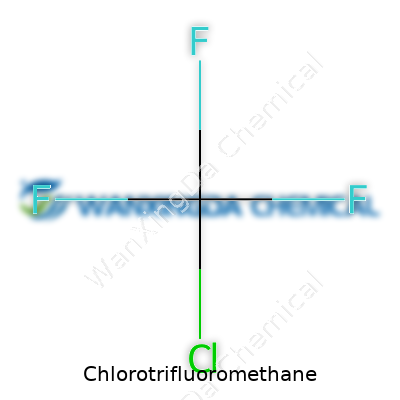
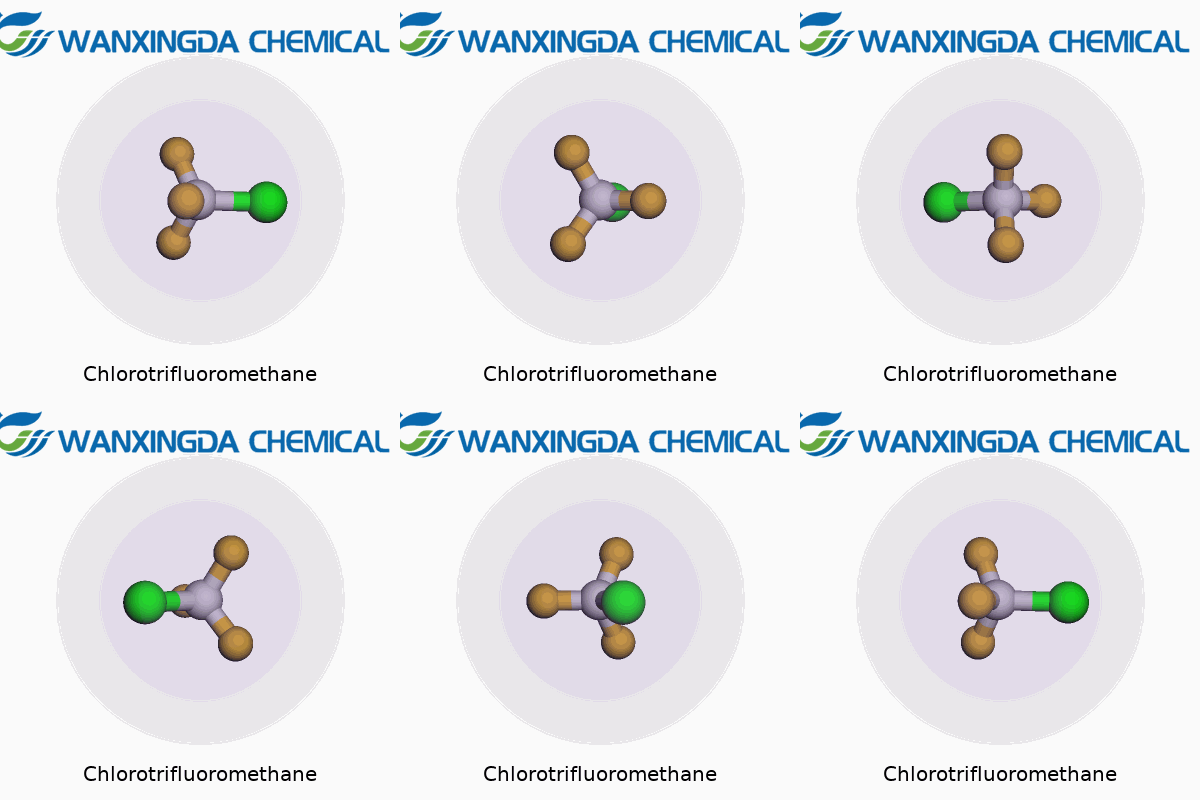
Chlorotrifluoromethane belongs to a class of compounds described as halomethanes. It stands out thanks to its straightforward molecular structure. Looking at a typical canister of R-13, you deal with a compound made up of a single carbon atom bonded to one chlorine and three fluorine atoms. It’s colorless, odorless in its pure state, and non-flammable. Unlike many common gases, it’s very stable at room temperature and pressure. People value it for consistent performance at extremely low temperatures, with a boiling point dipping down to about -81°C. This low boiling point once made it a favorite for specialty freezers and laboratory equipment, long before alternatives showed up.
Physical and Chemical Properties Guide Practical Use
There’s more to chlorotrifluoromethane than boiling or melting points. This gas is heavier than air, so it pools in low places if released. At standard pressure, it remains a gas unless cooled below -81°C. It does not burn under normal circumstances and resists chemical attack, staying intact when exposed to moisture or typical atmospheric conditions. Anyone using it knows it needs tight equipment and mindful handling. A leaky valve or rupture doesn’t create an explosion hazard but brings with it a different set of risks—primarily suffocation in large enough quantities, as it displaces oxygen silently. Transport and storage systems are built to keep the gas contained and cool, reflecting both its physical characteristics and the technical expectations that decades of use have honed.
Labeling and the Details that Matter
Through my work around chemical storerooms and research labs, the most critical detail never comes from color coding or generic hazard symbols. Instead, technicians focus on accurate, incontrovertible labeling. Containers get marked not only as “R-13” or “CFC-13” but also with the chemical formula, regulatory warnings, and handling instructions rooted in experience. In practice, regulations in Europe, the US, and Asia each write distinct requirements for weight, purity, and transport identifications, but the message is always the same: the slightest ambiguity can lead to serious mistakes. Technicians absolutely depend on reliable, immediately visible labeling for everyday safety.
Manufacture and Synthesis: A Study in Simplicity and Risk
Crafting chlorotrifluoromethane involves direct and sometimes hazardous chemistry. Fluorination of carbon tetrachloride under carefully managed conditions forms the backbone of production. Engineers flow antimony pentachloride and hydrogen fluoride across a carbon tetrachloride feedstock, controlling temperature and pressure with tight tolerances. This process churns out chlorotrifluoromethane alongside related compounds, so purification comes next. Fractional distillation inside steel columns separates R-13 from its cousins. Each step, from reactor insulation to cooling water flow, demands hands-on attention to prevent leaks of harsh reactants or high-pressure product. Even now, some production facilities in nations not bound by the Montreal Protocol keep these methods alive, driven by low costs and technical necessity.
Reactivity and Paths for Chemical Modification
CFC-13 holds up as one of the less reactive halocarbons. Its carbon-halogen bonds resist breakage under normal lab conditions. Still, strong UV light can crack it open, flipping stability into a threat for the ozone layer. Over years of teaching undergraduate chemistry, I used this as a case study in understanding why environmental safeguards matter. Once chlorotrifluoromethane drifts to the upper atmosphere, UV rays split its structure, freeing reactive chlorine atoms. These radicals tear into ozone molecules that shield us from solar radiation. In the lab, chemists rarely attempt direct modification of CFC-13, since newer alternatives open more doors for custom synthesis. Its main real-life “modification” comes from incineration, breaking it down at high temperatures in tightly controlled waste facilities—an expensive but necessary cost for protecting the environment.
Other Names and Industry Synonyms
Chlorotrifluoromethane goes by many names, a source of confusion until you’ve spent time around a busy storeroom. On labels, the shorthand “R-13” or the technical “CFC-13” crop up most often. You might hear “Freon 13” in trade talk, though “Freon” is a DuPont trademark with a sprawling family tree. Internationally, the chemical identifier “CAS 75-72-9” sometimes makes the rounds, especially in import/export paperwork. In practical terms, anyone handling or buying this compound learns to scan documents carefully for each one—missing the link between synonyms can grind production or repairs to a halt.
Safety and Everyday Operational Steps
Every technician I’ve worked with recognizes the need for safety long before calls for regulation or outside audits. Chlorotrifluoromethane doesn’t look toxic at a glance, and you won’t smell it in the air. That familiar chill of escaping refrigerant never seems sinister, but repeated exposure or accumulation in a closed space can displace oxygen. Plenty of seasoned engineers have stories about the times they caught a whiff after a careless valve operation. Routine work—a compressor swap, transfer from a bulk tank—demands eye protection, gloves, and good ventilation. National safety standards, whether from OSHA or the European Chemicals Agency, force a checklist every time, from leak detection sprays to evacuation fans. The most effective safety tool, though, is still the culture passed down from experienced staff: respect the routine and never cut corners.
Applications: Cooling the Impossible
The best justification for enduring the risks of handling CFC-13 has always come from its ability to reach temperatures almost nothing else can touch. Ultra-low temperature freezers, key to storing biological samples and transporting temperature-sensitive materials, often leaned on R-13 for their bottom cooling stage. Some aerospace projects turned to this compound to condition electronics or materials testing rigs, especially when failure just wasn’t an option. In the world of industrial maintenance, specialty chillers used in semiconductor manufacturing kept their reliability thanks to this low-boiling refrigerant. It did the hard jobs—jobs that shaped how research, medicine, and technology kept progressing. While many have since changed technologies because of environmental priorities, older systems worldwide still rely on it for functionality.
Research: From Materials to Environmental Science
Scientists, regulators, and activists have scrutinized CFC-13 since the late 1970s. Environmental research found it highly stable, meaning any that escapes into the air can drift for decades, reaching the upper atmosphere to chip away at the ozone shield. The proof was undeniable by the time global monitoring showed rising chlorine levels in the stratosphere and larger ozone holes. Because of this, research labs developed new detection tools for both workplace and environmental monitoring, leading to direct bans in many countries under the Montreal Protocol starting in 1987. Development shifted from improving the efficiency of applications toward safe handling, substitution, and eventual phase-out. Industrial chemists learned to use less harmful blends like R-23 or hydrofluorocarbons, but R-13 remains a reference point for reliability and performance.
Toxicity and Human Risk
Many laypeople see refrigerant gases as harmless, and tragic mistakes result from that ignorance. CFC-13 is considered low in acute toxicity under most industrial exposures. Yet, anyone that’s worked maintenance in enclosed spaces knows every refrigerant brings dangers through oxygen displacement. People working in basements or sealed engine rooms need oxygen monitors more than gloves. The story gets darker when considering thermal decomposition. Chlorotrifluoromethane, if burned or exposed to high voltage, releases hydrogen fluoride, a highly corrosive and toxic gas. I remember training sessions where scar stories and hard numbers both drove the point home: keep your detectors precise and treat every leak as a real threat. Chronic exposure worries, like carcinogenicity, remain lower than for many industrial chemicals, but that never meant a free pass on attention.
What Comes Next for Chlorotrifluoromethane
Chlorotrifluoromethane stands at a crossroads because society now expects progress measured in terms of environmental stewardship, not just technical marvels. The world has turned toward halocarbon management, pushing research into greener replacements. Most new equipment in developed countries moved on to hydrocarbons, ammonia, or hydrofluorocarbon blends that don’t last as long in the atmosphere or create reactive chlorine species. Still, vast infrastructure runs on legacy systems needing a phased, carefully managed transition. Serious debate continues about how best to reclaim and destroy old stocks without leaks, how to help developing countries leapfrog to cleaner tech, and how to keep safety at the core of whatever comes next. The history of CFC-13 teaches that small molecules can bring big consequences, and every decision on new chemistries needs a closer look at impacts that go beyond the lab or the factory floor.
Old-School Refrigerants in a Modern World
Chlorotrifluoromethane, known to many as CFC-13 or R-13, might not have the catchiest name, but anyone who’s dealt with older refrigeration or spent time working on vintage air conditioning systems has probably brushed up against this chemical. Unlike newer coolants, R-13 has roots deep in the early days of mechanical cooling. Engineers and tradespeople turned to it for its chilling power, especially in equipment needing to reach ultra-low temperatures. These days, you often find its legacy lingering in laboratory freezers, some commercial cold storage units, and the back rooms of repair shops holding on to aging tech.
Convenience at a Cost
R-13’s effectiveness made life easier for those preserving sensitive biological samples or keeping certain pharmaceuticals stable. A freezer holding vaccines at minus forty degrees doesn’t just spring from wishful thinking—chemicals like chlorotrifluoromethane made it possible. In the real world, this often translates to fewer spoiled shipments, more predictable research results, and, to put it bluntly, fewer headaches for both doctors and scientists. The chemical’s stability and reliability helped keep food safe for consumption, allowed researchers to store critical samples for years, and supported businesses that depend on cold chains.
The trouble starts when we look at the bigger environmental picture. R-13 belongs to the family of chlorofluorocarbons, substances famous for punching holes in the ozone layer. Ever since scientists started ringing alarm bells in the 1970s and 80s about CFCs’ damaging impact, the world has moved to phase them out. Seeing the devastating effects of ozone depletion, from higher skin cancer rates to eye problems and changes in crop yields, brings home how tightly our everyday comfort links to global health. The Montreal Protocol pushed for alternatives to R-13 and its cousins, leading to a boom in less harmful refrigerants. Still, old equipment can’t always make the switch without major retrofits, and the cost can put a strain on small clinics and community labs.
Lessons from the Shop Floor and the Field
As someone who’s spent time in both air-conditioned server rooms and rusty garages, I’ve seen that convenience sometimes blinds us to bigger risks. Leaking R-13 doesn’t smell, doesn’t sting your nose, and doesn’t spark immediate panic. The harm sneaks up globally, with each puff contributing to atmospheric changes nobody feels until years later. Many repair techs, out of habit or necessity, keep using stockpiled R-13 where modern replacements should go. It’s tough to argue when budgets are tight and the equipment’s still running.
Finding Solutions in Adaptation
Phaseout deadlines forced creative thinking in shops, labs, and factories. Drop-in replacements have cropped up, but performance varies, and safety remains a concern. Technicians crave straightforward alternatives that work with old compressors, don’t require a chemistry degree to handle, and won’t torch their warranty coverage. Phasing out R-13 outright, without backing up resource-strapped places, just won’t stick. Regulatory agencies, industry leaders, and grassroots tinkerers all need to share their practical experiences, so fixes work for the people actually on the ground.
R-13’s story is a lesson in how technology shapes lives far outside the labs that invented it. Real progress comes from listening to the people who rely on these chemicals daily, weighing comfort and safety, and never forgetting that small choices ripple far beyond any one freezer or A/C unit.
Getting Real About Exposure and Hazards
Chlorotrifluoromethane, often known in industry as R-13, R-113, or CFC-13, shows up mostly as a refrigerant in older commercial systems and as a specialty chemical in some manufacturing. Most people outside of those fields rarely run into it. People working with HVAC, refrigeration, or certain chemical labs may have heard the name, since it’s been handy in freezing systems that need extreme cold. But just because a chemical has served a practical purpose for decades, don’t assume it’s all good news.
Years ago, I remember visiting an older compressor facility with the smell of refrigerant lingering in the air. People around me shrugged it off, but awareness about chemical exposure now runs deeper, especially as evidence grew that some of these substances don’t just impact the ozone layer—they can mess with human health too.
Health Concerns Behind the Label
Breathe in chlorotrifluoromethane and your body pays the price. The lungs, brain, heart, and liver all react to high concentrations of these vapors. Short-term exposure brings headaches, dizziness, and trouble breathing. If inhaled in really high amounts—like from a leak in a small space—someone could pass out or, in serious cases, die. Direct skin or eye contact can also cause irritation or frostbite, because the stuff evaporates so fast it chills whatever it touches. There’s no good reason to treat this chemical lightly—it’s not just about feeling uncomfortable for a few minutes.
Research on chronic effects from low-level exposure to chlorotrifluoromethane hasn’t reached the kind of clarity seen with other CFCs or industrial solvents. What’s clearer is that the risks rise with dose, and high exposures won’t do any good to anyone’s long-term health. The gas itself isn’t known to be the most potent carcinogen in its class, but the uncertainty around cumulative effects keeps most occupational health authorities on their guard.
Environmental and Social Accountability
For decades, these compounds helped build the modern cold chain, but they cost us more than convenience. Besides health hazards, chlorotrifluoromethane stirs trouble for the environment. Anyone who paid attention to the Montreal Protocol remembers the push to phase out CFCs like this, since they tear holes in the ozone layer. Over time, we’ve cut back their use sharply worldwide, but the legacy persists in old equipment and accidental releases.
Let’s not forget workplace responsibility. People in facilities with old refrigerants can face an invisible risk. Air quality monitors, proper ventilation, and enforcing personal protective equipment count as basic steps, not optional ones. Training the folks who keep these systems running safely matters just as much. Some managers treat these requirements as an afterthought—until a leak happens, panic kicks in, and people learn the price of ignoring chemical hygiene.
Building Real Solutions
Moving forward calls for more than swapping out one refrigerant for another. Retrofitting or replacing outdated cooling systems costs money, but that expense can’t outweigh keeping people safe and protecting the air we all breathe. Enforcement by regulatory agencies and company policies have nudged safer alternatives into mainstream use, with modern refrigerants showing much lower toxicities and environmental footprints.
Personal accountability shapes community health. I take extra care now to look at what chemicals get used, to wear the right safety gear, and to talk about these risks with people around me. We can’t afford to ignore what we inhale or what lingers in the workspace. Every step to limit exposure—engineered controls, safe disposal, real training—builds a healthier future, both inside and outside the lab or factory walls.
People Before Profit: Rethinking Gas Storage for Safety’s Sake
Most folks outside of chemical plants or fire suppression businesses rarely think about how dangerous gases like chlorotrifluoromethane can be. The name itself doesn’t roll off the tongue, but for anyone who handles it, there’s nothing forgettable about it. This compound, also known as CFC-13 or R-13, usually gets attention in specialized industries. It might not land in headlines often, but the risks it brings should give anyone pause. Some of the biggest lessons about chemicals always come from the storage room, not the boardroom.
The Real Stakes: Extreme Cold, High Pressure, Hidden Risks
Picture a gas that starts leaking if containers crack or fittings malfunction. Chlorotrifluoromethane comes pressurized in metal cylinders. The stuff boils at chillingly low temperatures. Anyone in the business learns fast: never stash these cylinders somewhere warm or exposed to direct sunlight. Otherwise, pressure inside can surge, making containers into potential bombs. Stories circulate about heatwaves forcing hasty evacuations because a forgotten gas cylinder overheated in a warehouse corner. I’ve seen disaster reports that mention gas clouds from refrigerant leaks taking hours or days to track and stop.
Let’s talk about frostbite, a risk many workers overlook. In the rush to move heavy cylinders, fingers sometimes brush the cold steel and pick up nasty freezer burns. It’s easy to say, “Just wear gloves,” but old habits die hard—especially if people keep reaching for whatever’s available instead of proper insulated gear. Worse, shipping accidents and tipping over a container can lead to gas shooting out unexpectedly, since many handlers hurry more than regulations allow. These mistakes pile up, and the bill gets paid in hospital visits or property damage.
Regulation Drives Better Habits—To a Point
Federal rules already limit who gets to buy and store this gas. Facilities label and lock up pressurized cylinders away from open flames or potential sparks. Trained staff regularly inspect seals and valves, because even a slow leak can poison air or degrade nearby equipment. Most people who run these systems don’t cut corners, but there’s always pressure to push safety checks down the list when deadlines loom. Any regular person might wonder: If we know storage mistakes risk lives, what stops shortcutting? In practice, solid safety culture depends on line operators standing their ground, calling out slip-ups, and refusing to rush tasks that can wait.
Looking Ahead: Solutions Rely on Consistency and Accountability
Every seasoned worker can rattle off war stories from the chemical industry. Every time someone treats toxic refrigerants like harmless supplies, the entire building faces real danger. The real secret isn’t flashy technology but community vigilance. Supervisors walk through storage areas daily, looking for rust, warping, or surprise puddles under cylinder racks. The best teams hold quick safety meetings, swap fresh gloves and goggles, and report problems, not hide them.
Long-term thinking usually prevails. As global regulations squeeze out older refrigerants like chlorotrifluoromethane, new chemicals come in. That brings fresh handling challenges, not quick fixes. The lesson for anyone with skin in the game: every cylinder deserves respect, every storage rule keeps someone breathing easy, and safety routines call for real commitment, not box-ticking or shortcuts.
The Chemical Formula and Its Real-World Impact
Chlorotrifluoromethane goes by the chemical formula CF3Cl. This name might sound technical, but the story behind it connects right to issues that matter in daily life—especially when looking at the environment, industry, and the air we breathe. After all, people often interact with chemical names only when a problem shows up, like ozone layer damage or old refrigerators that never seem to break down.
Growing up, the jargon around chemicals usually floated right over my head, but I remember one specific summer when my uncle replaced the refrigerator in our garage. The repair guy made a comment about ‘freons’ escaping, and the older family members suddenly switched from talking about the weather to the environment. That was my first introduction to chemicals like CF3Cl. Turns out, this compound belongs to the family of chlorofluorocarbons—the same group once hailed for making refrigeration and air-conditioning possible in a lot of homes.
Real Problems Set In
Chlorotrifluoromethane has benefits. As a refrigerant and propellant, it kept food fresh and allowed for spray cans that didn’t clog. Then, scientists noticed these same chemicals lingered in the atmosphere and reacted with sunlight. The end result hit hard: damage to the ozone layer, leading to more ultraviolet rays reaching the earth. People got worried about skin cancer rates rising and crops failing from too much sun exposure. It felt personal. Nobody liked the idea of the air at the beach getting more dangerous just because of old fridges and spray cans.
Regulations clamped down. The Montreal Protocol, one of the rare examples of nearly every country in the world actually agreeing on something, started phasing out substances like CF3Cl. The formula stayed the same, but its place in the world changed fast. I still see used appliances labeled with warnings about CFCs, and disposal has become more careful. At recycling centers, workers learn to catch and contain any remaining chemicals—nobody wants ozone-eaters on their watch.
We’re Still Dealing with the Fallout
Tough regulations curbed new uses in many places, but old stockpiles and legacy equipment create ongoing headaches. Developed countries look for safer alternatives, adopting new refrigerants with lower impact on the ozone and the climate. Not every community has equal resources to swap out infrastructure. If a budget-dependent school still uses a decades-old cooling system, they wrestle with both the cost and responsibility of upgrading safely.
People like to think the job is done once a law passes, but that isn’t the case for tricky chemicals. It takes solid oversight and education to manage transitions—teaching workers how to detect, capture, or neutralize any emissions that still risk leaking out. Supporting those on the front lines, like HVAC techs and waste management crews, with training and up-to-date gear goes a long way. Sharing knowledge about the details, starting with the formula CF3Cl, makes it easier to spot problems before they balloon.
The Takeaway
Chlorotrifluoromethane isn’t just a collection of letters and numbers—it’s a reminder that something once seen as progress can turn into a problem people have to fix together. Understanding the formula matters, but what counts more is handling what’s left responsibly and making smarter choices next time a new technology comes along.
A Relatable Look at a Hidden Air Pollutant
People tend to forget the dangers that lurk in seemingly invisible gases. Chlorotrifluoromethane, also known as CFC-13 or CFC-23, hides quietly in the background of everyday production lines and refrigeration systems. Many think the phaseout of CFCs made their threat ancient history, but CFC-13 still finds its way into our air. The trouble lies in its impressive stability — it barely breaks down, cruising through the atmosphere for centuries.
What Makes This Chemical Stand Out?
Most folks don’t realize just how long-lasting these gases are. After a few years of talking to folks in refrigeration and chemical plants, it’s clear that the detection and containment of tiny leaks just isn’t as easy as it sounds. Chlorotrifluoromethane stands out because it’s persistent and potent. According to the Intergovernmental Panel on Climate Change, the global warming potential of CFC-13 can top 14,000 times that of carbon dioxide over a hundred-year stretch. That’s not a typo. Using this stuff means every little puff drifts up and stays around much longer than the exhaust from a traffic jam.
The Ozone Question
Older generations remember the warnings about CFCs and the ozone hole. That’s what led to the Montreal Protocol, one of the most successful environmental treaties around. Global action forced big cuts in these chemicals, saving us from much worse UV radiation down the line. Chlorotrifluoromethane still has a role in some industries as a byproduct, and in rare cases as a specialty refrigerant. Just small leaks cause damage — each molecule climbs up and breaks down ozone. Those collective leaks make the recovery of the ozone layer slower, especially over Antarctica.
Industry Realities and Regulatory Loopholes
The regulations exist, but some gaps remain. As someone who has discussed pollution reporting with environmental health professionals, I’ve seen that tracking emissions of CFC-13 falls flat. Most countries list it under controlled substances, but it pops up accidentally from the production of other chemicals, like HCFC-22. There’s not always financial incentive to capture every last molecule. Instead, factories vent "small amounts," which, on a global scale, add up faster than we like to admit. The Environmental Investigation Agency flagged big unexplained jumps in CFC emissions after 2015 — a signal that enforcement demands more attention.
So, Is Chlorotrifluoromethane Safe?
Chlorotrifluoromethane doesn’t bring the kind of massive oil spill headlines that get pockets of the public riled up. Its harm creeps in quietly. Scientific data says it clings to the atmosphere for up to 500 years. It damages the ozone and heats the planet, even in small quantities. If the world treats this chemical as "safe," we ignore its long-term threat.
Pathways Toward Real Solutions
Cutting the accidental creation and release of CFC-13 calls for stricter oversight. Incentives to recover and destroy byproduct gases would help. Companies and governments could start sharing transparent emissions data instead of hiding behind outdated reporting laws. Better leak detection gear belongs in aging chemical plants and refrigeration systems. International watchdogs like the United Nations Environment Programme can keep the pressure on manufacturers to follow the rules. Teaching technical teams how to spot hidden leaks through regular training pays off over the long run. Most of all, businesses must recognize that climate commitments aren’t just feel-good PR — they directly shape whether the next generation inherits a cleaner atmosphere.