Perfluorobutyl Iodide: Looking Beyond the Chemical Formula
Tracing the Journey: Historical Development
Perfluorobutyl iodide seldom makes headlines, but its place in the chemical landscape runs deeper than most realize. Chemists first unlocked the secrets of perfluorinated compounds during the frenzy of mid-20th-century chemical innovation, when the search for new synthetic pathways saw wild experimentation with fluorine chemistry. Early on, long-chain perfluoroalkyl iodides grabbed attention, both for their remarkable stability and for the tantalizing reactivity that the iodine atom brought to the group. Through gritty organic synthesis and plenty of trial and error, shorter perfluorinated alkyl iodides like perfluorobutyl iodide earned a spot in the toolbox of both industrial and lab chemists hunting for that perfect reactive intermediate. Today, its presence signals more than just chemical curiosity; it shows up in industries ranging from materials science to pharmaceutical chemistry—a testament to years of practical know-how shaping its role.
What Sets Perfluorobutyl Iodide Apart
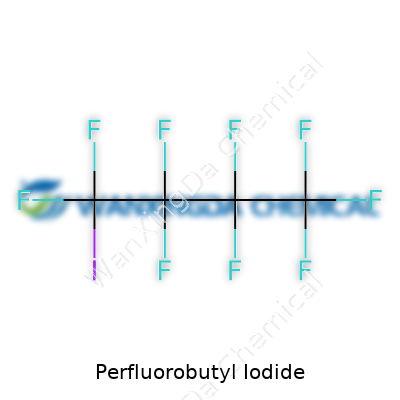
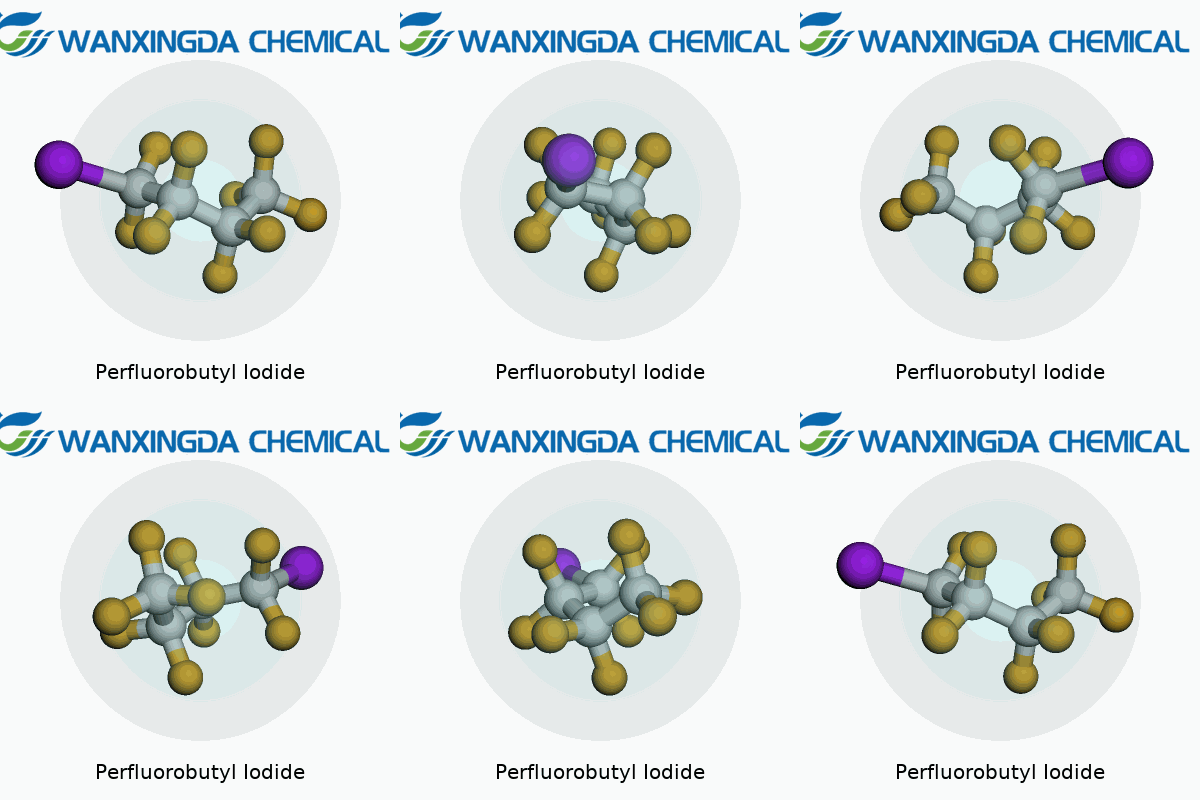
Anyone who’s worked with it knows perfluorobutyl iodide stands out for its blend of chemical resistance and reactivity. With the formula C4F9I, it packs a chain of four carbons, thoroughly shielded by fluorines, capped by an iodine. This combination isn’t just trivia. The heavily fluorinated backbone shrugs off acids, bases, heat, and even aggressive solvents that chew through other organic compounds. At the same time, that iodine at the end acts like a handshake for further reactions, making it a favorite starting point for building more complex molecules. In the physical realm, it shows up as a colorless to pale yellow liquid, dense and heavy, with a weightiness you notice the moment you pour it. None of these traits come by accident—they all stem from those tight carbon-fluorine bonds, the most robust in organic chemistry, and the singular bond with iodine, notoriously eager to get swapped out in further reactions.
Getting Technical: Specs and Labeling
In the real world, people care about purity and safe handling. Purity often checks in at greater than 97 percent, though higher grades exist for research demanding near-perfection. Labels warn of toxicity and are peppered with reminders about its potential as a halogenated hazard. Regulatory standards include warnings about skin and eye contact, as well as proper ventilation requirements. That iodine atom earns specific attention in labeling for its radio-opaque qualities—and for implications in synthesis, where even minute impurities can throw off subsequent reactions. The safe shipping and storing of perfluorobutyl iodide isn’t just regulatory lip service: glass bottles with tight seals, shielded from light and heat, remain the norm.
Preparation: Synthesis in Practice
Building perfluorobutyl iodide from scratch means heading into the world of halogen exchange and direct fluorination. Early methods leaned on less refined chemistry, sometimes starting with perfluorobutyl bromide, then driving a halogen exchange with elemental iodine. This two-step routine, while effective, asked chemists to balance reactivity, yield, and cost at every turn. Direct iodination has seen limited use due to technical challenges, but improvements in electrochemical fluorination (ECF) have made scaling up less daunting. ECF, a favorite for high-volume fluorochemical production, brings efficiency by blasting hydrocarbon precursors with elemental fluorine in a controlled electric field, making it possible to turn up pounds instead of grams. Each prep step adds its own quirks and hazards, especially as fluorine chemistry rarely forgives carelessness or shortcuts.
Modifications and Chemical Reactions
Anyone with experience in fluorine chemistry knows perfluorobutyl iodide is more than just a shelf chemical; it’s both ally and challenge in the synthesis lab. The iodine atom acts as a versatile launching pad, leaving easily under nucleophilic attack and opening the door to a wide slate of modifications—from simple replacement with other nucleophiles, to more complex coupling reactions that string together new units for specialty materials. A common route involves displacement with organometallics, where the iodide acts like a passport, allowing entry to reactions that would stop dead with a less labile group. In the world of surface coatings and electronics, it’s used as a precursor for grafting perfluorinated tails onto polymers, lending these materials the fabled “nonstick” or hydrophobic qualities seen in next-generation devices and performance fabrics.
Other Names in the Industry
Walk into a chemical storeroom and you’ll find perfluorobutyl iodide hiding behind a host of alternative names: 1-iodoperfluorobutane, nonafluorobutyl iodide, and simply PFBI for those on a first-name basis. These synonyms reflect both its systematic nomenclature and the comfort of shorthand engineers and researchers prefer. While the longchain variants have grabbed more attention in the debates over forever chemicals, the butyl derivative shows up in patents, research papers, and industrial lists with a frequency that signals its versatile utility. Consistency in naming keeps confusion off the order form and out of the lab notebook—a small but important detail in reliable chemical management.
On the Ground: Safety and Daily Handling
Anybody working with perfluorobutyl iodide soon learns respect for the substance. Inhaling its vapors or letting it soak through gloves brings real health risks, including potential damage to the lungs and nervous system. Labs run proper ventilation, fume hoods always in operation, not just for comfort but for outright safety. Chemical-resistant gloves and splash goggles become the uniform, especially since iodine compounds can stain and irritate skin fast. Emergency procedures focus on quick decontamination, and disposable supplies go straight into solvent-tight waste drums—no shortcuts, since lingering residues build risk for accidents or long-term exposure. Storage stays straightforward: away from light, heat, and especially away from open flames, since halogenated organics tend to bring their own complications in fires. These habits aren’t overkill—they keep work safe and people healthy.
Where Perfluorobutyl Iodide Finds Work
Few compounds bridge so many worlds as perfluorobutyl iodide. Materials scientists shape it into specialist intermediates for high-performance coatings, polymers, and lubricants destined for demanding environments. Pharmaceutical researchers have experimented with perfluoroalkylated molecules for their stability and unique biological properties, though environmental scrutiny has limited broader adoption. In electronics, perfluorinated compounds improve insulation and longevity, especially wherever heat and chemical resistance occupy center stage. Beyond these, novel uses crop up in surface engineering, where the fluorinated chain resists staining and moisture, a quality in demand for both medical devices and advanced optics. Each application brings its own set of technical hurdles and safety concerns—a reminder that new chemistry often arrives hand-in-hand with new responsibilities.
Research: Where Curiosity and Scrutiny Collide
Research on perfluorobutyl iodide has two faces. Synthetic chemists keep probing its reactivity, eager to harness its ability to build new fluorinated architectures, while toxicologists and environmental scientists cast a wary eye on what legacy it leaves outside the lab. Studies have shown compounds with strong carbon-fluorine bonds resist degradation, raising alarms about accumulation in groundwater and animal tissues. But shorter-chain compounds like this one may break down faster and pose less risk of bioaccumulation than the long-chain giants now tightly regulated worldwide. Current research also tests new analytical methods to track and destroy even trace contamination—a technical arms race that reflects the scale of modern chemical manufacturing. Meanwhile, new pathways for synthesis promise less hazardous intermediates and byproducts, hinting at a future where chemists balance utility with stewardship.
Toxicity: Weighing the Risks to Health and Environment
Perfluorobutyl iodide comes with an honest toxicity profile. Short-term contact irritates skin, eyes, and the respiratory tract, while longer exposures bring more serious hazards. Iodinated organics sometimes interfere with thyroid function and metabolism, particularly in people dealing with chronic exposure. As the world learns more about the dangers of persistent chemicals, scrutiny has intensified over how these substances move through the environment. Scientists track their spread from manufacturing sites, waste streams, and even consumer products that use perfluorinated coatings or additives. Compared to notorious longer-chain relatives, perfluorobutyl iodide presents a more mixed outlook: less likely to build up in the body, but still persistent enough to warrant careful handling, strict waste procedures, and ongoing research into both environmental and occupational safety.
Where the Road Leads: Future Prospects
Looking ahead, perfluorobutyl iodide stands at a crossroads—torn between its impressive performance in synthesis and growing environmental caution. Technical advances tease new, more responsible uses for its reactive backbone, especially in electronics, specialty polymers, and targeted drug delivery. Regulatory pressures keep pushing chemists to wring more utility from every molecule while searching for greener synthetic paths and less persistent alternatives. Research into safe degradation and recycling, along with more nuanced toxicology, may keep this compound in the running even as the world grows ever more concerned with so-called “forever chemicals.” The real challenge lies in meeting ever-stricter safety and sustainability standards without sacrificing the demanding performance that fluorochemicals still deliver. Those able to steer research toward safer, more efficient, and less persistent compounds will hold the key—balancing scientific progress with the real-world need for responsible chemistry.
The World Behind the Lab Bench
In the world of specialty chemicals, most folks rarely give a thought to chemicals like perfluorobutyl iodide. Tucked away in storytelling about labs and research, this compound plays a quiet but essential role. Growing up around a household with a chemist, I saw an endless parade of strange bottles with even stranger names. Each one did a job, and, like any tool, the difference showed up in results—cleaner reactions, fewer hazardous leftovers, sometimes breakthroughs that made it onto patent applications.
What Does Perfluorobutyl Iodide Do?
Perfluorobutyl iodide slides under the radar. It’s an organofluorine compound, built differently from the stuff used in non-stick pans or waterproof jackets. Chemists appreciate its properties because it brings together reactivity with stability—you get the strong carbon-fluorine bonds and a highly reactive iodine end. As a result, it appears in synthetic chemistry, especially where making fluorinated compounds is the goal. Fluorinated building blocks show up in medicines (pharmaceuticals), specialty polymers, and sometimes advanced electronics.
The medical world, for example, loves fluorinated molecules. They tend to last longer in the body, resist being broken down too quickly, and, in many cases, function better as drugs. Some of the world’s most prescribed medicines have a dose of fluorine atoms tucked away in their structure. To stick those fluorine atoms in precisely the right place, chemists reach for specialized chemicals. Perfluorobutyl iodide acts as both a reagent and a starting material for these syntheses.
The Roadblocks and Risks
With all this usefulness comes a real-world question: what about safety and environmental impact? Not everything that leaves the lab ends up safely locked away in finished medicine or plastic. The world already struggles with “forever chemicals”—fluorinated compounds that don’t break down. Stories of water contamination tied to PFAS have scientists, regulators, and families worried. Although perfluorobutyl iodide itself looks a bit different, it belongs to that broad and sometimes hazardous chemical family.
Handling, disposal, and regulation always deserve attention. Most industrial users understand just how persistent these molecules can be. Anyone who has worn thick gloves and heavy goggles gets that lesson quickly. The challenge is making sure older, less-regulated stockpiles don’t leak or end up tossed without plans. The best labs commit to closed systems and responsible waste practices, but smaller and less experienced outfits sometimes stumble. There’s room for stricter oversight and more investment in greener chemistries.
Looking for Safer Pathways
Today, green chemistry carries more sway than ever before, especially among the next generation of scientists. Research is moving toward methods that use fewer harmful chemicals or find ways to recycle or destroy old stocks safely. That takes collaboration, real money, and patience. Perfluorobutyl iodide might remain on the shelf for many years, but companies and universities can step up efforts—both by supporting regular safety training and by chasing down safer alternatives for the same chemical transformations.
No chemical is used in a vacuum. Next time you read about a breakthrough cancer drug or an eco-friendly gadget, consider what raw materials and expertise make it possible. Making that world less dangerous for both workers and neighbors is a challenge worth embracing.
Respecting the Risks in the Lab
People who haven’t worked with chemicals in a lab sometimes underestimate compounds like perfluorobutyl iodide. The substance looks almost innocent at a glance—clear, colorless, easy to mistake for water. But the truth is, this compound comes with safety demands no chemist should shrug off. Over my years studying and working in labs, ignoring proper handling even once often led to unnecessary irritations or costly mistakes. The mistake isn’t always obvious right away; sometimes it creeps up, with a headache, a rash, or equipment that suddenly won’t work as expected.
Real Dangers Behind Complicated Names
Perfluorobutyl iodide carries fluorine and iodine atoms, which usually means even small spills or leaks can pose a mess for both people and facilities. The vapor isn’t famous for smelling bad, but it can irritate eyes and the respiratory tract almost right away. No matter how confident someone feels, skipping goggles or gloves never works out. Latex or nitrile gloves block skin contact, and a decent lab coat stops splashes that ordinary shirts can’t handle. Fume hoods shouldn’t just collect dust—they pull harmful vapors away before anyone breathes them in.
Why Complacency Kicks In
I’ve seen researchers and students alike get too comfortable. They might pipette or pour without thinking twice. I remember once seeing someone rinse a flask with acetone and dump it straight down a sink, thinking it diluted the rest. This becomes tempting, but it risks more than a slap on the wrist from a safety officer. Over time, short-term exposure builds up, and labs end up with residue or contamination that’s tough to trace—let alone clean. Coughing or red eyes seem minor, but ignoring symptoms leads to more serious reactions. Some reports have connected perfluorinated compounds to longer-term health impacts, so vigilance needs to go beyond checking symptoms after a spill.
Storage: A Lesson Hard-Learned
Chemicals like this don’t age gracefully. Leaving a bottle with a damaged cap lets vapors creep into storerooms, and I’ve seen accidents from mislabeled or poorly sealed containers. So, tight caps and clearly marked labels really do save headaches. Storing perfluorobutyl iodide away from heat and sunlight lowers the odds of leaks and reactions with things like acetone or alcohol. Keeping a chemical inventory updated kept me out of trouble more than once, especially when colleagues needed to find or dispose of leftover material safely.
Waste and Spill Preparedness
No lab plans on spills, yet everyone faces one sooner or later. During my grad school years, we prepped absorbent pads and chemical waste bins within arm’s reach before even opening a bottle. I can’t stress enough: Do not pour leftover perfluorobutyl iodide down the drain. Disposing of it requires coordinated collection and support from professional chemical waste services. Local environmental rules make this a legal issue as much as a health one. Getting lazy with disposal invites fines and puts others at risk.
Building Better Habits
Personal safety isn’t a box-ticking exercise. Even if labs seem overrun with rules, each one was written after real problems. Training sessions sometimes feel repetitive, but seeing new students pick up these habits matters. It’s not just about meeting standards; it’s about making sure everyone makes it home safe and healthy at the end of the day. Precaution and respect for chemicals keep research going and the lab community strong.
Understanding Perfluorobutyl Iodide: Formula and CAS Number
Perfluorobutyl Iodide has a chemical formula of C4F9I and carries the CAS number 423-39-2. That’s the science. Now, beneath those simple strings lies a story of chemistry, innovation, and real-world consequences. In my years following research trends, every time someone mentioned “perfluorinated” or “iodinated” compounds, alarm bells about environmental impact, persistent chemicals, and specialized industry uses would ring in my head.
Why Does This Compound Get So Much Attention?
Look past pure chemical curiosity: Perfluorobutyl Iodide didn’t just stumble into biotech labs and manufacturing facilities. It earned attention as a strong building block in making other fluorinated molecules. These types of chemicals often don’t break down easily. I’ve watched regulatory conversations heat up around them, especially since "forever chemicals" (per- and polyfluoroalkyl substances or PFAS) have started appearing in news feeds. C4F9I sits in a landscape where persistence spells both utility and long-lived risk.
Manufacturers see opportunity in the unique bond strength and chemical inertness—key for electronics, pharmaceuticals, and specialty coatings. In practice, fluorinated compounds like this one let engineers dream bigger on circuit board resilience, or chemists plan drug molecules that last longer in the body. The flipside: cleanup operations must deal with molecules designed not to go away. The chemical’s unique properties become a double-edged sword.
What Sets Perfluorobutyl Iodide Apart?
As I’ve seen in scientific conferences, most folks using this molecule in synthesis value its functional group: iodine acts as a “handle” for further reactions. C4F9I lets chemists swap one end while keeping the stable fluorinated backbone intact. The result? New molecules tailored to block corrosion, repel oil and water, or perform as industrial intermediates.
Industrial chemists get a reliable starting material, but environmental specialists raise their eyebrows at persistent organic residues. Society grapples with the shadow cost of our chemical ingenuity, trying to balance industry with responsibility for air, water, and soil quality. In reports I’ve read, these compounds—even in trace amounts—can last for generations, outliving their original intent and challenging conventional cleanup methods.
Balance, Responsibility, and Smarter Chemistry
Any editorial on a compound like Perfluorobutyl Iodide circles back to a familiar refrain from the chemistry community: smarter stewardship. As someone who follows green chemistry closely, I’ve watched the sector propose better ways to create and break down persistent molecules. Researchers have started digging into alternatives and tighter end-of-life controls. Improved detection in water, tighter waste protocols, and “benign by design” chemistry give reason to hope.
It comes down to the choices made in labs and boardrooms. Engineers and chemists can favor molecules or processes that balance technical merit with environmental legacy. Regulatory bodies, like those in the EU and US, press for transparency and tracking of high-persistence substances. Persistent chemicals like C4F9I pose problems we can’t ignore. Solutions grow from clear-eyed risk assessment paired with investment in remediation and greener ingenuity.
Why the Small Stuff Matters
Perfluorobutyl iodide flies under most people’s radar. Mention it, and even many in the research community pause before recalling what it does. So much of modern chemistry and medical science depends on compounds most folks never see outside a lab, yet how scientists treat them in storage shapes how safe and reliable their work can be.
A Chemist’s Experience
Working in an organic chemistry lab for over a decade makes you respect the difference between “stored right” and “stored just for now.” Small oversights can snowball into major headaches. I remember early in my career, I handled a similar fluorinated compound. A senior researcher showed me the ugly aftermath of ignoring storage protocols: a shattered bottle, a sticky mess, and a ruined sample. The message landed. Some chemicals react to the wrong conditions with the kind of unpredictability you never want in a crowded workspace.
Keep It Cool, Keep It Dark
Perfluorobutyl iodide doesn’t tolerate sunlight or heat. Direct light triggers chemical changes nobody wants in their experiment or their work environment. Heat ramps up that risk. That’s why this stuff belongs in a cool, dark part of the lab—usually inside a tightly sealed amber bottle, well away from any window or heat source.
This isn’t overkill. I’ve seen colleagues lose time and grant money because a reagent lost potency sitting too close to a sunny counter. Beyond wasting cash, bad storage can produce unpredictable byproducts. Some of those might pose hidden risks long after anyone remembers a slip-up took place.
Air and Moisture: The Unseen Threats
Iodinated compounds, in general, dislike moisture. Perfluorobutyl iodide picks up this trait. Exposing it to humid air invites slow breakdown. Even in climates that feel dry, water vapor sneaks around open bottles and loose caps. That tiny trickle-in of moisture can skew results, ruin a sample, or shorten shelf life by weeks or months. A tightly capped bottle and a spot in a dry cabinet defend against all that hassle.
Common-Sense Solutions
Clear labeling makes life easier for everyone. Slapping a “store in the dark” sticker and marking the open date on a bottle saves young researchers from guesswork. Staff get into habits, good or bad, and it pays to reinforce good ones. Never rely on memory—log each time someone takes a chemical out or refills a stock room shelf.
These ideas sound basic, but disasters usually grow from ignored basics. Most of us learn this on the job, sometimes the hard way.
The Bigger Picture
Safe storage isn’t just about avoiding messes or saving on budgets. Research stands on the reliability of every sample, every time. Hospitals, cleanrooms, and startups all fall apart if the chain of care breaks. By sticking to best practice with substances like perfluorobutyl iodide, researchers protect data, health, and hard-won discoveries. No shortcut ever justifies the risk of getting it wrong.
Opening the Conversation on Perfluorobutyl Iodide
Walk through any chemistry research lab, and exotic compounds start to show up. Names like Perfluorobutyl Iodide rarely pop up outside specialized circles, but these small specialty chemicals tend to find their way into technologies and processes far from public view. Once you get past the long name, the bigger question tends to follow: how does a compound like this stack up for safety, both for people and for the wider world?
An Under-the-Radar Chemical
Perfluorobutyl Iodide falls into the family of perfluorinated compounds. These chemicals share a backbone loaded with strong carbon-fluorine bonds, making them stable and persistent. In industry, this stability brings benefits—chemical resistance, durability, and niche usefulness. For example, similar molecules get used in electronics, medical applications, or as specialty solvents.
What We Know from Science
Science history shows that many perfluorinated chemicals do not leave the environment quickly. The carbon-fluorine bond resists breakdown, which helps the product do its intended job but can create long-lived traces in rivers and soil. With older and close cousins like PFOS and PFOA, research has shown persistence leading to bioaccumulation in animals and even humans. These are not light risks—studies tied long-chain PFAS exposure to cancer, immune problems, and developmental delays.
Though research points to potential concerns with some perfluoroalkyl iodides, direct studies on Perfluorobutyl Iodide remain thin. The lack of concrete publications doesn’t just mean the compound is harmless—it often means its risks have not been fully checked on the scale common to older, more notorious "forever chemicals." Because the structure stays resistant to natural breakdown, the possibility remains that Perfluorobutyl Iodide shares similar traits with others in its class.
The Question of Regulation and Safety Practice
Right now, oversight for chemicals like this depends on local and international regulations. In my experience watching the regulatory process, hazard often lags behind use in industry. A chemical’s specialty status can keep it under the radar, which slows down broad safety testing or routine monitoring. Companies working with such substances do take protective steps, such as ventilation, gloves, and containment. These measures help, but accidents and leaks do slip through.
If a spill reaches water or soil, the stickiness of perfluorinated compounds makes clean-up time-consuming and pricey. I’ve seen the struggle with PFAS chemicals at contaminated sites, where groves of equipment and teams of experts work for years to reduce a fraction of the pollution. The cleanup process never stops at the lab door—the waste stream at every level needs tracking.
Balancing Innovation with Responsibility
The broader lesson calls for open access to safety data and ongoing studies. Chemical innovation drives important progress, but waiting for problems to appear before acting never seems wise. Companies and scientists can push for deeper studies and quicker transparency. Governments can require reporting on new chemicals and fund independent research. Better tracking and public disclosure go a long way for community trust.
For people living near research centers or manufacturing plants, clear communication about what chemicals are in use builds confidence. The stakes—air, water, soil, and health—go far beyond one company or group. Ignoring potential hazards from “minor” compounds just sets up the next invisible problem to haunt health and the environment.