Perfluorooctanesulfonamide: Dissecting a Persistent Chemical’s Story
A Look Back: How Perfluorooctanesulfonamide Emerged
For many years, chemical innovations have tried to push the limits of durability and utility in new products, and perfluorooctanesulfonamide, often called PFOSA, ended up as one of those substances that promised big improvements in everything from firefighting foams to water-resistant textiles. PFOSA didn’t show up overnight. Its roots lie in the post-war chemical boom, a period that chased solutions to everyday problems with aggressive industrial chemistry. Companies introduced PFOSA as part of larger families of per- and polyfluoroalkyl substances (PFAS), chasing benefits like resistance to heat, water, and grease. PFOSA, with its unique molecular stability, quickly caught on in various industrial processes. It seemed almost tailor-made for a world that wanted convenience and longevity in consumer goods—a world that, in hindsight, often ignored the full scope of environmental and health consequences.
What Sets It Apart: Properties and Product Landscape
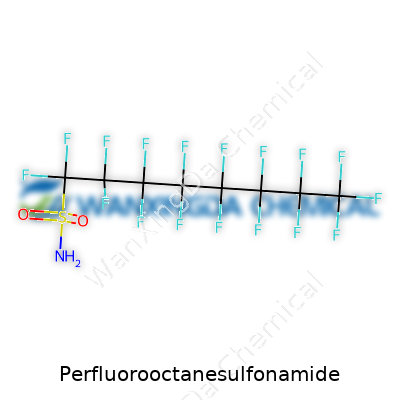
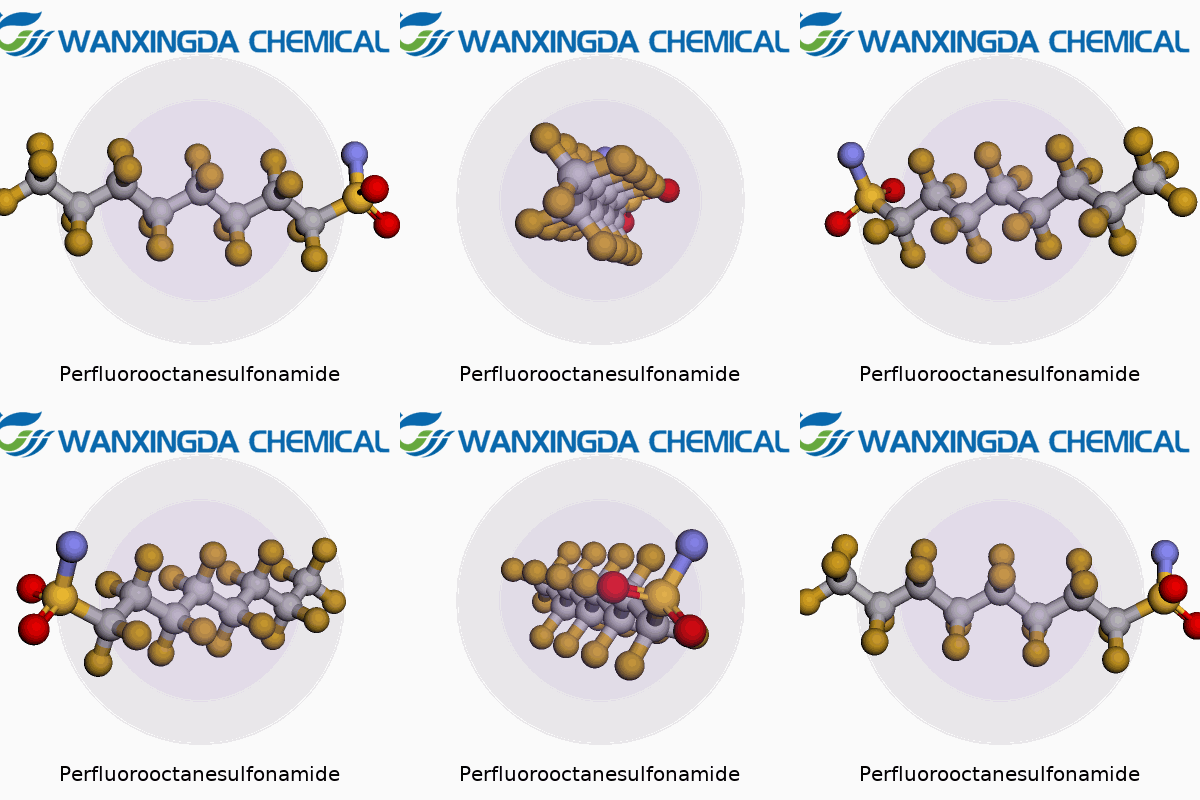
PFOSA’s structure packs a long tail of carbon atoms fully saturated with fluorine, topped with a sulfonamide group. This shape forms a molecule that shrugs off water, oil, and most chemicals. It did more than enhance product performance; it made certain industrial hurdles disappear. For instance, the chemical’s ability to stay unchanged under high temperatures gave old-school fire suppressants a much-needed upgrade. Users started seeing PFOSA everywhere—waterproofed fabrics, stain-resistant carpets, even in specific agricultural chemicals. What these properties add up to is a substance that doesn’t break down easily, which at first looked like a strength, but over time, became one of its biggest problems.
The Science in the Details: Specs, Synthesis, and Nomenclature
PFOSA goes by a few names, including perfluorooctane sulfonamide and various chemical shorthand labels. These aliases crop up in regulatory discussions, lab reports, and import papers, sometimes making it tricky to track the chemical’s journey across markets. In the lab, producing PFOSA starts with perfluorooctanesulfonyl fluoride, pulled through a reaction with ammonia or its alkyl derivatives. This creates the sturdy sulfonamide group that keeps popping up in applications. Chemically, PFOSA doesn’t easily react with water or oxygen, and it resists most attempts to degrade it with heat or light. Those who work with it look for a clear or faintly yellow substance, usually a liquid or, as some suppliers deliver, a waxy solid.
Working with PFOSA: Safety and Handling
Ask anyone who has spent time in industrial or research labs about handling substances like PFOSA, and you’ll hear a mix of respect and wariness. PFOSA requires thoughtful handling. The rules in labs and factories have gotten tighter over the years, following a trail of research about possible toxicity and the compound’s knack for lingering in soil and water. People working with it wear gloves, goggles, and rely on fume hoods—those precautions come from agency guidelines and years of unfortunate incidents. Labeling now tends to include strong warnings. Not only is there a risk during production, but disposal of PFOSA wastes can drag hazardous residues into nearby groundwater. One reality the industry has not solved: how to completely neutralize PFOSA waste without passing along problems to the next generation.
From Labs to Living Rooms: Where PFOSA Shows Up
Decades ago, the chemical found its way into products that seemed cutting-edge. Fluorinated surfactants, water-repellent sprays, firefighting foams, photographic films—a pretty wide list. Municipal and industrial applications made heavy use of PFOSA to boost performance. Ordinary folks likely didn’t realize that their everyday goods leaned on a compound engineered to last for centuries. But “performance” came at a cost. Since PFOSA refuses to break down under natural conditions, it lingers in the environment stronger than most pollutants. Residues have shown up in rivers, lakes, groundwater, and more recently, in human blood samples. The idea of persistence changed a story of innovation into a global problem that public health communities now scramble to untangle.
Where Does the Science Stand? The Ongoing Battle Over Toxicity
Research into PFOSA’s effects has been slow-moving, bogged down partly by its stability and partly by how long it takes to show clear links to disease. Some studies, especially work done outside of industry funding, point to troubling outcomes. PFOSA hangs around in the body, building up in blood and liver, putting pressure on hormones and immune response. Scientists warn about possible connections to cancer, developmental changes in children, thyroid disruption, and overall toxicity, especially in communities near heavy PFAS contamination. European regulators and US agencies continue to set tighter targets for allowable levels in drinking water and consumer products. In the past, slow acknowledgment from manufacturers gave PFOSA a long leash in the wild, but mounting evidence of its dangers means the leash gets shorter every year.
Trying to Fix the Mess: Ideas and Barriers
The industrial world faces a tough choice. Phasing out PFOSA, a key material in some sectors, means either finding safer direct substitutes or changing whole processes from the ground up. Some groups explore materials with similar water and oil resistance but less environmental baggage, betting on short-chain PFAS, bio-based compounds, or completely different chemistries. The hurdles pile up fast—high cost, inconsistent performance, and limited long-term data. Governments lean on liability laws and targets for cleanup, but the real test arrives in towns struggling with contaminated water, where solutions cost much more than promises. Remediation projects—like advanced filtration or burning at high temperatures—chew through money and time, sometimes only shifting chemicals from one form to another without real destruction.
Where We Might Go Next: Research, Regulation, and Hope
The future of PFOSA sits at a crossroads of tough policy, community outrage, fresh research, and old habits. Toxicologists keep pushing for more independent data, tracking PFOSA’s movement through bodies and landscapes. Environmental activists and local governments demand bans, cleanups, and clear answers from manufacturers. In industry, some companies now invest in greener chemistries, aware that public trust can vanish overnight. There’s also hope riding on next-generation waste treatment, with university labs searching for microbes or catalysts, anything that can take apart the stubborn carbon-fluorine bonds. Until a breakthrough shows up, the world lives with PFOSA’s legacy—reading labels more carefully, demanding stronger laws, and wondering if the stubborn durability that built empires can ever be tamed.
Where It Shows Up and Why It Stays
Perfluorooctanesulfonamide, or PFOSA, has a name that’s a mouthful but a footprint that’s even bigger. My first encounter with its reach happened during a summer job at a water treatment facility. One day, an engineer shared that the toughest thing to filter out is anything that starts with “perfluoro-.” You find PFOSA behind the scenes in products designed to resist stains, water, and grease—from old-school carpet treatments to paper wrappers that keep your burger from soaking through. Dry cleaners once relied on it in certain solutions, and it showed up in firefighting foams that blanket runways and industrial sites.
Why Its Longevity Raises Eyebrows
PFOSA is built to last. Chemical bonds in this compound keep it from breaking down easily. That toughness made it a darling for companies in the post-war boom, chasing performance that didn’t quit. White couch? Spilled red wine? The coating stood guard. But durability in objects sometimes means persistence in the environment, and in our bodies too. Years after a stain-proofing spray hits the landfill, PFOSA molecules continue to show up in water, soil, and the tissue of animals living nowhere near a factory or treatment plant. Human blood tests have found traces almost everywhere researchers look.
Health Questions That Demand Straight Answers
The concern isn’t hypothetical. Exposure to PFOSA may mess with cholesterol, liver function, or hormone levels. Studies in animals link it to effects nobody wants—tumors, reproductive changes, and immune system shifts. Regulators started paying attention in the early 2000s. In my own circle, I have friends who grew up fishing around old plants in the Midwest, and their families worry about these chemicals leaching into local streams. Health professionals want more long-term human studies, not just lab data.
What Keeps PFOSA in Circulation
Plenty of folks swapped out the old chemistry, and many countries restricted its use. Yet, demand for water- and stain-resistance remains. Some manufacturers moved on to closely-related chemicals—just different enough to skirt rules, but with many of the same concerns. Cleaning up contamination brings steep costs. For towns with legacy pollution, funding and know-how rarely keep pace with the need to protect drinking water.
Possible Ways Forward
Regulators started to set limits, mostly focusing on drinking water and industrial releases. Groups in Europe and North America push for tighter controls, and some consumer giants are phasing out use. The most promising fixes involve safer materials designed from the start to break down rather than stick around forever. Municipalities testing new filter tech for water treatment signal progress, but the price tag and complexity remain hurdles.
In my view, why this matters really shows in the everyday reality: people want products that work, but don’t want to trade their long-term health or clean water supply just for convenience. Push for more transparency on what’s in stuff you use. Support companies taking the right path, even if it costs a bit more. PFOSA reminds us that good intentions in convenience often outlast their original promises—and come back demanding attention decades later.
Perfluorooctanesulfonamide, often called PFOSA, hardly makes headlines despite building a reputation as a problem in the chemical world. Most people never even hear its name. But it weaves itself into food packaging, firefighting foams, and fabric treatments. PFOSA belongs to a huge group of chemicals many experts now call "forever chemicals"—meaning they barely break down in the environment or the human body. If your blood gets a dose, it tends to stick around.
A Chemical That Doesn’t Leave
Exposure to PFOSA isn’t just random. It shows up in household dust, contaminated water, and some imported products. Once in the bloodstream, research shows PFOSA lingers for years. This chemical persistence creates a risky environment, especially for young kids and pregnant women. Scientists link PFOSA exposure to issues with the immune system, the thyroid, and possibly cancer.
Reports from the CDC and studies out of universities like Harvard show that even low levels of PFOSA can start tipping things in the wrong direction. Animal studies point to changes in liver function and developmental delays. People with higher levels sometimes show higher cholesterol or shifts in hormone levels. I’ve watched concerned families ask doctors why their kids aren’t tolerating vaccines as expected, only to find research hinting that these persistent chemicals might be working in the background.
Why Everyday Exposure Matters
Regulators in Europe and North America are starting to take PFOSA seriously. Several countries put limits on its use, but a lot of older products never got recalled. In the U.S., water quality tests keep finding PFOSA in city and rural water alike. Part of the story comes from decades of industrial release. Cleanup remains slow, expensive, and usually doesn’t remove everything.
Working in the health field, I've watched PFOSA and its chemical cousins become a regular talking point in environmental meetings. Colleagues worry because these compounds don't just disappear. Removing them from water takes special filters ordinary cities can’t always afford. People in affected communities ask why officials didn’t catch the problem sooner. Truth is, nobody expects household chemicals to last this long, and science is still catching up to real-world effects.
The Road Ahead: What Can We Do?
Relying on government regulation brings only part of the answer. Community-driven efforts can push companies away from using PFOSA in everyday goods. If consumers speak up, manufacturers notice. Some retailers already avoid products with these types of compounds. At home, using more glass and stainless steel instead of coated pans, avoiding stain-resistant fabrics, and checking water filters are reasonable steps.
For those of us raising kids, the idea of harmful chemicals lingering in their bodies hits close. No parent wants to worry about decades-old decisions from companies they never knew. Pressing researchers to dig deeper, supporting better testing, and voting for leaders who see chemicals as a health issue could help turn the tide. Prevention beats clean-up, especially with compounds as stubborn as PFOSA.
PFOSA’s story is still being written, but the weight of evidence already tells us not to take this “invisible” chemical lightly. With enough awareness, the push toward safer alternatives can grow stronger—keeping families and communities safer in the long run.
A Chemical With Far-reaching Fingers
Perfluorooctanesulfonamide, or PFOSA, isn’t a name that rolls off the tongue. Most people have never seen it, let alone worked with it directly. Yet, its fingerprints turn up in places few realize. The folks mixing up stain-resistant sprays, the people making firefighting foams, and the chemists behind anti-fog coatings—they all have a story with PFOSA.
Stain Resistance in Textiles and Carpets
PFOSA sits in the toolkit of textile and carpet manufacturers hoping to create surfaces that brush off coffee, wine, and muddy prints as if nothing happened. It came into wider use back when the demand for “no fuss spills” swept across homes and businesses. I remember working a summer with a carpet cleaning crew. Halfway through, my supervisor pointed to a plush rug that somehow stayed flawless after a tipped cappuccino. “That’s the chemical magic,” he said. Later, I learned PFOSA played a role in those invisible shields that kept stains at bay. Yet, the very ability to repel liquids so well makes PFOSA persistent in both the rug and the environment.
Paper, Food Packers, and Kitchen Convenience
Sandwich wrappers and microwave popcorn bags lean on substances like PFOSA to keep oils and oils from soaking through paper. Lunch on the go would leave a greasy mess without these chemical barriers. In factories, coating machines hum along, spraying or dipping the paper products in PFOSA formulas so fries make it home crisp and dry at the bottom of a bag. But that convenience brings questions. Studies stack up linking PFOSA and its family of chemicals to health and environmental issues. Some countries have tried to phase it out of food packaging, but the global food industry moves at its own pace.
Firefighting Foams Standing Guard
Airport firefighters and military bases have relied on aqueous film-forming foams—a solution for fuel fires that can’t be doused with water alone. These foams used to contain PFOSA. At training drills, the white foam would blanket runways. While that certainly saved lives, it also meant that these perfluorinated chemicals seeped into groundwater. The cleanup costs for some towns now stretch into the millions. Real people, many of them firefighters, found themselves at the center of a problem nobody saw coming during those drills decades ago.
Other Industrial and Consumer Paths
Anti-fog sprays for goggles and headlights, glossy floor waxes, and specialty coatings all pull from the same chemical toolbox. PFOSA served manufacturers looking for a fix to water, grease, or smudges. These products make daily life a little less tricky, a little cleaner. They also scatter PFOSA into drainage systems, waste dumps, and eventually rivers. Routine tasks—polishing a floor, cleaning a lens—connect to much broader consequences down the line.
Charting a Way Forward
Whole industries built themselves around the stain-fighting, water-repellent, and fire-quenching powers of PFOSA. Shifting away from it takes grit, investment, and time. The science community keeps uncovering more about its impacts, giving lawmakers, companies, and families more reasons to seek safer alternatives. No single group can pull full solutions out of thin air. It takes honest talks, more research, and a willingness from industry giants to stop prioritizing convenience over health. The next time we reach for that stain-proof fabric or grease-free sandwich wrapper, it’s worth asking what got sacrificed for that bit of ease—and what can be done to set it right in the future.
Looking at Safety Beyond the Basics
Perfluorooctanesulfonamide — often shortened to PFOSA — doesn’t draw as many headlines as other industrial chemicals, but turning a blind eye won’t make it less risky. From experience working with specialty chemicals, it’s clear: routine gives people confidence, sometimes to a fault. Many folks grab a drum or bag, skim an outdated label, and call it “good enough.” That sort of thinking turns a routine workday into a ticking time bomb, especially with a compound that often sticks around in both soil and groundwater for years.
Common Sense Isn’t Enough
People sometimes shrug off chemical hygiene in the name of convenience. PFOSA isn’t some harmless powder. It belongs to a family notorious for persistence in the environment and the human body, with scientists tying this class to serious health problems. I’ve seen more than one workplace try to cut corners, locking up large drums in stuffy closets or sharing PPE between shifts. All it takes is a little leak, and you’ve got a tricky cleanup that can turn into a long-term exposure risk.
Solid Rules: Don’t Wink at the Science
PFOSA doesn’t mix well with moisture, light, or impulsive habits. Proper storage should always mean a sealed container made of materials that won't break down or react. No overcrowding. Benches packed with random jugs make spills much more likely. The shelves should be sturdy and secure, not sagging under the weight of a dozen candidates for a chemical reaction. I’ll always vouch for a lab fridge or a locked cabinet in a cool, dry spot; you want to avoid places that heat up or see sunlight. Even if PFOSA doesn’t react in minutes, heat can mess with containers and cause pressure changes, small cracks, or leaks.
People sometimes act like gloves and goggles are optional for “dry” chemicals. Skin contact can still put someone at risk. I remember during a routine lab audit, a junior staffer skipped gloves thinking a powder couldn’t do as much harm as a liquid. An accident with PFOSA isn’t just about burns — it’s about traces getting in, hanging around, and building up. Shoes, gloves, lab coats: all should be on, and changed immediately if contaminated. Good ventilation is non-negotiable; even small releases can become airborne and hard to track. Fume hoods, not just open windows, should be in regular use.
Solutions That Work — No Shortcuts
The world needs stronger attitudes in chemical stewardship. I’ve watched industries improve after real stories of exposure, where clear protocols forced folks to rethink old habits. Mandatory training, real-time reminders, and making it easy to do the right thing all matter. Routine checks of storage spaces make a huge difference. Nobody should wait for inspection day — treat every week as an opportunity to spot leaks, replace defective lids, and double-check seals.
Disposal often turns into an afterthought until the drums pile up. That’s the point where mistakes creep in: pouring the remnants into an all-purpose waste can or shipping them off without confirming the receiving facility can handle PFOSA. Working with certified hazardous waste handlers keeps it out of regular plants and landfills. Folks who handle these chemicals need ongoing support, not just a one-time lesson or a faded poster. People deserve to know exactly what’s at stake, from cancer risk to environmental damage.
Raising the Bar: Hard Truths and Honest Practice
Nothing substitutes for vigilance. I’ve seen it in my own work: the right approach to PFOSA begins with respect for what you’re handling and an unshakeable commitment to the health of both people and planet. Those who treat chemical storage as an active responsibility — not a checklist — give everyone a fighting chance against a legacy of environmental harm.
The Quiet Threat Slipping Through Global Cracks
For years, industries counted on perfluorooctanesulfonamide, or PFOSA, to deliver the kind of stain-resistance and waterproofing magic that shaped products from carpets to food packaging. The trouble is PFOSA doesn’t break down easily. That means it sticks around in the environment, seeps into lakes and rivers, and eventually finds a way into human bodies—the kind of pollution that travels across borders, quietly accumulating with each passing year.
I remember learning about toxic legacies from old chemicals left behind in soil, and PFOSA’s story reads the same. Early studies linked related chemicals to cancer, hormone disruption, and immune system hits. Public health researchers watched as these substances showed up in blood studies and wildlife, signaling a problem bigger than any one country’s backyard. All this underlines an issue: widespread use with mailbox-level oversight didn’t factor in what would happen years later.
Who Draws the Line? A Patchwork of Action
Countries have started recognizing the long-tail risks of chemicals like PFOSA, but the landscape looks more like a patchwork quilt than a unified front. In the European Union, PFOSA falls under tough restrictions thanks to its inclusion in the Stockholm Convention’s list of Persistent Organic Pollutants (POPs). This treaty calls on signatory nations across Europe and parts of Asia, Africa, and the Americas to phase out most uses. The message is pretty strong: known risks mean industry must shift.
Canada, for its part, moved to ban PFOSA and several other perfluorinated chemicals in new consumer products over a decade ago. Authorities highlighted the threat to water supplies and wildlife. Australia adopted limits, rolling out guidance to restrict use and manage contaminants in soil and groundwater. In contrast, the United States has lagged behind. Regulatory gaps mean PFOSA slips through in some firefighting foams, legacy applications, and imported goods, even if major manufacturers stopped producing it domestically.
Why Strong Rules Matter
Living near waterways and old landfills, I’ve seen what happens when chemical wastes duck oversight. People who fish these rivers watch for advisories, knowing fish accumulate more than just fat—they build up chemical burdens, too. PFOSA leaches steadily into ecosystems and takes decades to disappear, putting entire food webs at risk. Without real regulation, the slow creep of exposure keeps going.
Global bans don’t just keep water and soil cleaner—they push manufacturers to invest in safer options. The fear that tough oversight slows economic growth doesn’t match reality. Factories respond to new rules by pivoting toward materials with fewer health questions attached. I've seen plucky startups jump at the chance to create PFAS-free packaging and textiles, proving industry innovation can go hand-in-hand with consumer safety.
Moving Past Half-Measures
Waiting for conclusive, worldwide action wastes lives and resources. Effective, science-based limits offer the best hope for reducing PFOSA risks, but only if countries hold each other accountable. International agreements like the Stockholm Convention offer a solid blueprint. Public databases listing what’s in products, clear labeling, and tighter import controls make a real difference. We owe it to future generations to do more than patch holes in the system. Trust builds when communities see real commitment to clean water, healthy soil, and less chemical baggage in daily life.