Perfluoropropane: Tracing the Journey, Evaluating the Impact
The Early Days and Historical Progress
Chemists have explored the world of perfluorocarbons for decades, but perfluoropropane—sometimes called octafluoropropane—came onto the scene with an eye toward utility beyond the lab bench. Early efforts with fluorinated gases centered on refrigerants and electrical insulation, back when the hazards of some chlorinated cousins hadn’t fully surfaced. Perfluoropropane offered a new path: a stable, inert gas that shrugged off thermal breakdown and chemical assault. The timeline follows the larger arc of chemical innovation, moving from curiosity-driven synthesis in research labs to actual commercial demand, often driven by electronics and medical device developments. The journey reads like a story about people chasing reliability wherever high voltage and tight tolerances matter.
What Makes Perfluoropropane Stand Out
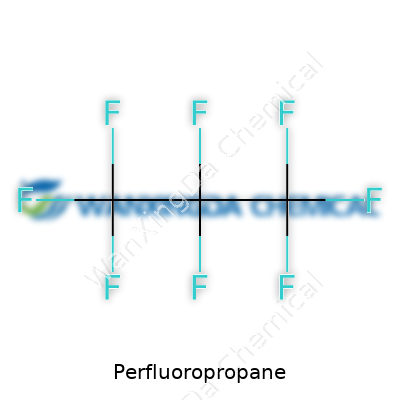
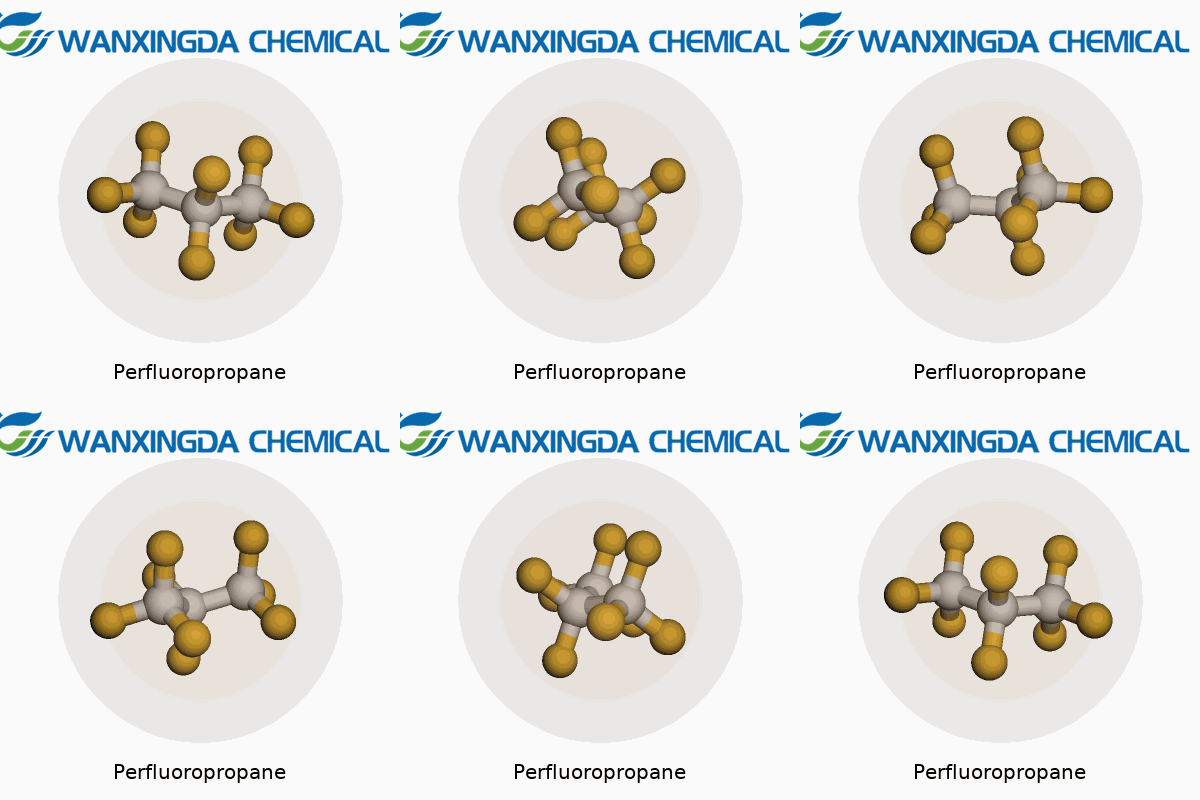
Unlike more familiar gases, perfluoropropane carries eight fluorine atoms, turning a simple propane skeleton into a heavyweight in the inert gas league. With the formula C3F8, it hovers as a colorless, odorless presence under normal conditions, sporting a molecular weight that—while hefty for a gas—proves light enough for straightforward handling. Its chemical resilience comes from the carbon-fluorine bonds, some of the strongest in organic chemistry, crucial for anyone who counts on consistent performance under stress. The gas resists decomposition under heat and doesn’t invite reaction with moisture, acids, or bases.
Physical and Chemical Properties in Real-World Terms
In practice, perfluoropropane boils at about -36.7°C. Storing and transporting it means paying close attention to pressure, as it transitions easily between liquid and gas depending on temperature and containment. One key advantage is its low reactivity—venting or leaks don’t spark fires, and unlike ammonia or chlorine, workers aren’t blasted by caustic fumes. Still, a heavy gas like this brings some catch: it hangs low in confined spaces, displacing oxygen, presenting a clear risk if folks don’t respect basic safety.
Labels, Specs, and Lab Realities
Science in the real world isn’t just about getting the formula right. It involves juggling how to read and relay technical details: balanced between regulatory requirements and what people actually do on-site. Pure perfluoropropane generally ships in high-pressure cylinders with clear labeling, following hazard classification as a compressed gas. The technical data pinpoints purity (often hitting 99.99%), pressure limits, and usage warnings. In my own time navigating industrial labs, clear labeling and meticulous specs made more difference than some folks realized—a botched shipment or unclear label caused headaches no training could cure.
Putting the Pieces Together: How It's Made
Commercial production typically spins out from the fluorination of hydrocarbons, like exposing hexachloropropane to elemental fluorine. That reaction isn’t for the faint of heart; fluorine’s biting reactivity means strict controls and robust reactors. Many labs opt for catalytic techniques to limit byproducts and make downstream cleanup tolerable. Each link in the supply chain shoulders responsibility—one kink or shortcut, and purity drops, which ripples straight through to performance in the field. As always, it falls on skilled personnel and thoughtful oversight, not just the equipment itself.
Not Just a Spectator: Chemical Interactions and Tweaks
Once made, perfluoropropane rarely volunteers for chemical reaction, precisely because those fluorines shield the carbon backbone so well. Still, under the right push—like strong irradiation or electrical discharge—it can break down, releasing lower-weight fluorocarbons or even elemental fluorine. In niche research, scientists coax new properties from perfluoropropane by blending or partially substituting fluorines, after wrestling with tough synthesis challenges. The bottom line? Inertness saves equipment and extends lifetime, but it doesn’t mean unlimited possibilities.
The Many Names of a Useful Gas
Anyone working with perfluoropropane soon runs into synonyms—octafluoropropane, C3F8, R-218—each reflecting either industry shorthand or regulatory frameworks. One label pops up in electronics, another in medical imaging, and these shifting names sometimes confuse trainees or newcomers. That simple naming conundrum carries weight, especially with supply chain complexity or export restrictions. Consistency matters when what’s legal in one country isn’t so simple in the next.
Safety, Handling, and Industry Standards
In my experience, working responsibly with compressed gases starts with up-to-date safety protocols and real-world inspections. Perfluoropropane doesn’t ignite, but like other dense gases, it quietly builds up in pits or poorly ventilated corners—an invisible hazard threatening asphyxiation if ignored. OSHA guidelines call for leak-proof storage, systematic ventilation, and robust cylinder handling. Training covers both what to do and what not to do, weaving together lessons written in accident reports and best-practice guides. Emergencies rarely announce themselves, and the best-prepared shops treat even routine transfers as high-stakes work.
Where Perfluoropropane Shows Up
Demand for perfluoropropane stretches across unexpected arenas. In electronics fabrication, the gas shines in plasma etching, carving out microscopic pathways on silicon wafers. Surgeons and ophthalmologists value its role for retinal detachment repairs, where a gas bubble balances delicately against the inside of the eye. MRI contrast imaging sometimes taps into its unique signature, opening details invisible to conventional agents. Other fields eye it for thermal insulation and as a dielectric medium, especially where stability outranks cost or convenience. Each use fuels further refinement, as one group’s needs push manufacturers to up the ante on purity or performance.
Pushing the Boundaries: Research & Development
No good material avoids the curiosity of researchers for long. Universities and R&D labs scrutinize perfluoropropane’s behavior in nanotechnology, looking for fresh applications in drug delivery or advanced coatings. Global demand for precision cleaning and ultra-clean etching keeps spawning new questions—can this gas solve newer contamination challenges, or open doors to smaller, more complex chip manufacturing? There’s a kind of arms race underway, especially as global technology supply chains tighten and standards rise. Participating in collaborative research, I’ve seen teams compete as much against their own last-best results as against each other.
What We Know About Toxicity
Perfluoropropane travels through the body without much fuss and, so far, doesn’t break down into nasty metabolic byproducts. Inhalation at high concentration still blocks out oxygen, a real risk that sneaks up because there’s no smell to warn of danger. Research remains ongoing, especially as regulatory agencies demand deeper insight into chronic exposure and trace environmental buildup. In clinical use, as with any injected or inhaled gas, protocols hinge on tight control of both dosage and delivery. Vigilance never stops, since history shows that even “inert” chemicals sometimes yield surprises after decades of use.
Looking to Tomorrow
Interest in perfluoropropane won’t fade soon. Advances in chipmaking, high-voltage switchgear, and precision medicine all demand gases that perform reliably at the edges of current technology. At the same time, growing scrutiny over potent greenhouse gases creates friction—C3F8 lingers in the atmosphere for thousands of years, drawing regulators’ eyes. Newer projects search for ways to capture emissions or innovate alternatives that protect function without sacrificing climate commitments. From what I see as a chemist and concerned citizen, the path forward means merging technical ingenuity with a strong sense of stewardship. Cleaner alternatives, smarter containment, and open data-sharing among industries need to lead the way if we want to keep reaping the benefits without paying a steep price later on.
Where Science Meets Daily Life
Perfluoropropane doesn’t show up in lunchtime conversations, but its story stretches across lifesaving medicine and demanding manufacturing. I first encountered its name during a family member’s eye surgery. I remember asking the ophthalmologist about the “bubble” used for the repair. That's when I learned about perfluoropropane and how a single chemical can mean the difference between sight and vision loss.
A Closer Look at Eye Care
Perfluoropropane is a heavy-duty gas doctors use for retinal surgeries. During a retinal detachment, the surgeon needs to hold the retina in place while the eye heals. Filling the eye with this special gas creates just the right pressure. The bubble stays for weeks and gradually leaves the eye without further procedures—clever and practical. Surgeons prefer it because it lasts longer compared to alternatives like sulfur hexafluoride, which gives the retina more time to reattach properly. These surgeries restore sight for thousands every year. I’ve seen firsthand how such innovations reclaim independence and hope.
Beyond the Hospital: Manufacturing and Testing
Perfluoropropane also shows up in electronics factories. Engineers turn to this gas for plasma etching, a process that carves intricate patterns onto semiconductors for computers, phones, and cars. They pick perfluoropropane because it’s stable, doesn’t react easily in storage, and its mixture works well at micro levels. Better etching leads to faster and more reliable chips. As a consumer, I like knowing the devices around me rely on precise technology and the compounds that make it possible.
Environmental Considerations
This gas doesn’t vanish without a trace. Perfluoropropane lingers in the atmosphere for a long time. Scientists measure this persistence and call it the “atmospheric lifetime.” This means once it gets out, it sticks around—adding to greenhouse gases that warm the planet. With climate concerns climbing, people in science and industry need to constantly weigh the benefits versus environmental costs. Looking at the facts, perfluoropropane’s global warming potential is high compared to carbon dioxide. Facts like these matter when companies account for environmental footprints.
Balancing Innovation and Responsibility
Doctors and engineers embrace perfluoropropane because it solves difficult problems. Still, the story doesn’t end at utility—responsibility matters too. Hospitals have strict protocols to keep gas losses to a minimum during surgeries. Factories invest in recovery and recycling systems, capturing as much as possible before venting. Industry groups and environmental agencies are pushing for designs that rely on less persistent gases or even alternatives with lower impacts.
Looking At the Future
Medicine and technology have always depended on chemicals that can feel mysterious. Perfluoropropane stands out for how it gives back sight and powers our electronics, even as it asks tough questions about sustainability. Real progress comes from honestly weighing these mixed legacies and seeking safer, smarter ways to use powerful chemistries.
Looking Past the Lab Coat: How Safe Are We?
Perfluoropropane, a colorless and odorless gas, has gained attention in more medical circles lately, especially among eye surgeons. Some people call it by its code, C3F8, since it rolls off the tongue more easily in the clinic. Doctors use it mainly during eye surgery to help repair retinal detachments. It gets injected into the eye, where it creates a kind of bubble that holds things together while the body heals. The big question: just because it’s used by professionals, does that mean regular exposure is safe?
Looking at What Science Says
What stands out in published studies is how little perfluoropropane interacts with the human body on a chemical level. It’s very stable and doesn’t seem to break down inside the eye. That’s a good sign. Scientists discovered that, after the gas has done its job, the body gets rid of it mainly through the lungs. So, you won’t find leftover pieces of the molecule lurking where they shouldn't.
But this doesn’t tell the whole story. The eye is a pretty controlled environment. When people get exposed at work, safety changes. Places that make or use perfluoropropane for electronics or refrigeration need to track leaks, since the gas can displace oxygen in enclosed spaces. Breathing in a bunch of any inert gas can lead to breathing problems, dizziness, or even unconsciousness if the oxygen gets low enough. That’s not about perfluoropropane having a toxic bite, but about plain old suffocation risk.
Unpacking Health Risks Beyond Medicine
Long-term effects in people who never had an eye operation? There isn’t much solid data. The evidence we have right now comes from industrial accidents, which thankfully remain rare. Still, the Environmental Protection Agency rates it as having low toxicity to humans. It doesn’t cause cancer, and the molecule doesn’t break down into anything nastier in the body.
Some doctors I’ve spoken to feel comfortable with its use in surgery because the alternative, complete vision loss from a detached retina, is far worse. The risks in a tightly watched surgical room differ from risks in a busy factory or out in the wild.
I remember chatting with a safety officer at an old refrigeration plant, who said the gas monitor alarms were absolutely crucial. They learned it early: just because you can’t smell or see a gas doesn’t mean it can’t cause problems if there’s not enough fresh air. The risks here come down to how and where someone gets exposed.
Moving Toward Safer Use
So what should people do? For patients facing surgery, the benefits far outweigh the concerns when skilled clinicians follow protocols for dosing, pressure, and post-op checks. In factories or workplaces, don’t skip routine gas checks and ventilation systems. Regular training and reliable detectors save lives, and every worker deserves that peace of mind.
We have a lot more to learn about how trace exposures affect health, especially over decades. Pushing for more open safety data, not just in scientific journals but talked about among workers and patients, will help keep everyone safer. The tools are there. Using them makes all the difference.
The Straightforward Nature of a Gas Few People Meet
Perfluoropropane exists quietly in labs and high-tech facilities, yet most folks might never know its name outside academic circles. I learned about it in an undergraduate chemistry class where it stood out because it behaved so differently from everyday gases like nitrogen or oxygen. Think about a substance that laughs in the face of flames and shrugs off water – that’s perfluoropropane.
What Makes Perfluoropropane Physically Unique
This gas boils at a temperature much lower than your winter freezer can manage. Turn the thermostat down to somewhere near -37°C, and only then will it begin to drip. It keeps its cool as a gas at room temperature, totally invisible and odorless. Anyone who expects a whiff of chemicals when opening a bottle of perfluoropropane will be left guessing.
I’ve seen this gas pumped into systems where leaks spell financial trouble. Due to its density, perfluoropropane sticks around longer than air. Growing up where welders and refrigeration techs often talked shop at the breakfast counter, I recognized its value in tracing leaks in tough spots, since it hangs low and doesn’t disappear the second a breeze blows in.
What makes it so unflappable? It owes this, in part, to a full coat of fluorine atoms wrapped around every carbon in its backbone. The result: perfluoropropane resists reacting with just about anything. Put a match to it, and nothing happens – it won’t burn. No wonder, then, that electrical engineers have taken a shine to it in arc-quenching, since it doesn’t catch fire when sparks start flying.
The Weight and Feel of an Invisible Workhorse
Some folks might guess all gases feel the same, but perfluoropropane tips the scale with some muscle. Each molecule packs plenty of heft, thanks to the fluorine in its makeup. This drives it to sink below the lighter gases in the air. I remember a university demonstration where students tried to pour it much like water into a beaker, and the invisible bubble pooled below, refusing to rise and mix. That lingering quality matters, especially in leak detection or as a tracer.
A Nonstick Personality and the Bigger Impacts
Chemically, perfluoropropane slips away from almost every reaction. Water won’t dissolve it, acids can’t rot it, and microbes can’t eat it up. This has me thinking of old Teflon pans that refuse to let breakfast slide into sticky disasters – there’s something almost magical about how nothing sticks to it. Trouble is, this slipperiness carries concern. The same muscle and staying-power that prove useful in science labs can pose problems. Released into the air, perfluoropropane doesn’t break down quickly. It can stick around in the atmosphere for thousands of years, contributing to greenhouse effects far longer than carbon dioxide.
So, in a world trying to manage climate issues, better stewardship of specialty gases isn’t just a technical challenge – it’s a moral and practical one. That means tightening up leak prevention, recycling gases when possible, and keeping close tabs on their use. It’s not about abandoning helpful technology, but using it responsibly and with an eye on the future.
Understanding the Real Risks
Storing any specialty gas can feel like a chore forced by regulations, but some chemicals demand real respect. Perfluoropropane falls into that group. It’s a greenhouse gas. It hangs around for thousands of years and traps heat a lot more efficiently than carbon dioxide. Every cylinder represents not just value for industry, but environmental risk if mishandled.
Practical Experience Speaks Volumes
I’ve seen more than a few labs treat rare or specialty gases as afterthoughts, with stray tanks collecting dust in a corner, chained only because the rules say so. The problem isn’t just the obvious hazards—cylinder rupture or leaky hoses. The bigger story hides behind the numbers: a single small leak can contribute to atmospheric damage long after your project is done.
Perfluoropropane won’t ignite and isn’t toxic like chlorine, but it doesn’t vanish if released. Mistakes matter. If you’ve ever watched a seasoned warehouse crew check the gas lines before winter, you’ve seen the difference experience makes. They don’t skip the basics: upright storage, cool and dry spaces, away from direct sun and heat. Concrete floors and plenty of airflow keep the tanks safe from bumps and corrosion. Forget the temptation of storing tanks in mechanical rooms or cramped under-stairs closets—gas finds its way out the path of least resistance.
Strong Institutional Habits
Companies that get storage right put procedures ahead of convenience. Chain every cylinder upright against a fixed support. Never assume last year’s storage corner is still good just because nothing bad happened yet. Where I worked before, the safety team did random spot checks and replaced rusty chains or racks every year, whether they looked okay or not. Some may see it as overkill, but the track record speaks for itself: no incidents, no leaks, no fines.
It’s not just about securing a tank. Use rooms that stick to moderate temperatures all year, with proper signage that doesn’t fade or peel. In my own experience, even a seemingly small oversight, like leaving a cylinder valve cap off for a day, can become a lesson in why protocols exist in the first place. Storing perfluoropropane cylinders away from sources of vibration, heat, or anything that could knock them loose reduces headaches and keeps everyone safer.
Environmental and Regulatory Pressures
Regulations keep tightening around greenhouse gases. More inspectors look for clear records—who signed for the gas, how long it’s been in storage, and what plan exists for unused cylinders. Good practice means tracking every tank, not letting mystery bottles sit for years. Return empties to suppliers without delay. This helps stop leaks before they happen and keeps your operation above board.
Pressure testing, valve checks with leak-detection spray, and routine cylinder rotation all play a role. Building a team culture that treats rare gases as shared responsibility makes the difference. Early in my career, peer accountability was the silent force behind safe storage. One sloppy moment from anyone could put a project, a lab, or even a company’s reputation at risk.
Better Outcomes Through Simple Choices
The safest storage spaces aren’t often the easiest spots to install or reach, but making that extra effort pays off. Secured, dry, and ventilated storage with good records forms the backbone of managing perfluoropropane wisely. Those small decisions—checking seals, respecting expiry dates, documenting usage—add up, protecting both workplace safety and the environment for years to come.
What Perfluoropropane Brings to the Table
Perfluoropropane shows up in all kinds of industries—medical imaging, electronics, even as a gas in fire suppression systems. Folks rely on it because it hardly reacts with other chemicals and can do its job without breaking down under pressure or heat. Over time, I’ve run into it in labs, where people treat it like a valued tool, not just another part on the shelf.
The Hidden Risks Behind the Science
A big reason perfluoropropane earns respect in the field: it doesn’t play around with human health or the planet. Breathing in too much can lead to dizziness, headaches, or worse. Since it’s heavier than air, it pools low to the ground. Without enough ventilation, someone could pass out before they even realize what’s happening. Since it’s a greenhouse gas, scientists and regulators have their eyes on it. Air samples in large cities show traces drifting from handling sites, raising issues for earth’s warming climate.
Practical Steps for Safe Work
I’ve learned that a good safety setup isn’t optional—it protects people. Everybody handling perfluoropropane needs to double-check their gear before starting. Masks rated for gases, gloves that don’t let chemicals through, and goggles are musts, not extra accessories. Any time I’ve seen someone skip them, the risk isn’t just personal—it puts everyone in the room on edge.
Workspaces vent the air regularly, either with proper hoods or well-designed fans pulling fumes outside. No one wants to count on luck. The process for moving or storing pressurized canisters means strapping them upright on carts, keeping them out of sunlight, and locking up valves between uses. These steps become second nature to anyone who respects chemicals.
Training Makes the Difference
Safety rules make sense on paper, but real understanding comes from seeing mistakes and learning. I’ve lost count of the times new lab workers lean on routine, only to run into trouble. Hands-on demonstrations show what leaking gas smells and looks like or how to spot frost on faulty valves. Regular drills push the routines out of theory and into muscle memory.
Learning from Oversight and Experience
Inspections and audits, especially surprise ones, catch blind spots that everyone misses over time. Talking openly about findings, without laying blame, builds workplaces where people want to do better because they care, not just because the boss says so. I’ve watched teams bounce back from close calls by rethinking how they check lines for cracks and triple-seal containers. That saves trouble down the line and keeps everyone honest about their habits.
Just Enough, Never Too Much
Only using as much perfluoropropane as needed for the job has saved money and peace of mind in every shop I know. If engineers and buyers push for alternatives with a smaller environmental footprint, whole organizations move toward safer choices—both for workers and the wider world. If regulators keep pace, tougher rules set a new standard.
Moving Forward as a Group
People can manage even tough chemicals like perfluoropropane by thinking about each step and fixing problems fast. Teams who trust their gear, communicate openly, and never skip training set the standard for others. It’s a group effort, built from daily habits, where safety means nobody gets left behind.