Sodium Benzoate: Tracing the Story from Lab Bench to Grocery Shelf
Historical Development
Anyone who has kept leftovers in the fridge for more than a couple of days has benefitted, knowingly or not, from the science behind preservatives. Sodium benzoate has played a central role in that science for over a century. Its use dates back to the late 1800s, at a time when scientists struggled to outsmart spoilage in food and medicine. The benzoic acid that appears in many fruits and spices started turning heads in the chemistry world, ultimately leading researchers to discover that the salt, sodium benzoate, carried similar antimicrobial properties but dissolved much more easily in water. That simple tweak gave product formulators a tool to extend shelf life and reduce waste, at a time when refrigeration wasn’t widespread. Chemists and food safety professionals walked a long, winding path to understand its behavior, but the outcome has seen sodium benzoate become a staple across processed foods, carbonated drinks, and beyond.
Product Overview
Sodium benzoate shows up everywhere these days. Look at soft drinks, pickles, fruit juices, cosmetics, even medicines—odds are, you’ll find it on the label. The reason is straightforward: it’s cheap to manufacture, easy to use, and does a solid job at stopping microbes before they have a chance to spoil or infect a product. It dissolves easily in water and acts fast, so factories can dose products in bulk with precision. If you’ve ever tasted that tang in some sodas, sodium benzoate sometimes plays a hand in that too, lending a faint salty taste that companies try to mask with sugar and flavorings. Over the decades, its reputation as a go-to preservative solidified, beating out rivals like calcium propionate in a number of applications.
Physical & Chemical Properties
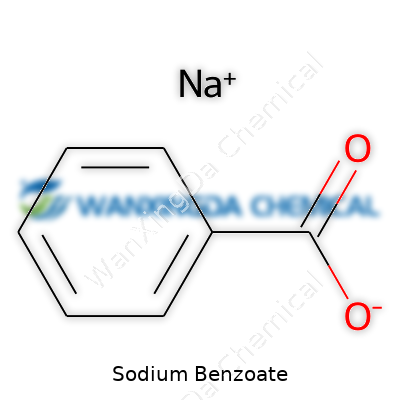
For a preservative, sodium benzoate doesn’t draw much attention to itself. It appears as a white, odorless powder or small granules. Chemically, it boasts the formula C7H5NaO2 and easily dissolves in water—over 60 grams can be dissolved in a cup of cold water, more if you heat it. Its success as a preservative stems from its acidic roots; it only acts against bacteria and fungi when the product pH is less than 7, with sweet spots below 4.5, which suits sodas and fruit sauces well. Chemists appreciate its stability under normal storage, but it breaks down at very high temperatures, which isn’t much of a concern unless the food is cooked aggressively after preservation. Its chemical stability means it rarely interacts with packaging, which keeps both food and medicine safe over long storage times.
Technical Specifications & Labeling
Reading food and medicine labels, sodium benzoate commonly pops up under its name or as E211 in Europe. Regulators in different countries set maximum allowable concentrations: the FDA caps it at 0.1% by weight in most foods, reflecting years of studies and ongoing debate. Labels must show its presence, often in small print, partly because of allergy risks and controversies about its health effects. Manufacturers follow purity guidelines—sodium benzoate for food comes with strict limits on heavy metals and potential contaminants, something that sometimes gets overlooked in public debate but matters immensely for public safety. Regulatory bodies conduct regular reviews, and the rules adapt with more research.
Preparation Method
The industry method to make sodium benzoate is straightforward chemistry at work. Benzoic acid—either synthesized from toluene via oxidation or extracted from natural sources—reacts with sodium hydroxide, turning into the salt form. Large chemical plants orchestrate this reaction in batches or continuous flow, with teams ready to test purity at each step. Impurities, like unreacted acid or trace metals, get filtered out, and the resulting powder or granules get dried and packaged. In smaller-scale labs, chemists follow the same logic but juggle with smaller glassware. The method stays consistent because it yields predictable, high-quality results, supporting industries from sodas to skin creams.
Chemical Reactions & Modifications
Chemists have tested sodium benzoate in all kinds of reaction schemes. On its own, it rarely reacts unless facing a strong acid or base in solution. In food or drink, under certain circumstances—high heat, low pH, and the presence of ascorbic acid—it can produce benzene, a known carcinogen. This discovery unsettled both food companies and regulators about twenty years ago, sparking reformulations and routine product checks. Outside food, the molecule adapts for use in specialty chemicals, where chemists might tweak the benzoate group to adjust solvent properties or reactivity. These modifications feed research in pharmaceuticals, where sodium benzoate sometimes serves as a starting point for more complex molecules.
Synonyms & Product Names
Anyone researching or working with sodium benzoate will see its many names: benzoate of soda, E211, food preservative 211, or sometimes just “preservative” on vague labels. In chemistry circles or technical documents, the name flips to sodium benzoate almost exclusively, but consumer-facing products often use the E number. International shipments and ingredient lists add more: “Sodium salt of benzoic acid” or translations in a dozen languages. This multiplicity can interfere with consumer understanding, so advocates push for simpler, standardized labeling.
Safety & Operational Standards
Safety standards for sodium benzoate grew stricter over the years, reflecting both increased awareness and periodic scandals around food safety. Workers in chemical plants wear protective gear, as the powder irritates the lungs and eyes. In product formulation, strict batch testing ensures that levels don’t creep above agreed-upon thresholds. In my own experience working in a food laboratory, every preservative addition gets documented, and a system of checks prevents overdosing. Schools and universities train chemists and technologists to treat it with care, despite its mundane appearance. The overarching goal always focuses on protecting user health, guided by evolving research data and the occasional high-profile recall that pushes industry standards higher.
Application Area
Sodium benzoate appears far beyond the soda aisle. It pops up in salad dressings, jams, syrups, sauces, and pickled goods. Beyond the plate, you’ll see it in toothpastes, mouthwashes, cough syrups, deodorants, and certain topical medications. Leather and textile industries take advantage of its antimicrobial kick to prevent mold in damp environments, a use I came across in textiles research. Laboratory scientists sometimes deploy it to inhibit microbial growth in reagents, making it a quiet backbone in experiment after experiment. Though food remains its headline act, its reach touches across industries, helping to keep products safe and stable.
Research & Development
Sodium benzoate's simple structure keeps research relatively affordable, opening the doors to both academic and industrial projects. Food science labs study how it interacts with other ingredients—preservatives, acids, colorants—constantly searching for combinations that deliver shelf life without negative side effects. Some recent work asks whether using lower concentrations alongside newer preservatives cuts risks without sacrificing protection. In drug research, there’s interest in how it can treat some neurological disorders; it shows up in experimental therapy for urea cycle disorders and even gets attention for possible effects in managing schizophrenia, though these studies remain early-stage. Environmental chemists test how sodium benzoate breaks down, since widespread use raises questions about its impact on wastewater and soil microbes.
Toxicity Research
Health concerns keep researchers busy, especially after the benzene-in-soda scare. High doses of sodium benzoate in animal tests point to kidney and liver stress, but typical amounts in food land far below danger zones. Most of the population clears it from the body within hours. Combined exposures—mixing sodium benzoate with other additives or drugs—prompt ongoing study. Some work links preservatives like sodium benzoate to hyperactivity in children with ADHD, though causality remains murky and heavily debated in scientific circles. Regulators and advocacy groups keep updating guidelines as more data rolls in. As a parent and consumer, I take comfort in knowing that multiple agencies, from FDA to EFSA, keep a close watch and push for transparency and safe levels.
Future Prospects
The push for clean labels and “natural” foods puts sodium benzoate at a crossroads. While it does its job well, growing consumer skepticism directs attention to labels and alternatives. Research fakes through fermentation-derived solutions, plant extracts, and even the use of bacteriophages to keep food fresh. Demand for transparency and the rise of organic foods challenge the industry to adapt, and smarter packaging technologies may soon reduce the need for some preservatives. Still, the chemistry behind sodium benzoate keeps it a useful fallback, especially in places where spoilage poses a major risk to food security. Its future likely lies in more targeted, lower-dose applications, possibly in partnership with newer, “greener” preservation methods. Industry, government, and academia all have a stake in balancing advances with health and environmental safeguards, ensuring that the pursuit of longer shelf life never comes at the cost of safety or trust.
What’s Actually in That Soda?
That sweet, fizzy drink in the fridge often carries a secret helper—sodium benzoate. Supermarkets don’t bother to explain what it is or why it’s there. This chemical pops up in soft drinks, jams, pickles, and even mouthwash because it keeps spoilage at bay. Its main task isn’t fancy science. Sodium benzoate holds off mold, yeast, and some bacteria, keeping food and drinks fresh longer. Some historians might say the invention of food preservatives outmatched the invention of refrigeration in the fight against hunger and food waste. That’s not far from truth.
Mold, Yeast, and Why the World Needs Help
Open a bottle of juice and leave it out, and the sticky stuff inside doesn’t stand a chance—fuzzy mold takes over. Fresh food comes with a short lifespan. Producers scrambled to find solutions that didn’t kill the flavor or send folks running with stomach aches. Benzoic acid showed up naturally in cranberries, prunes, and some spices. Chemists figured out how to make sodium benzoate, a salt of benzoic acid, and dropped it into their ingredient lists. Food giants everywhere leaned on it, partly because they had to. The Food and Drug Administration recognized it as safe in low doses, setting limits well below where side effects might kick in.
Bigger Than Food—A Hidden Helper
Most people come across sodium benzoate without a clue. Dig into a bottle of salad dressing, brush your teeth with certain brands, splash mouthwash after coffee, or rinse your hair with dandruff shampoo—it’s in there working quietly. The job never changes: fight off microbes, keep the product stable, and allow supermarkets to fill shelves instead of dumpsters. Manufacturers love it because it’s cheap and reliable.
Pharmacies also sell medicines and syrups that last months on the shelf thanks to sodium benzoate. Without it, many liquid drugs wouldn’t even make it to the pharmacy. Some makeup and personal care goods use it too. My own bug spray has sodium benzoate on the back label, making me glad I don’t have to worry about it turning funky after one summer picnic.
Problems and Pushback
The internet loves to sound alarms about ingredients that look unpronounceable. Studies raised questions about sodium benzoate and its reaction with ascorbic acid (vitamin C), forming benzene—a substance linked to cancer at high exposure. Real world measurements show benzene usually stays well below safety limits, but food scientists keep an eye on the problem. Allergic reactions show up rarely, and most people won’t notice anything after years of eating food preserved with sodium benzoate.
A few parents claim artificial preservatives make their kids hyperactive. The evidence so far stands on shaky ground, but some companies market their products as “preservative-free” to win over families who want to play it safe.
Where Do We Go From Here?
Many shoppers want labels they can trust. The latest trend calls for simple ingredients and fewer chemicals. Some smaller brands lean into natural preservation, using vinegar or fermenting their products. Still, sodium benzoate hangs around because people want food and personal care items that won’t spoil before the next road trip or lunch break. The search for better alternatives keeps scientists busy, but shelf life always matters on store shelves and in busy kitchens.
Why Sodium Benzoate Shows Up Everywhere
My first real run-in with sodium benzoate came during a lazy scan of a soda bottle’s ingredients. Sparkling drinks, jams, salad dressings—turns out this stuff pops up in kitchens all over the world. Food companies didn’t just toss it in for fun. It has a sturdy track record for putting the brakes on mold and bacteria, stretching shelf life, and cutting down on waste. That matters in a world where spoilage leads to costly trips to the store and a mountain of trash.
Digging Into the Science
No one wants to blindly trust food labels. The FDA and European Food Safety Authority scoured data before giving sodium benzoate a pass for use in foods, sticking to levels below 0.1% by weight. Researchers lined up to test it, running animal and human studies. After lots of reading, what stands out is that most healthy bodies break down sodium benzoate fast and flush it out in urine. Trouble arises if someone piles it up far above the usual amounts in a standard diet.
Mixing sodium benzoate with vitamin C stirs up the most buzz. Under certain conditions, the combo can form benzene, a cancer-linked chemical. Tests on real products show that levels of benzene in most sodas come in far under what health authorities worry about. Still, companies have changed recipes to steer clear of that risk where possible. The drama seems like a reminder that simply tossing chemicals together without awareness doesn’t always go well.
The Allergy Question
Life hasn’t handed me much in the way of food allergies, but I know folks who can’t even stroll down an aisle without double-checking labels. For most, sodium benzoate passes through without a peep. Some people with asthma or chronic hives report flare-ups linked to preservatives, including sodium benzoate. Studies show it mostly happens with higher intakes, and plenty of other preservatives act up in similar ways. A food diary and care from a professional can help get to the bottom of what’s triggering symptoms.
Balancing Risks and Reality
Buzz about food additives comes in waves. Reading through research and food safety group updates, I see sodium benzoate singled out far less than other preservatives linked to headaches or attention issues in children. The everyday shopper deals with a tangle of confusing labels, marketing drama, and half-facts thrown around online. The best way I’ve found to cut through the noise is sticking with whole foods more often while accepting that modern life sometimes calls for bottled drinks or preserved condiments.
Heading Toward Smarter Choices
People want a say in what lands on their plate. Calling for clearer labels gives everyone more control, especially families dealing with health issues that could tie back to preservatives. Cooking more at home, scanning ingredients, and staying up-to-date through nutrient facts pages or food safety agencies keeps risky trends in check.
Trying to yank every additive out of your diet overnight sets a high bar. Picking fresh produce, dialing back on heavily processed foods, and keeping an eye on news from trustworthy and research-backed sources delivers peace of mind. After all, sodium benzoate rarely stands solo as the main culprit in health troubles—it acts as one piece of a bigger food puzzle.
Open your kitchen cabinets and you might see a parade of products stamped with unfamiliar ingredients. Sodium benzoate pops up often. People ask about its safety, and for good reason—it sits in so many things people eat every day. I’ve spent years looking at food labels and studying the science behind what goes on plates and in cups, so let’s talk about why sodium benzoate has become almost invisible yet so common.
Why Companies Put Sodium Benzoate in Foods
Anyone who’s tasted homemade fruit juice after a few days knows how fast things spoil. Bacteria and mold move in quickly. Companies add sodium benzoate as a preservative to slow that process. It lets drinks and snacks last on store shelves for weeks—or even months—without smelling bad or growing fuzz. This isn’t just convenience for the company; it means fewer trips to the store for families and less food thrown out from spoilage at home.
Where Sodium Benzoate Hides
Grab a bottle of soda, especially anything with citrus flavor, and look at the tiny print near the bottom of the label. Sodium benzoate often appears in sodas, sport drinks, and bottled teas. These drinks have just the right mix of sugar and acid for bacteria, so the preservative sticks around as a silent guardian. Jams, jellies, and fruit spreads can contain sodium benzoate, especially the lower-sugar types where the natural preservation doesn’t kick in hard enough.
Pickles and relishes sometimes have it as well, especially if vinegar alone can’t keep spoilage away. Some salad dressings use sodium benzoate to balance preservation with fresh flavors. You can find it in certain types of condiments, sauces, and even in jarred olives.
Even products on the sweeter side—like maraschino cherries, popsicles, and fruit syrups—rely on sodium benzoate. Some dessert toppings and low-calorie spreads depend on it to stretch out their shelf life after opening. Pharmaceutical syrups, kids’ medicine, and some vitamin drinks often carry it too. I’ve seen the ingredient more than once while helping a friend read allergy warnings for their child’s cough syrup.
Safety, Regulation, and a Closer Look
Skepticism about preservatives has grown. My neighbors talk about chemicals in food at backyard cookouts and scroll through headlines about banned additives. The FDA labels sodium benzoate as “generally recognized as safe” at concentrations below 0.1 percent in food. Too much of any additive can be problematic, but most people consume way below this threshold from regular foods.
One thing science has pointed out: sodium benzoate can interact with vitamin C to form benzene, a compound that draws a lot of concern. Modern soft drink recipes get tested to limit this reaction, and food laws place strict limits on how much benzene a drink can contain. Still, folks who want to cut down might learn to look for whole foods, fresh items, and brands that skip preservatives.
Real Alternatives and Changing Habits
Many families now push for shorter ingredient lists. Some companies respond by replacing sodium benzoate with alternatives like potassium sorbate, refrigeration, or smaller packaging. I lean toward foods where I recognize every ingredient, and so do many parents I know. Sometimes this means trading a few extra trips to the store for peace of mind.
Sodium benzoate is just one of many food quirks hiding in plain sight. Understanding where it turns up gives people power to choose what goes on their table—and that choice starts with a closer read of the label, not just the promises on the front of the box.
Digging Beneath the Surface of a Common Preservative
Staring at an ingredient list in the grocery store, my eye often catches sodium benzoate. It pops up in sodas, salad dressings, pickles—the stuff we toss into our carts thinking more about flavor than science. On the surface, the chemical does a clear job: stop mold and bacteria from spoiling what’s in the bottle. Yet, few shoppers ask what this preservative does to us, not just the food.
I started thinking harder about this after reading scientific reviews and chats with nutrition-minded friends. Most of us hear “FDA approved” and call it a day, assuming routine exposure is safe. But living through my own sensitivity to processed foods, I learned that not everything considered safe for the majority actually feels fine for everyone.
The Allergy Factor
It’s easy to scroll past news of food additives causing allergic reactions. Still, sodium benzoate occasionally triggers hives or asthma in sensitive people. Asthma runs in my family, so the stories of sudden wheezing or skin flare-ups after soda aren’t just medical trivia—they could easily happen at a summer picnic with my cousins. Reports in medical journals describe rare but real cases of urticaria, a fancy word for itchy hives, that vanish once sodium benzoate leaves the meal plan. For kids or adults who already wrestle with allergies, reading tiny print on food packages becomes more than a chore—it’s a defense mechanism.
Benzoate Meets Vitamin C: An Unwanted Chemical Partner
Science isn’t just about what individual chemicals do solo. In acidic foods and drinks, sodium benzoate and ascorbic acid (vitamin C) can join forces to create benzene, which is a carcinogen. Research done by food safety watchdogs like the FDA points out that benzene only turns up at dangerous levels in rare conditions, like high heat or old stock sitting on the shelf. Still, every scare sparks reform; after findings about benzene in sodas, companies adjusted how they mix these ingredients.
Keeping exposure low is always safer. The Environmental Working Group emphasizes this point—watch for labels, know that “generally recognized as safe” does not mean risk-free—especially for children, pregnant women, or those who simply want to limit unnecessary additives.
Concerns About Hyperactivity
Parents of hyperactive kids hear a lot about food dyes and sugars, but sodium benzoate quietly enters the discussion. One British study brought the chemical into the spotlight by linking it to increased hyperactive behavior when mixed with certain colors in drinks. This didn’t prove sodium benzoate alone causes behavioral issues, but for groups already managing ADHD, the warning sparks cautious shopping. I’ve seen parents switch to homemade snacks because the peace of mind outweighs convenience foods.
What Choices Look Like
We don’t all react the same way to preservatives. Some people sip a can of soda and think nothing of it, but others get an itchy throat. The science around sodium benzoate keeps evolving, and that’s why reading emerging research matters. Food companies can reduce risk by replacing sodium benzoate where possible, relying on better packaging or refrigeration instead of chemical guards. Shoppers can stick to fresh items that skip the chemical shelf-life extension altogether. Real progress happens where companies, scientists, and consumers keep the conversation honest and keep an eye on what’s actually going into the food we eat every day.
Looking Beyond the Label
Most people reach for a packaged drink or snack without pausing over the ingredient list, but a name like “sodium benzoate” tends to stop folks in their tracks. Some will insist it’s all synthetic, while others mention that it can show up naturally. In the food world, these debates turn into big questions about what we eat, why manufacturers add certain things, and what’s truly “natural.”
Origins and Chemistry
On paper, sodium benzoate comes from a pairing: it’s the sodium salt of benzoic acid. Benzoic acid has roots in nature—cranberries, plums, cinnamon, and apples all carry a bit of it. But the clear crystals that end up in soda or pickles don’t get plucked from berry bushes. Factories make sodium benzoate by mixing benzoic acid with sodium hydroxide. Chemically, it copies something natural, but the finished powder doesn’t come straight from the earth.
This split origin turns up in other ingredients too. Vitamin C gets made in labs though it also lives in oranges. Vanilla flavor might come from a real bean or get spun up from chemicals that taste identical. Regulatory bodies in the U.S. and Europe tend to put sodium benzoate under the “synthetic” category since the bulk supply uses industrial processes. Still, it’s tricky: a little does show up in foods without any help from humans at all.
Why Sodium Benzoate Matters
Preservatives make long-distance shipping and supermarket shelves possible. Food wouldn’t last a week in most pantries without them. Sodium benzoate stands out because it beats back yeasts, molds, and some bacteria by making life tough for microbes. Companies turn to it for acidic products—colas, fruit juice blends, pickles, even salad dressings.
Concerns rise because the name sounds harsh, and there’s plenty of worry about what “synthetic” means for health. Sodium benzoate usually flies under official safety limits, but some studies point to possible headaches or hyperactivity bumps in sensitive kids. Health agencies like the FDA call it safe, up to certain levels. Pairing sodium benzoate with other additives, such as vitamin C, can lead to benzene traces—a connection that’s earned stricter testing and recipe tweaks by major brands.
Food Industry Dilemmas and Consumer Choices
Natural preservative alternatives haven’t reached the scale, shelf life, or cost that synthetic ones provide. Vinegar, salt, rosemary extract, and plant ferments all help in niche situations, but they don’t match sodium benzoate’s wide reach and stability. Clean-label movement fans push for “ingredients mom can pronounce,” but every swap brings trade-offs in price, freshness, and even safety.
Rather than take labels at face value, I’ve learned to check entire ingredient panels and think about the overall pattern of my diet. Focusing on fresh, home-cooked meals where possible keeps these kinds of worries far away. Still, the broad food supply relies on durable preservatives, and sodium benzoate likely won’t disappear soon. Pressuring brands to share why they use certain additives and supporting real research can shape a future with safer choices—whether something starts in nature or in a beaker.