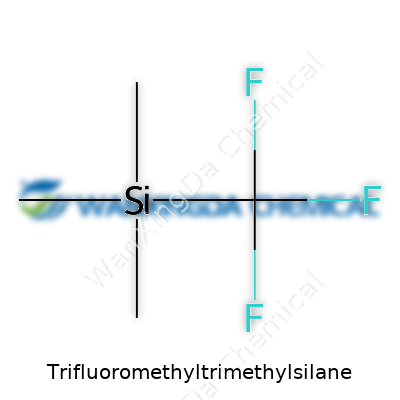
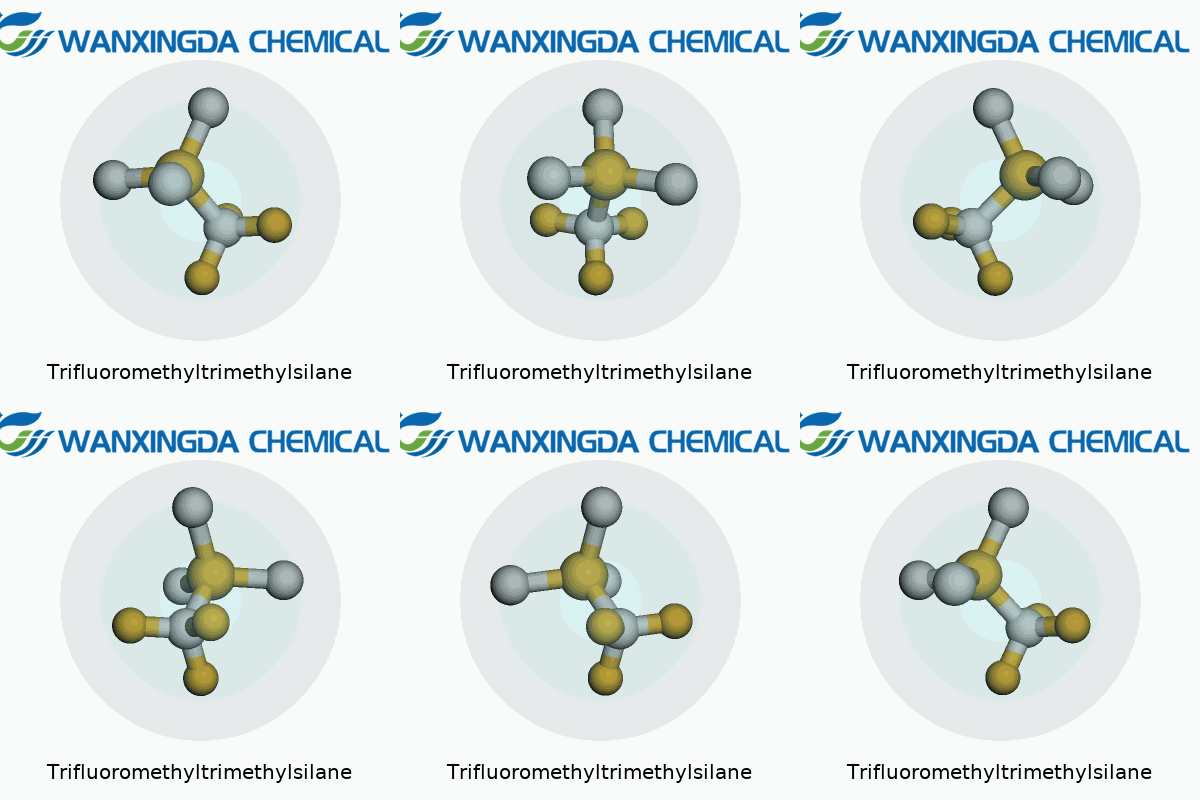
Trifluoromethyltrimethylsilane: Unwrapping Its Real World Value and Challenges
Historical Development
Chemistry tells stories about changing priorities and the need for clever molecules. Trifluoromethyltrimethylsilane, known in many labs as Ruppert-Prakash reagent, came onto the scene after researchers like Ruppert started probing new ways to add trifluoromethyl groups to other chemicals in the late 1970s. Before that, chemical toolkits for introducing this fragment were either clunky or expensive, or just plain dangerous. Introducing this new reagent changed the way chemists approached synthesis, especially in pharmaceutical and agrochemical labs. Back then, adding a trifluoromethyl group felt like a luxury reserved for big-budget projects. With this compound, researchers saw new possibilities: complex structures, new drug candidates, and better crop protectants. The impact is still being felt, decades later.
Product Overview
Anyone spending time in a synthetic chemistry lab sees bottles marked TMSCF3, a shorthand for trifluoromethyltrimethylsilane. It looks like a clear, almost oily liquid. What draws scientists to it? It delivers the powerful trifluoromethyl group in a manageable, easier-to-handle package. The simplicity sounds almost unfair: just pour it, react, and suddenly, your molecule wears a new hat—a durable, electron-rich trifluoromethyl group. Its role in modern chemistry can’t be overstated. Whether developing next-generation pharmaceuticals or shaping specialized materials, this reagent acts as a bridge from theory to real applications.
Physical & Chemical Properties
This compound doesn't stand out by color or texture—it's a colorless liquid with a modest boiling point. Chemists need to handle it with care, though; volatile organosilanes often bring flammability and the risk of releasing nasty fumes. Under normal conditions, trifluoromethyltrimethylsilane is stable enough for bench-top manipulation, if everything else in the lab is kept dry. Any splash of water can spoil the solution, giving off gas and destroying the reagent. Its power and risk both stem from its molecular character: a tight, silicon-based frame carrying the fluorinated group that every medicinal chemist now seems to want.
Technical Specifications & Labeling
Every bottle bears the marks of experience. The label tells a seasoned chemist all they need to know: purity over 97%, keep sealed, store under dry argon or nitrogen. Labels also warn about moisture sensitivity and incompatibility with strong acids and oxidizers. Precise technical specs matter less to everyday use than understanding what the symbol on a bottle means: an opportunity mixed with a reminder about respect for chemical hazards. The colorless nature and faint smell can lure the careless into mistakes, so tight labeling becomes part of safe operation, not just a bureaucratic checkbox.
Preparation Method
Chemical synthesis routes tend to evolve as demand and safety standards change. The industrial process for trifluoromethyltrimethylsilane involves the reaction of trimethylsilyl chloride with trifluoromethyl copper compounds, often under rigorously dry and oxygen-free conditions. Research chemists have published a few tweaks here and there, like changing solvents or metal catalysts, each with strengths and limitations. The story of how to prepare this reagent weaves together practical experience—dealing with sensitive intermediates, controlling reaction conditions, and finding the right balance between yield, safety, and cost.
Chemical Reactions & Modifications
Bench chemists lean on this reagent for key carbon-fluorine bond formation. Its real trick comes from nucleophilic trifluoromethylation—attaching the strong CF3 unit to electrophilic centers, especially carbonyl groups. This opens doors for making pharmaceuticals that don’t degrade in the body, pesticides that can withstand the elements, and imaging agents with the right balance of stability and reactivity. Reactions often need a catalyst or fluoride activator like cesium fluoride for best yields. Over the years, researchers have found ways to expand its scope: tweaking solvents, changing temperatures, or adding co-reactants to steer the trifluoromethyl group exactly where it’s needed in a target molecule.
Synonyms & Product Names
Long chemical names rarely catch on in busy labs. People say "TMSCF3", "Ruppert’s reagent", or "trimethylsilyl trifluoromethane". Each synonymous term brings stories of failed experiments, late nights, and breakthroughs. These multiple labels reflect a living history and underline the reagent’s status as a global workhorse, not a niche technical curiosity.
Safety & Operational Standards
One whiff inside the fume hood reminds everyone that safety isn’t optional. Legally required safety data sheets warn of flammability, targeted toxicity, and possible hydrolysis to toxic gases. Gloves, goggles, shielded syntheses—none of it is ornamental. Even short exposures to vapors require swift response. Many labs have tight protocols: two people present for transfers, dry-well PPE, sealed waste disposal. Institutional rules around organosilanes reflect hard-won lessons from accidents. Operational standards matter because the ease of use can be misleading. Seasoned chemists know to inspect seals, check argon low-flow alarms, and always double-check that no open flames are around.
Application Area
Pharmaceutical companies rely on this chemistry tool to give drug molecules longer lifetimes or special biological properties. Many blockbuster medicines, including some against cancer, viruses, or psychiatric disorders, trace back to a synthetic route involving trifluoromethyltrimethylsilane. Agroscientists find value adding CF3 groups to herbicides and fungicides. Analytical chemistry also finds this reagent handy for modifying molecules to enhance signal detection in spectroscopic analysis. In electronics, specialty polymers owe some of their high performance to the chemical transformations made possible by this compound. The versatility and accessibility of trifluoromethyltrimethylsilane keep it near the center of many research toolkits.
Research & Development
Research in this field moves fast because demand for new fluorinated molecules never slows. Academic labs keep publishing faster, cleaner, and more selective ways to use this compound. They aren't satisfied with traditional methods: they tinker with catalysts, explore greener solvents, and look for ways to recycle spent materials. Industrial giants push for safer, continuous-flow syntheses that scale well and generate less waste. These improvements often get shared at conferences long before they make it into textbooks. Young chemists experiment with it in student projects and competitions, taking on challenges that 40 years ago seemed out of reach. Science stays unpredictable, and this old reagent keeps surprising people.
Toxicity Research
Even essential reagents come with trade-offs. Researchers who work with trifluoromethyltrimethylsilane understand the need to review its toxicological profile. Studies report that while acute exposures don't always bring immediate symptoms, repeated contact with the skin or especially inhalation can cause lasting harm. Concerns about environmental persistence of fluorinated byproducts lead some labs to invest in specialized scrubbers and waste management. Some studies track cytotoxicity in cell models, hoping to pinpoint safer handling practices. That work shapes policy: stricter occupational limits, better fume hoods, and routine workplace monitoring. Science teaches that sticking with old practices isn't good enough—ongoing research pushes for ever-safer use protocols, encouraging real adoption of best practices rather than empty compliance.
Future Prospects
Chemistry won't move backward. The appetite for novel fluorinated compounds keeps growing as industries want better medicines, safer pesticides, finer diagnostics, and more resilient materials. Trifluoromethyltrimethylsilane stays central to this trend. Its continued use depends on improved handling, better recycling, and new synthetic tricks that cut down waste while boosting selectivity. Projects on greener alternatives—using less toxic metals or renewable resources—give a glimpse of the next breakthroughs. Chemical education pushes undergraduates to think about not just what this reagent can do, but why its stewardship matters to workers, the public, and the planet. As the landscape changes, trifluoromethyltrimethylsilane's story evolves, shaped by a world hungry for both progress and responsibility.
Building Blocks for New Medicines
Trifluoromethyltrimethylsilane shows up often in the labs of chemists working on new drugs and advanced materials. It has a long name, but its reputation comes from the way it adds a trifluoromethyl group — three fluorine atoms stuck to a carbon. Adding this trifluoromethyl group can change a molecule’s properties, sometimes making drugs break down slower in the body or helping them fit better into their targets. Think of a cancer drug that hangs around just a bit longer or a new antiviral that blocks infection more tightly. Without trifluoromethyltrimethylsilane, many of these tiny but important tweaks wouldn’t be possible.
Transforming Everyday Products
It’s not just about drug research. Trifluoromethyltrimethylsilane helps create materials that stand up to harsh conditions. Electronics and plastics with trifluoromethyl groups can resist heat, acids, and wear. Picture the wiring inside your phone or specialized coatings for aerospace — this compound often plays a role, making the difference between a tool that fizzles out and one that lasts through regular abuse.
What Makes It So Useful?
Most chemists smile a bit when they find a reagent that works smoothly. Some of them describe this compound as reliable and easy to handle, given the right training. Trifluoromethyltrimethylsilane stands out because it’s efficient: it brings in the prized trifluoromethyl group in reactions that would otherwise drag on or require lots of heat and effort. I remember a time in grad school, watching a colleague finally synthesize a stubborn molecule by switching to this chemical. She did three weeks’ work in an afternoon, thanks to its unique skills.
Safety and Environmental Concerns
As much as it delivers results, chemists know that trifluoromethyltrimethylsilane asks for respect. It releases toxic fumes if treated wrongly and can catch fire if spilled on a wet lab bench. The need to wear protective gear and use proper ventilation isn’t just a rule — anyone who’s worked nearby can sense why those rules exist. Fluorinated chemicals can also linger in water and soil, raising fair questions about waste management.
Labs and factories that use it often have protocols for collection and disposal, though the need for better cleanup strategies remains real. Regulatory agencies have been slow to catch up to the growing popularity of similar fluorinated compounds. Universities and industry leaders could do more to invest in alternatives or safe recycling instead of defaulting to the most convenient tools.
Looking Ahead
New methods, like using catalysts that cut waste, might lessen the burden on the environment. Some chemists try “greener” trifluoromethyl sources, but these often cost more or work less efficiently. Funding for this kind of research often struggles to compete with flashier fields, yet the impact on drug safety and environmental health deserves more attention.
Trifluoromethyltrimethylsilane opened doors to more stable medicines and stronger materials, but each benefit brings fresh duties. As chemists push the envelope, society benefits most when creators balance invention with stewardship.
Diving into synthetic organic chemistry often means coming face-to-face with reagents that sound more like a tongue-twister than a tool. Trifluoromethyltrimethylsilane has turned up in enough synthesis schemes for pharmaceuticals and fluoro-organic compounds that most experienced chemists have at least heard a war story or two about it. Like many silylating agents, this compound carries some real hazards. Bringing it out means you can’t take shortcuts on lab safety.
Why Trifluoromethyltrimethylsilane Demands Respect
I first worked with this chemical during a stint in a medicinal chemistry group. The goal was a trifluoromethylated aromatic that needed this compound’s unique chemistry. Anyone using it quickly realizes: it’s volatile, it hydrolyzes with water, and those vapors can irritate eyes, skin, and the respiratory tract. Silicone-based compounds might have a reputation for being relatively tame, but the trifluoromethyl group adds that extra layer of risk.
Mishandling leads not only to personal exposure but also to nasty byproducts—like hydrofluoric acid. Anyone with enough time in a lab has heard those two words enough to keep gloves and goggles glued in place. Love of chemistry doesn’t mean wanting etches on your corneas.
Simple Steps Can Prevent Catastrophe
Splashy safety campaigns sometimes pile on so many rules people tune out. Straight talk works better. If you’re opening a bottle of Trifluoromethyltrimethylsilane, suit up: nitrile gloves and a proper lab coat are non-negotiable. There’s a temptation to settle for lighter PPE when you’re rushing—nobody likes that sweaty feeling after hours in a fume hood—but losing focus can mean exposure that lingers long after clean-up.
Speaking from experience, goggles and face shields feel awkward until the day you skip them and get a splash of something nasty on your face. Eye safety sticks with you after a close call. I learned to always check for cracks or fog on goggles before every session. Replacing cloudy gear seems like a hassle until you don’t, and your field of view shrinks at the worst time.
Trifluoromethyltrimethylsilane hates moisture, so any glassware must stay sealed and bone-dry. I remember a postdoc once skipping the extra round through the oven: big mistake. The whole fume hood filled up with a haze of vapors, setting off every alarm. Drying doesn’t take much extra time but it prevents a dangerous runaway reaction. And using Schlenk lines or glove boxes provides a reliable safety net, though some groups under-invest in the right equipment.
Prioritizing Ventilation and Disposal
Nothing can substitute for a good fume hood. The routine of sash down, fan on, and chemical inside keeps exposure minimal. I’ve seen labs try to compromise on airflow for convenience and it never pays off in the long run. Proper hoods pull fumes away before anyone gets a lungful.
For disposal, tossing leftover Trifluoromethyltrimethylsilane into a regular waste bottle is asking for an explosive mess. Segregating halogenated waste and marking the contents keeps everyone safe down the line. That habit protects not only yourself but also the technician handling the bottles weeks later.
Building a Culture of Confidence
Safety around complex reagents like Trifluoromethyltrimethylsilane depends most on community experience. If you’re new, reach out for advice before the first experiment. Sharing the “almost accidents” builds awareness better than any slide deck. A culture that encourages stories about mistakes proves stronger than one obsessed only with compliance checkboxes.
No chemistry happens in a vacuum. Teams that prioritize looking out for each other end up both safer and more confident. The daily routines of careful handling, open communication, and mutual support turn high-risk chemistry into something sustainable.
If you’ve ever cracked open a bottle of trifluoromethyltrimethylsilane in a chemistry lab, the sharp smell alone reminds you it’s no ordinary solvent. Folks who work with silicon-based reagents know how touchy these chemicals get if the environment goes sideways. I’ve seen plenty of talented chemists cut corners and pay the price with degraded reagents or, worse, surprise reactions nobody wants to see in person. Trifluoromethyltrimethylsilane deserves respect not just for its chemical punch, but also for its unpredictability when mishandled.
Hazards Lurking Beyond the Label
Let’s talk about real risks. Trifluoromethyltrimethylsilane reacts violently with water — and you don’t want to find out what happens if your sample has picked up a bit of stray moisture. That means never storing it in places where humidity dances beyond safe limits. Even one careless move leads to decomposition, or vapors that sting the eyes and lungs. A few years ago, I saw a rushed postdoc open an unsealed bottle from an old shelf. The hiss and pungent cloud turned the lab into a ghost town for an afternoon. The lesson: people who let trifluoromethyltrimethylsilane sit unused or store it without thinking soon regret it.
Simple Rules, Big Difference
Glass bottles with airtight seals become your best friend with this compound. Plastic can leach or fail, so most seasoned chemists stick with glass topped with a fresh septum. On top of that, storing in a dry, well-ventilated chemical cupboard cuts down on accidental exposure. Chemical suppliers pack trifluoromethyltrimethylsilane under inert gas, and anyone who’s opened a fresh bottle appreciates the logic. After you unseal it, refill with dry nitrogen or argon right after every time. Lax habits leave you with sludge instead of a reagent.
Cool, stable temperatures also matter. The chemical handles room temperature well if there’s no sunlight heating the space. Improvised storage under warm fume hoods or near steam lines just speeds up the breakdown — I’ve cleaned up messes from someone else’s oversight like this. Storing away from acids, bases, or oxidizers matters too, since accidental mixing creates a safety headache. Don’t store anywhere near a sink or busy benchtop. Out of sight in a marked, labeled cabinet with a chemical spill tray keeps accidents down and inspection passes up.
Why This Matters in Real Life
Labs stay safer, costs drop, and experiments work out better if people treat reactive reagents with common sense. For trifluoromethyltrimethylsilane, safe storage doesn’t just protect property — it protects people who don’t always have a say in what goes on the shelf next to them. I’ve seen professors and grad students alike forget that a simple mistake in storage can set back weeks of work and put the whole building at risk. Some companies publish detailed best practices, but nothing replaces daily awareness and clean habits passed down from mentor to benchmate.
Solving these challenges starts with regular training and honest talk about what really happens in a shared workspace. No substitute exists for checking seals, labels, and shelves every week. In my experience, keeping just enough trifluoromethyltrimethylsilane for the near term and getting rid of old stock before it turns causes fewer headaches. With more labs moving toward safety audits, shelving practices get better only if people learn from close calls and share advice. The more we talk about storage with direct stories and real-world experience, the fewer hazmat suits we’ll see clearing the air after something goes wrong.
What Makes This Molecule a Game Changer?
Let’s talk chemistry, not as some far-off idea, but as something that shapes real science labs and impacts real products. Trifluoromethyltrimethylsilane, known to many as the Ruppert–Prakash reagent, comes with the chemical formula C4H9F3Si. It’s short, but if you’ve ever set foot in a modern research lab, you know this mouthful has a solid reputation for a reason.
Years spent hunched over a fume hood teach you a few things about what counts in organic synthesis. Some reactions demand speed, others crave accuracy. Introducing a trifluoromethyl group can be tough. This is where trifluoromethyltrimethylsilane steps up. It offers a direct path to those stubborn –CF3 functionalities, letting chemists streamline their work, reduce waste, and achieve high yields. You notice the difference when those key intermediates become accessible with much less fuss.
Why Does Trifluoromethyltrimethylsilane Matter?
Drug discovery rides on the back of innovation, but it moves fastest when chemists have reliable tools. Tweaking a molecule with trifluoromethyl groups isn’t just for headlines—it can boost a drug’s metabolic stability, adjust its lipophilicity, even nudge a compound into being a blockbuster. Many silicon-based reagents come and go, but this one stands out thanks to its clean introduction of a CF3 group, often under mild conditions. Researchers draw on data and experience to pick it again and again, especially for synthesizing pharmaceuticals and crop protection agents.
Historical papers put a spotlight on this compound’s flexibility with a range of electrophiles. Large-scale pharmaceutical companies invest heavily to streamline such reagents. More publications mean more eyes keeping tabs on the reagent’s role in pushing boundaries—making it useful not just in academic circles but throughout the industry.
Addressing Safety—Because Lab Work Isn’t Just About Results
No one should sugarcoat the risks that chemical reagents bring to the bench. Trifluoromethyltrimethylsilane isn’t without hazards. If you’ve ever had to deal with pressurized containers, volatile fumes, or reactive byproducts, you know that safety isn’t a checklist—it’s part of daily lab life. Proper ventilation, double-checking PPE, and using containment systems aren’t optional. Training new chemists to treat this reagent with respect helps prevent incidents and long-lasting consequences. Safety data guides these choices and real-world lab stories drive the lessons home.
The Push for Greener Chemistry
Modern labs feel the pressure not only to deliver new molecules but also to do so cleanly and responsibly. Traditional methods often produce significant waste or require heavy metals. Trifluoromethyltrimethylsilane offers a cleaner alternative. Reducing the use of toxic or persistent residues helps meet both environmental goals and the scrutiny of regulators. Some research groups have begun to look for even greener pathways, exploring new solvents or recyclable catalysts to use alongside—or instead of—this classic reagent.
Every day, practical solutions from skilled chemists turn tough problems into routine steps. It’s this blend of knowledge, experience, careful handling, and ongoing innovation that keeps trifluoromethyltrimethylsilane an important part of the synthetic chemist’s playbook.
Unpacking the Compatibility Puzzle
Walking into any synthetic lab, you spot the usual suspects lined up on the shelf—acetonitrile, THF, toluene, DMF, sometimes even water for the bold. Bring out trifluoromethyltrimethylsilane, or as chemists love to shorten it, TMSCF3, and things shift a bit. Its unique blend of silicon and fluorine offers a powerful punch for adding trifluoromethyl groups to a molecule. The glassware loves it. But not every bottle beside it does.
Solvent compatibility isn't just an academic debate. Bad choices waste material, make a mess, ruin runs, and sometimes shut down research for days. TMSCF3 offers a cocktail of reactivity and volatility, so picking the right solvent means the difference between a successful synthesis and a headache.
The Commons: What the Data—and Real Life—Say
In many standard protocols, acetonitrile and dry tetrahydrofuran lead the pack. Both have shown resilience in the face of strong reagents, and decades spent running organofluorine chemistry confirm their staying power. Dry acetonitrile, with low nucleophilicity, won’t mess with TMSCF3’s silicon. Rings of THF don’t open up or fall apart, allowing reactions to run smoothly. Lose the “dry” and everything changes; water saps TMSCF3 of its punch, hydrolyzing it into oblivion.
Polar aprotic solvents like DMF or DMSO tempt some chemists, but they can stir up side reactions, especially at higher temperatures or with open containers. Plus, simple tasks like extractive workups turn awkward, with the silicon compound sometimes forming stubborn emulsions or unexpected gels.
Traditional workhorse solvents—think toluene or diethyl ether—can handle TMSCF3, but volatility spikes risks. Toluene might hold its own, but ether can evaporate away with TMSCF3 in tow, leading to product loss and safety hazards. Not everyone wants to chase silane vapors through the hood.
Downstream Issues: Who Owns the Cleanup?
Labs ignore the leftovers at their peril. TMSCF3 isn’t just a starting material; its reaction byproducts and residues can gum up columns or complicate NMR analysis. Solvents influence everything, and only a handful—those low in water, non-nucleophilic, and stable—play nice across the board. In a group I worked in, colleagues lost days figuring out why their final materials disappeared during workup, only to trace it back to damp solvent draining the TMSCF3 early.
Solvent compatibility connects directly to waste disposal as well. Water-reactive leftovers in ether or hexanes create headaches for waste handlers, who'd rather see acetonitrile or toluene. It impacts everyone downstream of the bench.
How Chemists Win the Solvent Game
One approach I’ve found that saves both money and stress: Run a small reaction first as a solvent test. Dry each candidate well, keeping water and alcohols at bay. Look for cloudiness, odd layers, or precipitation; these should set off alarm bells.
Reviewing primary literature never hurts, pulling direct user reports about which solvent TMSCF3 tolerates. Chemists often publish tips about side reactions, failed attempts, or workup disasters. These save others a world of trouble, and too many ignore them in the rush toward novelty.
For greener chemistry, push to use less toxic solvents with good results. Acetonitrile isn’t perfect, but it outperforms many for both compatibility and cleanup. And nobody should forget the purification step; plan with the end in mind—knowing what travels through the column, what sticks, and what will make those final spectra readable.
Bottom Line
The TMSCF3 and solvent partnership holds lessons about chemistry’s larger challenges. Not every bottle on the shelf is a friend. Every smart chemist learns to decide wisely, value experience, and share disaster stories. The bench remembers both triumphs and mistakes, and solvent choice, though simple, shapes all that comes next.